

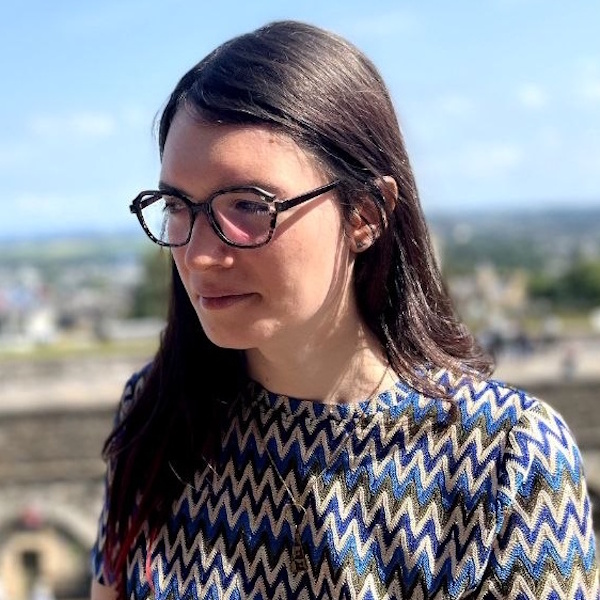
As part of Pride Month, Thinky Games is joining in the celebrations by publishing a series of Q&A interviews with LGBTQ+ video game developers and artists. Today’s featured developer is Anya Spadin a.k.a. Two-Headed Deer, who works on the game design, programming and art for the upcoming game Clover’s Quadrants.
Q: Hello Anya! Thank you for taking the time to answer our questions. Can you introduce yourself and describe Clover’s Quadrants for us?
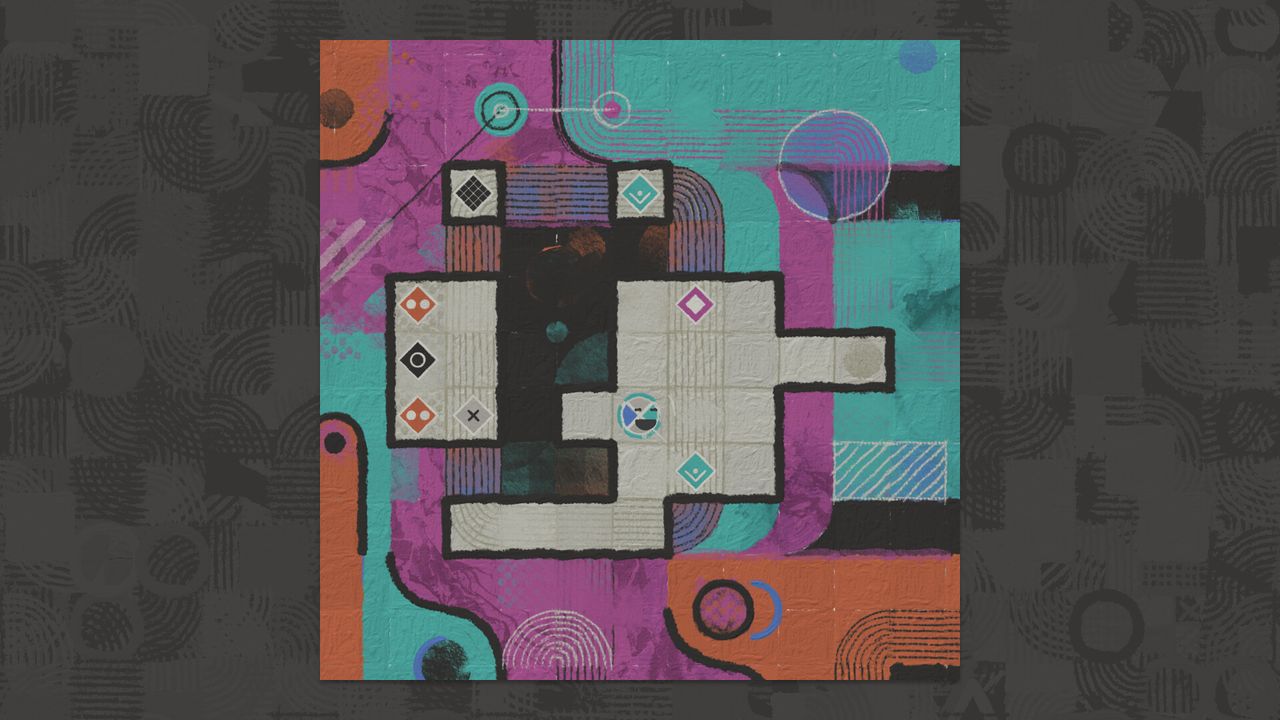
Anya: Hi! I’m an architect from the American Midwest, and I make art in my spare time, including games. I’ve been making games since I was 11 or so, and I’m 30 now. I’m currently working on Clover’s Quadrants, a sokoban-ish puzzle game where your four directions of movement are also inventory slots.
Q: This will be your first commercial release since Regions, which was published more than ten years ago! What’s changed since then?
Anya: I got really into mapping for Source engine games like Team Fortress 2 and Portal. My map Byre was officially added to TF2 in late 2015, which was at the same time that I was pursuing an architecture degree. I spent most of my free time on TF2 for about a decade after that and never netted another win, so I shifted my focus to game development. Also — I’m a girl now.
Q: Until recently, the game had a working title of “UDLR”. Where did that come from, and why did you change it?
Anya: A lot of people didn’t realize that it stood for Up Down Left Right. I guess people just thought it was gibberish? There were also a number of other existing things named UDLR, mostly related to gaming. It felt like stepping on toes and bad SEO. Also, UDLR felt more fitting for a totally abstract game, and I had just changed the player character to have a face and personality, so the game name needed a personality to match.
Q: Which parts of producing Clover’s Quadrants have you most enjoyed?
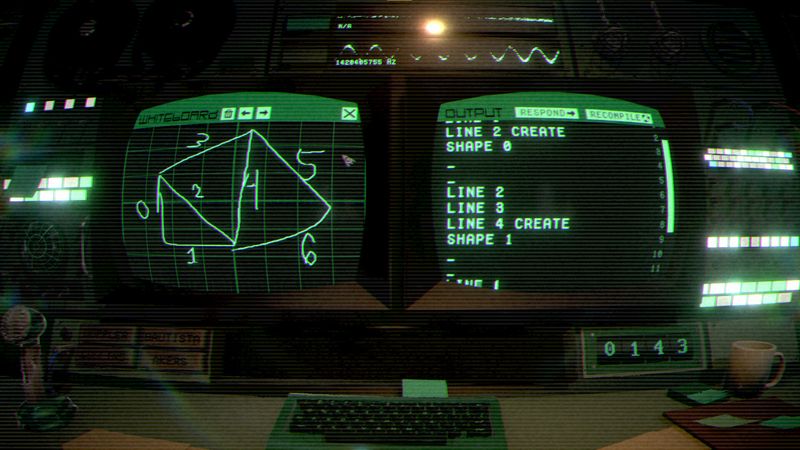
Anya: The input rebinding menu... just kidding. But seriously: the art, puzzles, and music. I think about “bumping the lamp” often — the art style and music have a lot of tech behind them that I made because I really enjoyed the difficulty of the process. They make the game better, but they’re also partially responsible for why it took two years to make.
.jpg)
.jpg)
Q: You’ve described the game as “difficult but fair” on its Steam page. I know the demo has received praise from some puzzle gaming communities, and I’ve quite enjoyed it myself. What role does difficulty play when you craft puzzles?
Anya: I often cackle to myself like a cartoonish villain or yell and clap like a seal when I find a puzzle that delights me. Sometimes this is because a puzzle comes together really elegantly… or I’m just being mean to the player. The mean puzzles become optional. In either case, the difficulty is necessary to find the delight.
Q: Aside from providing a satisfying challenge to players, what are your main goals with Clover’s Quadrants? What drives your work?
Anya: Explore the main mechanic and its intricacies. I stumbled into a lot of lovely ideas as I developed the game’s mechanics, and I think the point of the game is to share that joy with others.
Q: You recently announced a release date of June 26th through a new trailer during our very own Thinky Direct. As a self-publishing developer, what’s your experience with time estimates and deadlines?
Anya: I don’t use them if I don’t need them. They’re certainly useful and necessary at times, especially when coordinating with others, but I’ve seen so many creators for TF2 crunch and burn out for the sake of a schedule and it just sucks so, so much. For Clover’s, I only take on a deadline if I feel like I can meet it very comfortably.
.jpg)
.jpg)
Q: Any game recommendations you'd like to share? We’d love to hear about games you enjoyed recently, whether thinky or not.
Anya: Trackmania is a deeply fascinating game that I don’t actually play that much. Lots of fun to watch high-level players on YouTube. It looks like a racing game, but it’s really a speedrunning game with very deep and bizarre tech. You can mash a bunch of mechanics together like “underwater desert car reactor booster” and there’s probably a bunch of custom tracks exploring that idea.
Q: Finally, do you have any advice for LGBTQ+ game developers out there?
Anya: As a trans developer, I feel some responsibility to make games exploring trans identity. Obviously, I did not do that. I think my advice is that making a game as a queer person automatically makes your game queer, regardless of content — someone out there might enjoy your game, research who made it, and find a little more solidarity and/or reason to stay alive, which we really need right now. Maybe my next game will be gayer.
You can play the demo for Clover’s Quadrants and wishlist the game over on Steam. It will be released for Windows and Linux on June 26th through itch.io and Steam.
Read our other Pride Month articles:
- "Whatever you do, you gotta be your most authentic self": How Blobun's game development became an act of self-discovery
- "Find or build communities that empower you!": Teaming up to create meaningful games at Purple Sloth Studio
- "Your individual perspective can never be outsourced": Gwen C. Katz on the joy and pride of crafting original mysteries
Disclaimer: Thinky Games is a Carina Thinking Games Initiative and may have professional relationships with individuals and businesses related to the subject of this article. Please see our Editorial Policy for details.