

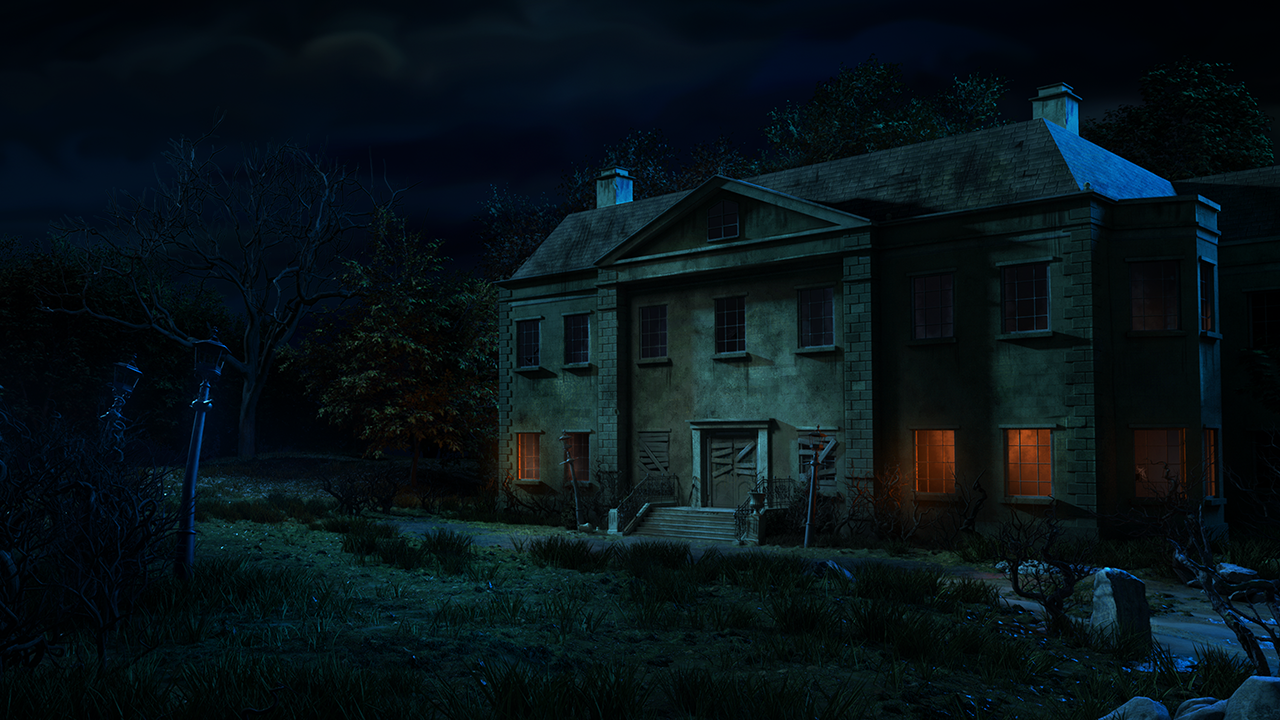

You approach the entrance to an old manor house. The windows are boarded up haphazardly. To the left, a large umbrella. To the right, on the top step, a bag. Poking out of the front pocket is a newspaper with an imposing headline:
BODIES FOUND AT GALLEY HOUSE.
The door swings open and you step inside.
The Incident at Galley House started out as text-based narrative deduction game, Type Help, released on itch.io in 2025 by solo developer William Rous. Rous describes Type Help as inspired by games like Return of the Obra Dinn and Her Story, among others. For me, this game is right up my alley, because I have a lot of love for a) games set in an abandoned or otherwise creepy manor house, and b) games that require me to use a physical notebook to play them. Type Help has both. It also has similar mechanics to some of my favourite puzzle games of all time. What more could I ask for?
It turns out I could have asked for more, because The Incident at Galley House takes what is excellent about Type Help and brings it to life, transforming an entirely text-based adventure into a fully imagined world with an atmospheric soundtrack, great voice acting, and an expanded story. Better yet, this remaster is brought to us by Evil Trout, the team behind the brilliant family-tree-assembling detective game, The Roottrees are Dead.
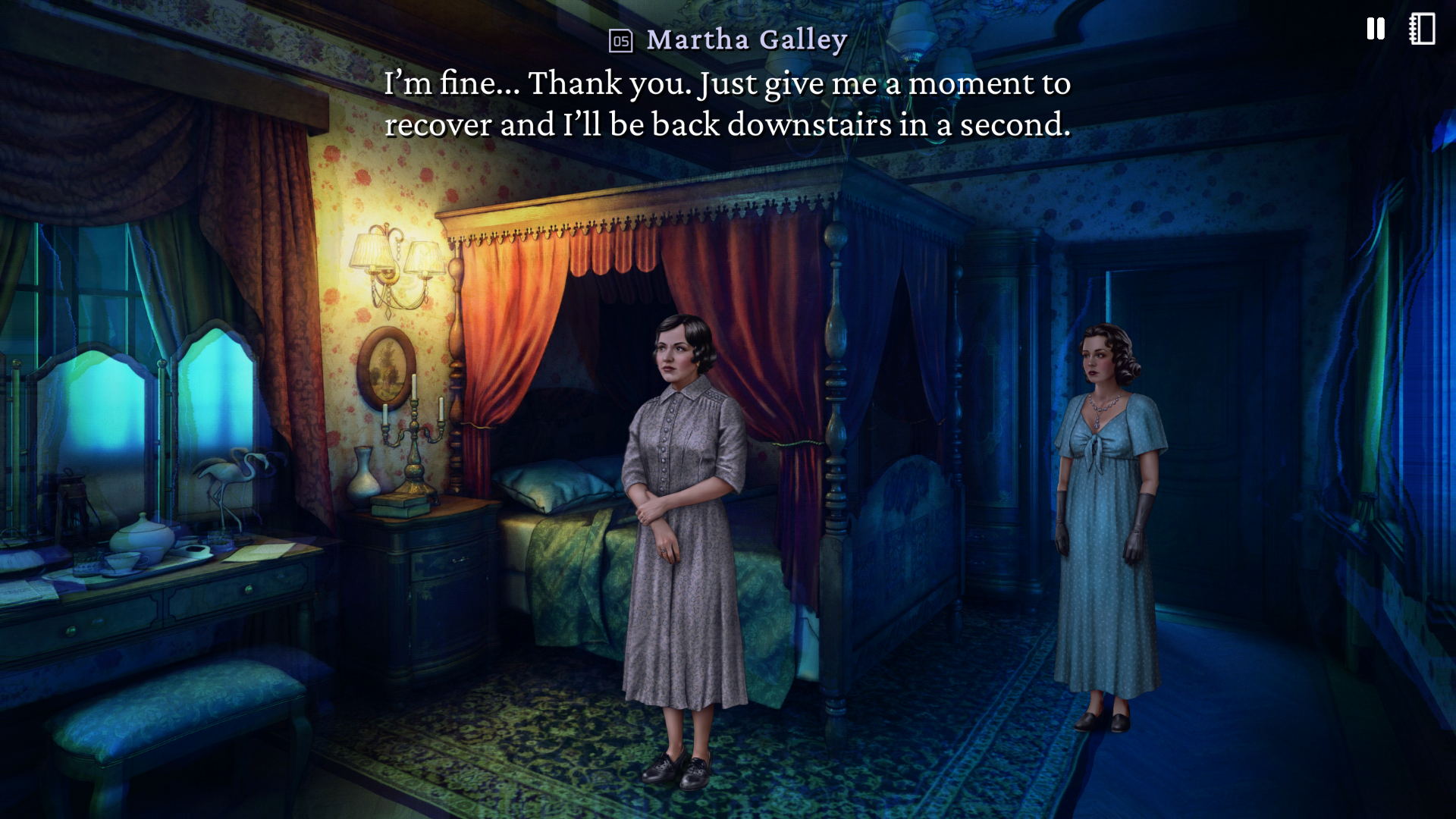
So, what actually happens in this creepy old house? You play a researcher named Raya, in charge of a weird machine that allows you to step into memories contained within a certain radius of the machine itself. And there's a good reason to use it here. Back in 1936, a group of locals died under mysterious circumstances at Galley House. Nobody knows what happened to them. Your job is to find out.
Type Help's gameplay revolves around the uncovering of specific file names; you'll type in codes to uncover the 100 hidden files on the system, but those codes must include a timestamp, a location, and the characters present. So, for example:
01-QU-1-11
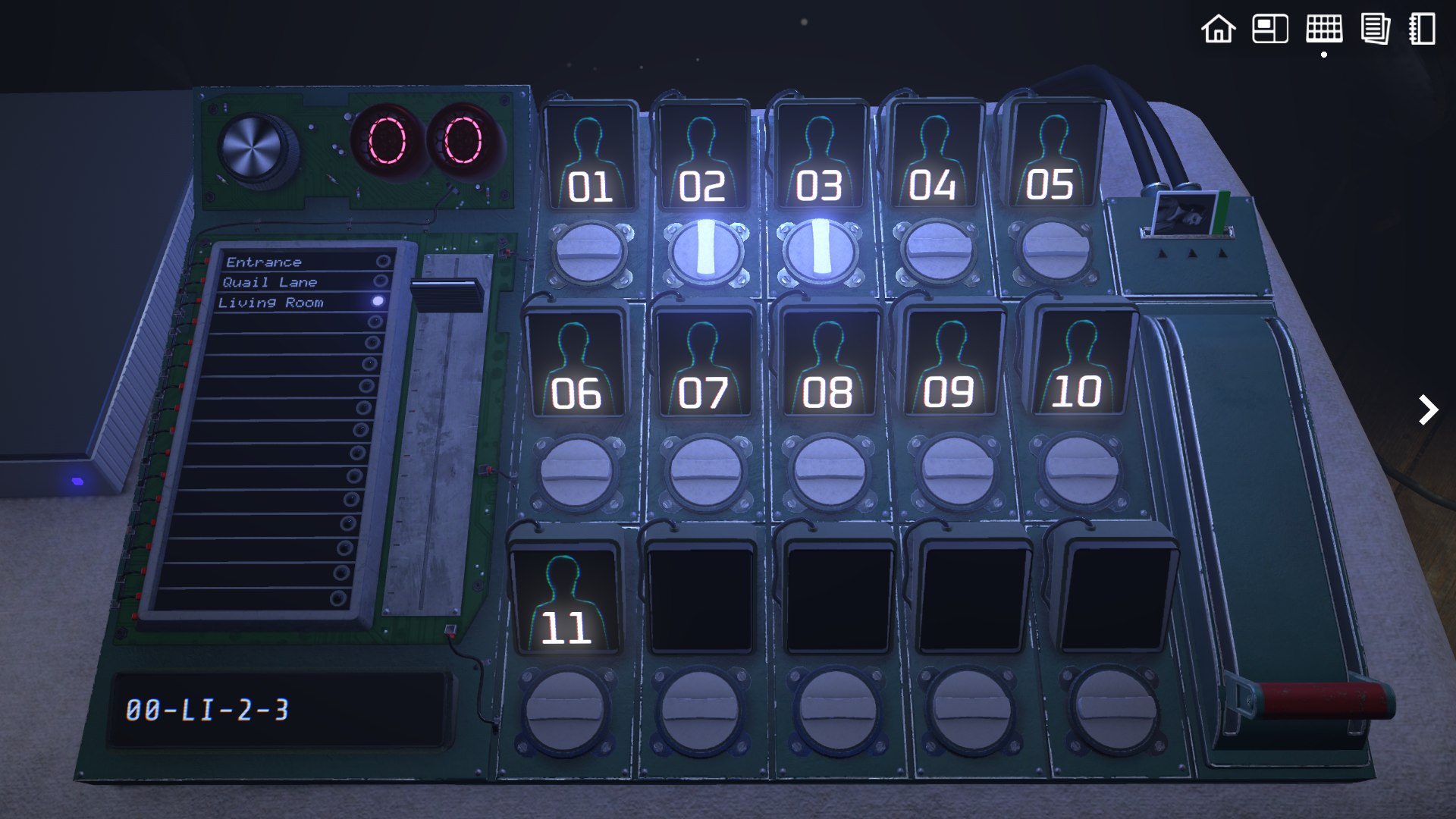
would lead you to the first available moment in the timeline, in Quail Lane, with characters 1 and 11. In Galley House, this process is fully visualised, reducing the need for a physical notepad, but having one by your side will certainly make things a lot easier. In a satisfyingly analogue sort of way, you can turn a dial to switch the timestamp, flick switches to change location and characters, and yank on a big lever to transport yourself back to the memory. If the code is correct, you'll go back in time and view a new scene; if it's incorrect, the machine will just buzz at you with disappointment.
You quickly learn that back in the 1930s, a man arrives at Galley House after receiving a mysterious invitation from an unknown person. The other guests at the house don't know who he is or why he's there, either. Quickly, things begin to unravel when a body is found, and it turns out this is just the beginning of a series of horrible discoveries. After watching a scene, you can view its dialogue in text form, which is where you'll find clues leading to other scenes. A character will mention having a conversation with another character, for example; if you can work out when and where this took place, you've got another code to try out, and another memory to dive into. Some memories will have numbers attached, which indicate the number of other memories you can find from clues hidden in this scene, similar to the “intuition” mechanic from Roottrees. These act as helpful bookmarks, directing you to the moments that you should focus on.
This rapid uncovering of memories is a fantastic mechanic that feels both bountiful and satisfying. It takes thought, but I found there were always avenues to explore and different threads to focus on. Not once did I feel utterly stuck, with no way forward; all you need to do is pick over the dialogue more closely and do a bit of experimentation. It's also incredibly easy to switch between evidence, characters, locations, timestamps, and the machine itself, so you can work as quickly as you can think.
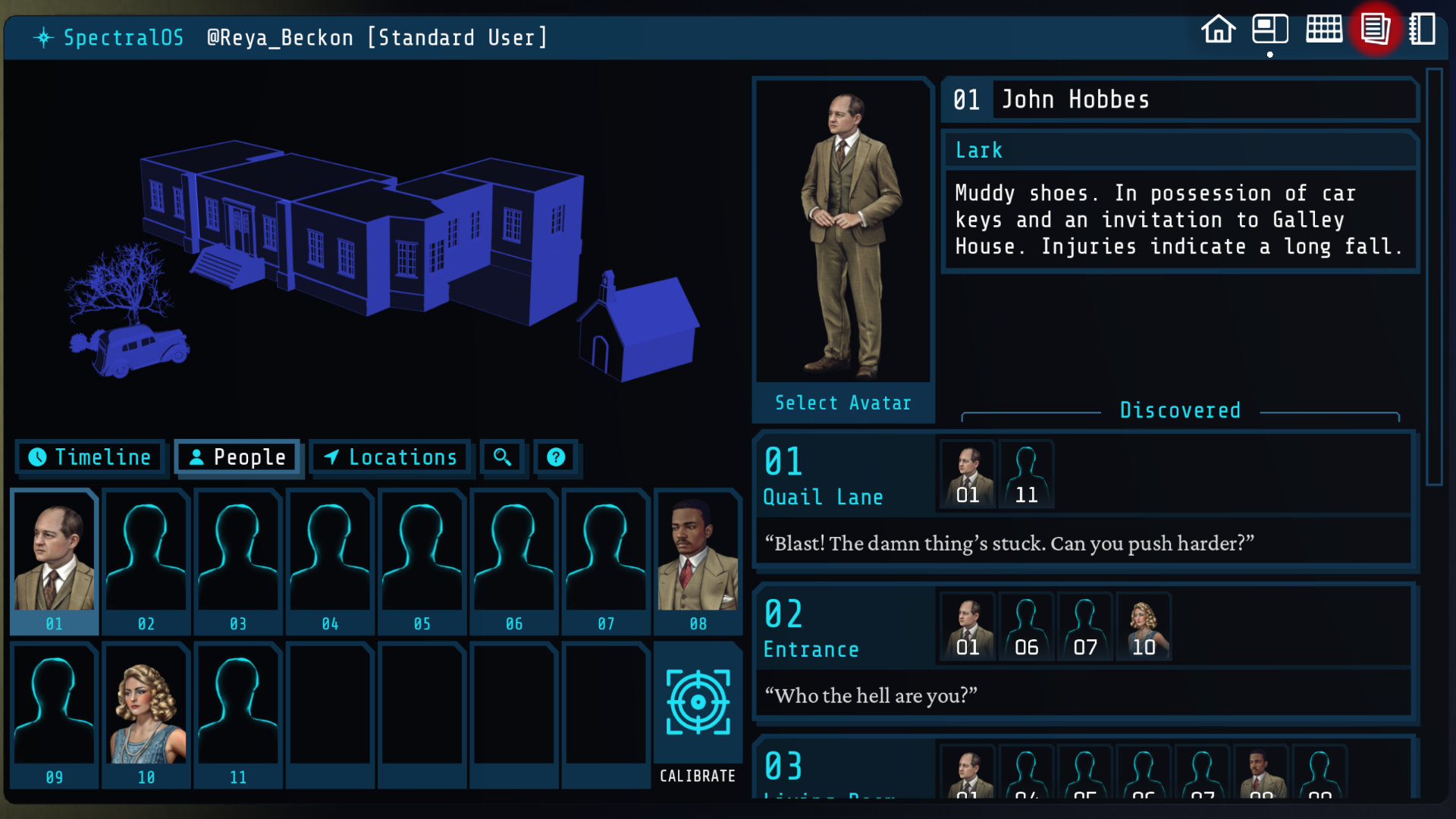
Difficulty-wise, I felt this was a little bit easier than The Roottrees Are Dead, in which I got stuck a number of times. The hint system is also brilliant. If you need help, you can ask for a little nudge in the right direction. If that's still not enough, you can push for more. After three or four steps, the game will just give you the code, with no penalties. You can also search for keywords in the dialogue itself, which is an incredibly useful tool and makes the later stages of the game much easier.
However, while the uncovering of memories might not be too tricky, actually piecing together what happened to the unfortunate occupants of the house is a very different thing. While you're trying to work out what happened to each person, Obra-Dinn style, you're also trying to figure out a bigger plot that is a bit more meta and requires more imaginative thinking. It gets more complicated than it appears at first sight. I don't want to say more, but I will say it's clever, and the game is very good at weaving in the occasional moment that roots you back to the actual present: you, in an abandoned house where several people died unexpectedly, tapping into a strange power that allows you to see snapshots of people that are long dead. There are several "oh, I see!" moments in the narrative, and from both a puzzle mechanic and storytelling perspective, it's well done.
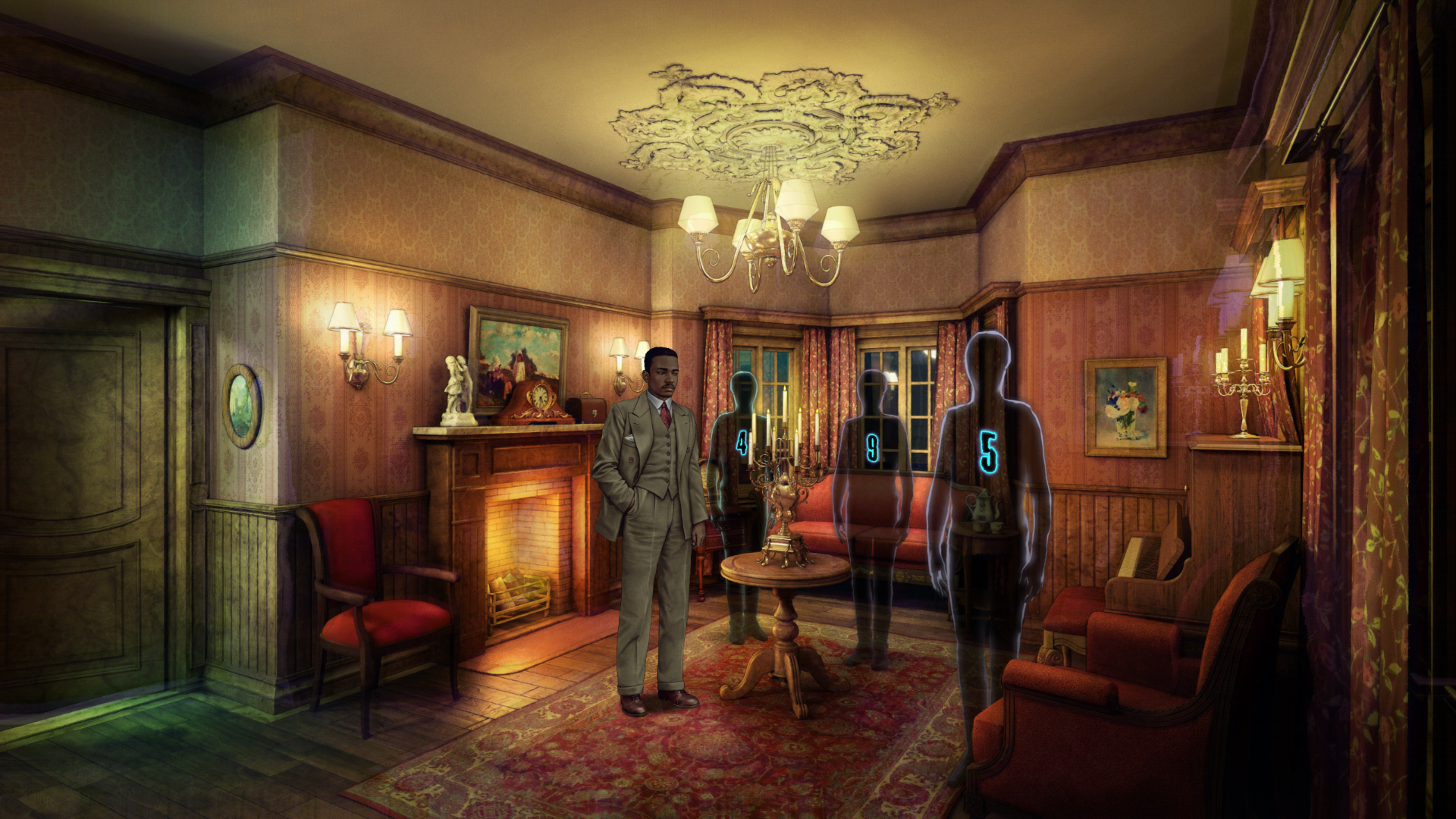
Much of the original dialogue from Type Help remains intact, and it's interesting to see how they built the characters and locations visually from the original game. You can see the process on the Evil Trout blog, which goes into the steps taken (as well as the inspiration behind the house itself). The soundtrack and the voice acting go a long way in terms of building atmosphere, too.
On the itch.io page for Type Help (which itself inspired another game thinky fans might like, The Red Pearls of Borneo, just in case you're looking for more), one comment reads: "I discovered this game literally yesterday and it has overtaken my life". This is how I felt while playing The Incident at Galley House. It's a brilliantly done remaster, and it's absolutely worth checking out even if you've played the original. And hey, you can still use a notepad if you really want to! I certainly won't stop you.
Disclaimer: Thinky Games is a Carina Thinking Games Initiative and may have professional relationships with individuals and businesses related to the subject of this article. Please see our Editorial Policy for details.
Disclaimer: This commercial product was received for free.