

-1280x720.png)
.png)
The field of calculus revolves around two fundamental concepts: the derivative and the integral (stick with me here). For ages, these two operations, like the midpoint boss in a Souls game, have heartlessly gatekept aspiring scientists and engineers. What’s more, they are each other’s inverse. Co-dependent partners. The Ornstein and Smough of math, if you will. So why does MIT hold an annual Integration Bee, but not a Differentiation Bee?
The answer is: because calculating a derivative is, itself, derivative. It’s an algorithmic procedure, no more interesting than following the “always turn right” strategy to solve a maze. Integration, meanwhile, requires creativity and supposition. We can’t just turn right. We have to learn to jump. To walk through walls.
For these same reasons, I typically approach sokobans with suspicion. In my personal experience, the genre’s allegiance to pure logic often produces puzzles which feel more like chores than satisfying conundrums, rote tasks for which difficulty can only arise from the introduction of additional complexity, a larger possibility space, a bigger maze. Where’s my egg?, the debut release from LevelClear, does not fall into this trap. Its puzzles are, I’m delighted to report, integrals—hearty, scrumptious, nourishing ones. And if you’re a sokoban skeptic like me, you should really, really give them a try.
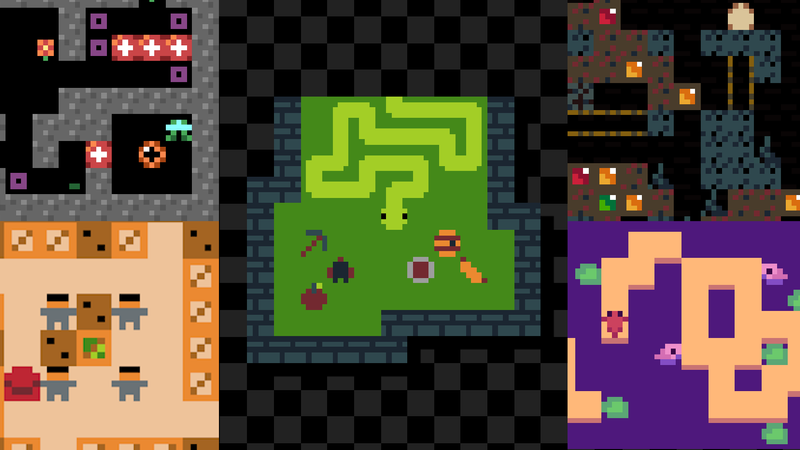
WME is a traditional sokoban centered around three core mechanics, rolled out over the course of three acts. First, there are lasers—from a mechanical perspective, basically just lines, straightforward to conceptualize and work with. Second, there are portals, which, while slightly less intuitive, still feel familiar and safe. Finally, there are “swap blocks”, a frankly cursed mechanic, which had me ranting and raving at the screen—so not familiar and not safe that it’s hard to believe a human being designed them. Unsurprisingly, swap blocks are also the basis for some of WME’s best, most satisfying puzzles.
This is all beside the point, though, because even swap blocks, with their eerie quantum-esque shenanigans, aren’t what make WME special and worth playing. That distinguishing quality is subtler, harder to define, more to do with the level design and the flow of playing those levels than the mechanics contained within. Again, integrals vs derivatives.
.png)
Like integrals, puzzles in WME start off small and innocent, but never stay that way. Whereas differentiation is typically about reducing terms, simplifying a mathematical expression until it becomes trivial, integration often requires one to expand terms into their most complex forms. Sometimes, one must even suppose additional, hypothetical terms, just to help handle the ones provided. WME is like that. Puzzles all fit on a single screen, and rarely contain more than a half-dozen elements. Seems simple enough, you think, as you peruse a puzzle’s landscape, chunking elements into familiar patterns, identifying the required endstate. Until it hits you: the puzzle is impossible, at least with the techniques you’ve learned so far. To solve it, you’ll need to expand. First the puzzle, then yourself.
Sure, many puzzle games force the player to think outside the box, to set aside their assumptions and expand their perspective. If anything, that’s the core experience that makes puzzle games so worthwhile. But there’s something about the way WME executes that experience that elevates it beyond its peers, a willingness to go one step further that won me over not only to WME’s own brand of block-pushing, but the sokoban genre as a whole. It’s tough to explain, but let’s give it a shot:
There’s a concept in table top role playing called “the rule of cool”, which states that if a player action is fun or interesting or dramatic enough, the GM should permit it, even if it bends, or even breaks the rules. A good sokoban (and probably any sufficiently “designed” puzzle) operates under a similar, unspoken principle. That is, when the player concocts an especially “cool” hypothesis for how to solve a puzzle, a fun and interesting and dramatic hypothesis, that hypothesis ought to bear fruit. Put another way: the coolest solution should also be the correct one.
.png)
Here is where WME elevates. Because while WME delivers on this “rule of cool” expertly, it doesn’t lay down and surrender the moment the player arrives at the “cool” solution (despite what puzzle design experts often recommend). It almost always guards the implementation of that solution behind an additional obstacle, sometimes many obstacles, wrinkles which delay the verification of the player’s big, magnificent hypothesis. And then, recursively, those wrinkles become their own puzzles, with their own cool hypothetical solutions gated by even further wrinkles.
Engaging with such a brilliantly designed puzzle feels like stretching apart an accordion, revealing its many heretofore-unseen folds, until finally, when you’ve pulled taut the span of that bellows, hypothesized solutions to each of its perplexing furrows, the puzzle collapses back together all at once, conjectures becoming truths in a rapid-fire cascade of scientific glory. Instead of the satisfaction of solving one puzzle, you’re rewarded with the satisfaction of solving many puzzles all at once. The accordion sings.
This, I believe, is one of the biggest strengths of the sokoban, and with Where’s my egg?, LevelClear have harnessed it to its utmost. Give it a try, and it may make you fall in love with this genre all over again.
Disclaimer: Thinky Games is a Carina Thinking Games Initiative and may have professional relationships with individuals and businesses related to the subject of this article. Please see our Editorial Policy for details.