


The Roottrees Are Dead is one of those blessed games that comes with a new language to describe games generally. I look at a lot of deduction games for Thinky, and I can’t tell you how quickly “Roottree-like” has surpassed “Idol-like” and the now historic “Dinn-like” in places like Steam. This blessing comes with a curse. Shutter Story inevitably comps to other self-guided investigation games, but none suit it perfectly. It’s fully unique. That’s why it’s quickly become one of my most anticipated games of the year.
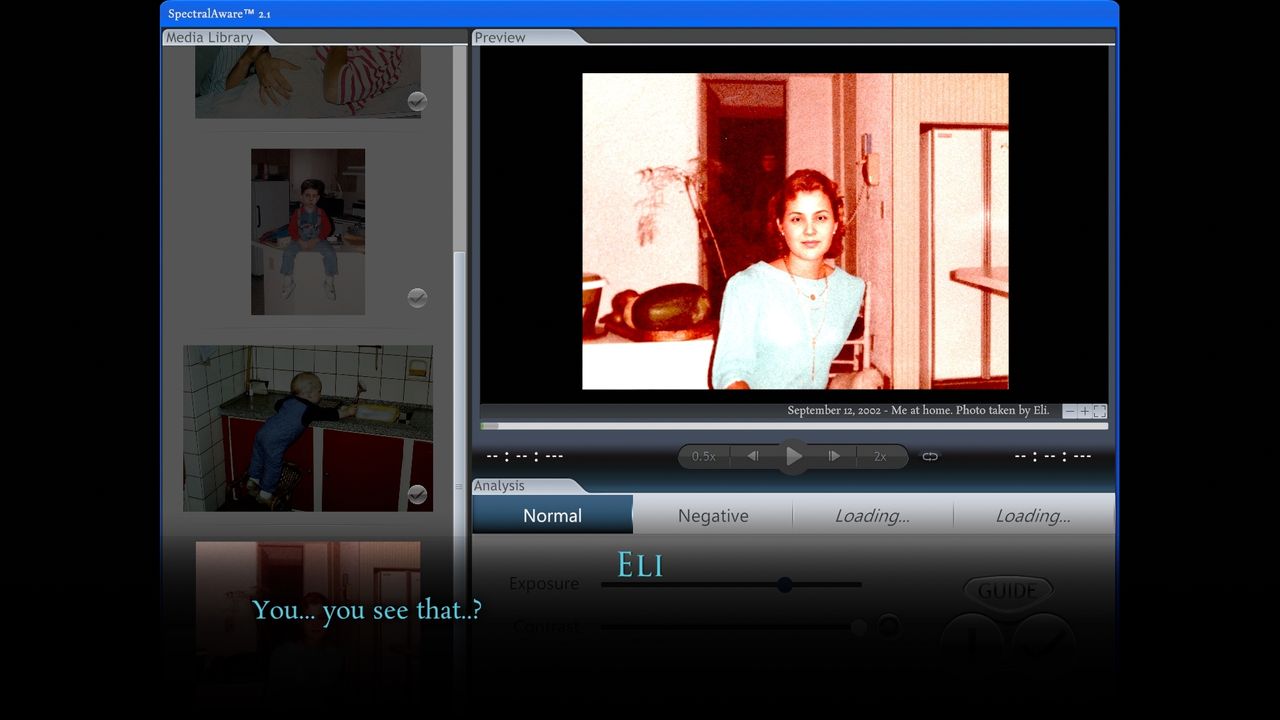
To start, Shutter Story isn’t stuck in its database section. Its opening moment sees the child player character going to his buddy’ Eli’s house to look at some photos. Like much of the game, what exactly you hope to find in those photos is fuzzy at first. It’s suggested by the vaguely human outline of mold on the wall, the spontaneous infestation of worms, even intermittent earthquakes. Eli’s family doesn’t believe him that their home is haunted, and he hopes you’ll be able to get to the bottom of it.
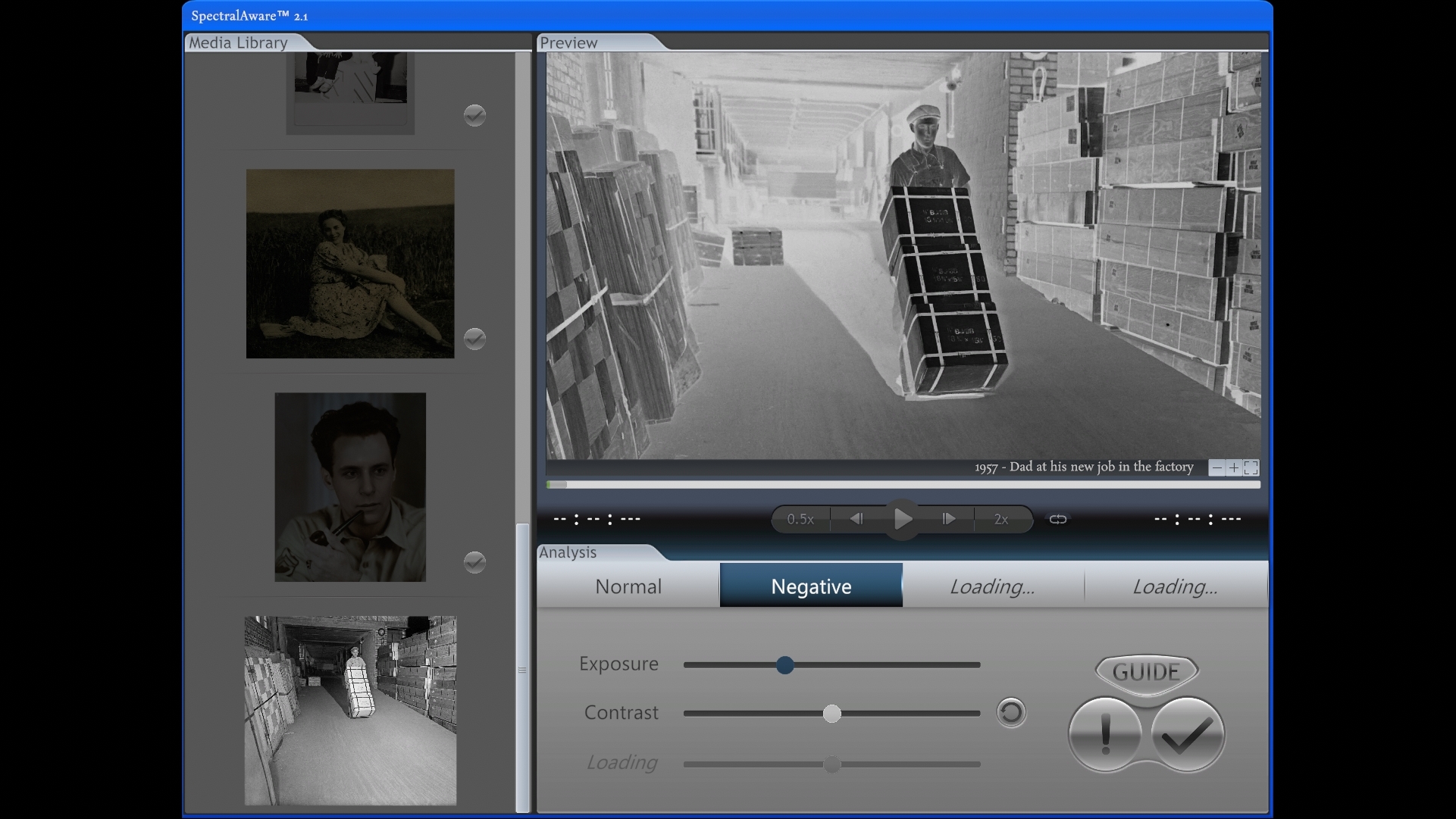
So you load up SpectralAware, a photo editing suite designed to reveal the presence of the paranormal—specifically in a stack of family photos provided by Eli—by modifying exposure, contrast, and filters. SpectralAware also provides a handy guide to help you ID just what kind of haunting you’re looking at. This includes see-through apparitions of the deceased, but also “reality glitches” and physical anomalies (giant deer, cars fused into buildings) which require attention to the context of the photo, not just smudges in the background. There’s one more category to sort photos into, and it’s the most important: safe. The null result is where Shutter Story ultimately finds its identity.
Careful observation is essential to every puzzle game, but games that flesh it out as a central mechanic are few and far between. There’s Where’s Waldo, I Spy Spooky Mansion… and that’s about it. But Shutter Story makes no use of clutter; its images aren’t trying to hide anything. In fact, you’re given a suite of tools to tinker with photos and pick them apart to your heart’s content. You just don’t always know what you’re looking for—or if that thing is there at all. What if Waldo was coming to get you? Each photograph becomes soaked in paranoia.
Take simulacra, which appear as pareidolic face-like patterns in textured surfaces. These are particularly hard to spot (potentially frustrating, since the game doesn’t offer much feedback when you get something wrong), and left me looking for eyes in every cloud and panel of wood. Even human figures can’t be trusted. You also have to check against photo captions to determine whether the person staring back at you is actually a ghost. Videos ratchet up this frame-by-frame scrutiny, and even the soundtrack occasionally slips its droning bassline beneath static.
Few games share Shutter Story’s willingness to let the player decide when they feel safe. It’s unmooring, but not lonesome, as the hand of the game’s creator is visible throughout. There’s presence in the motes of dust floating in sharp sunbeams, thoughtful functionality in the in-game guide, clear intent in the awkward animation of a scene at the kitchen table with your friend’s parents and anxious uncle—the meekest evocation of the Texas Chainsaw Massacre dinner scene that still manages the same flavor of unease. I guess what I’m saying is, Shutter Story is excellent horror: chilling but not cold, desolate but not empty.
And it all comes together when a photo presents the truly unexplainable. One video of Eli’s bedroom shows a dark smudge on the wall. I lock it in as a “shadow person” (a clear, dark outline in the shape of a person). I’m wrong, but I’m not told how I’m wrong. Was the photo safe, or did I just choose the wrong haunting? The guide suggests that a shadow person may just be the mundane shadow of a person out of frame. What did I see? The silence is my answer.
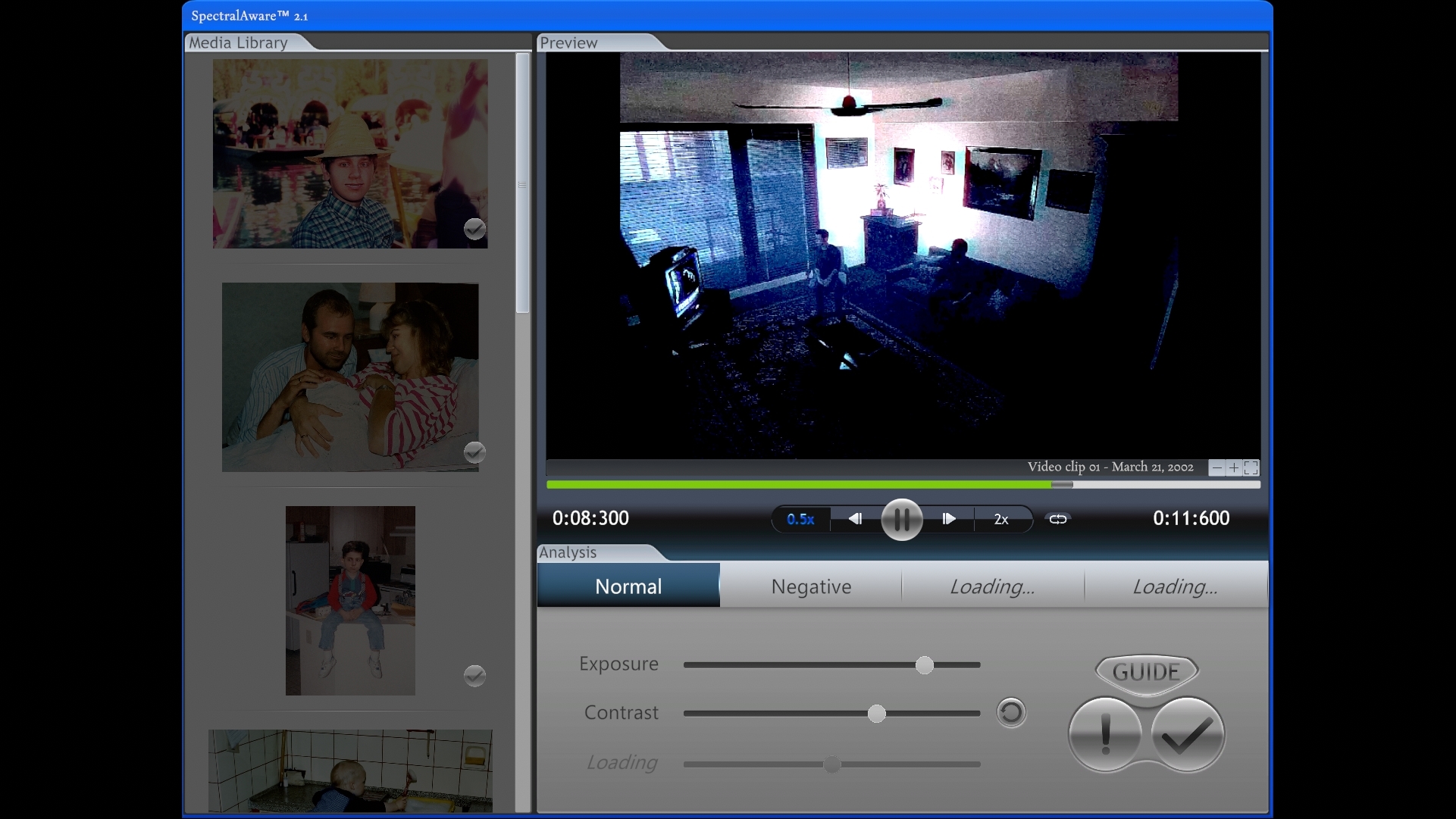
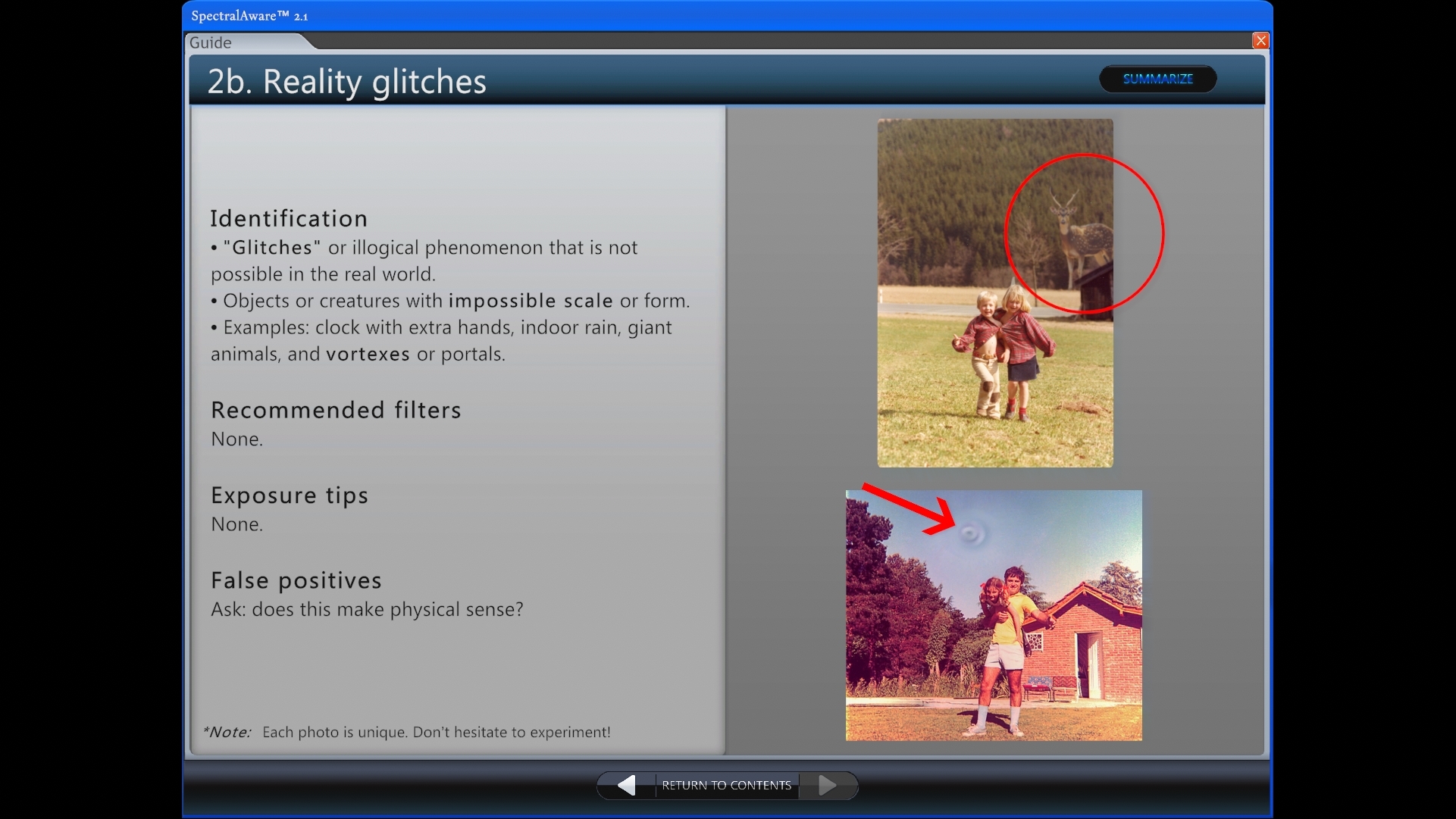
I hate that I even have to bring this up, but I couldn’t avoid the more immediate, 2026-specific unease of poring over photos in search of unreality. I can’t hunt for “extra hands or limbs,” as the guide suggests, and not flash back to the hours I’ve wasted recently doubting what I see in photos. This is where Shutter Story’s horror jumps from clever to brilliant: the spiral of paranoia, the catharsis of seeing it justified.
Does Shutter Story have an equal among deduction games? Developer Frostwood Interaction mentions Her Story and Home Safety Hotline (and Kiyoshi Kurosawa’s Pulse). I’ll add last year’s No, I’m Not a Human to the pile. Fans of these will certainly find a lot to love in Shutter Story, in part because it plays almost like a response to them. Deduction games ask you to trust yourself; Shutter Story asks whether you can even trust your own eyes.
Disclaimer: Thinky Games is a Carina Thinking Games Initiative and may have professional relationships with individuals and businesses related to the subject of this article. Please see our Editorial Policy for details.