

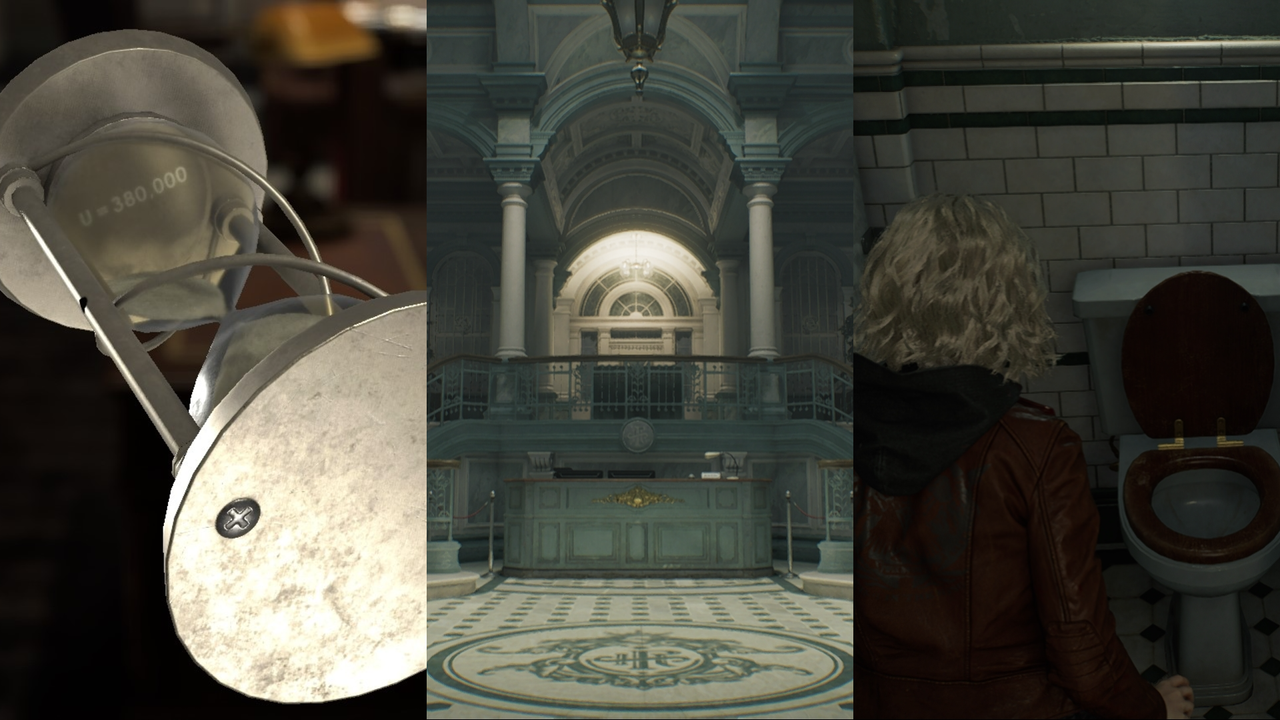

Here’s some of the knowledge needed to solve Resident Evil Requiem’s enigmatic Final Puzzle: Earth’s proximity to the Sun; the blood volume of 115 zombies; how to flush a toilet. The playthrough-spanning ordeal, spoiled by dataminers, was briefly electric. The Final Puzzle was something unique to the series: unlike previous ARGs for Resident Evil 6 and Operation Raccoon City, which lived online and had no effect on the games themselves, the Final Puzzle is prominently displayed as an achievement to anyone who’s beaten the main campaign. It isn’t even technically an ARG, just a sequence of actions so inscrutable that they demanded the attention of the entire community (and pure dumb luck) to solve. The Final Puzzle proved to be a neat gimmick, but not one that has remained in the conversation about Requiem for very long. For a series so married to bizarro puzzles, I can’t shake the feeling that it could have been so much more.
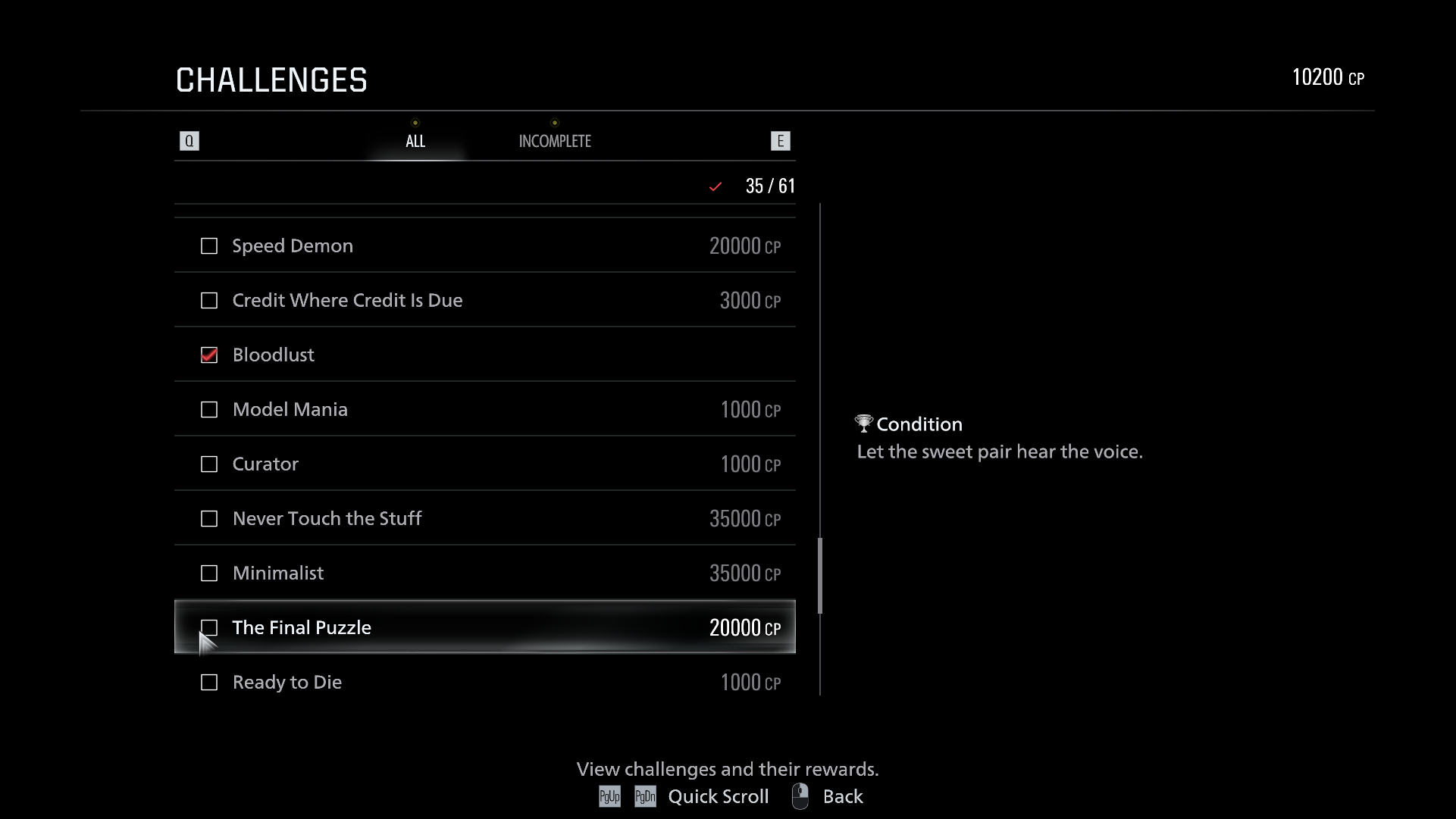
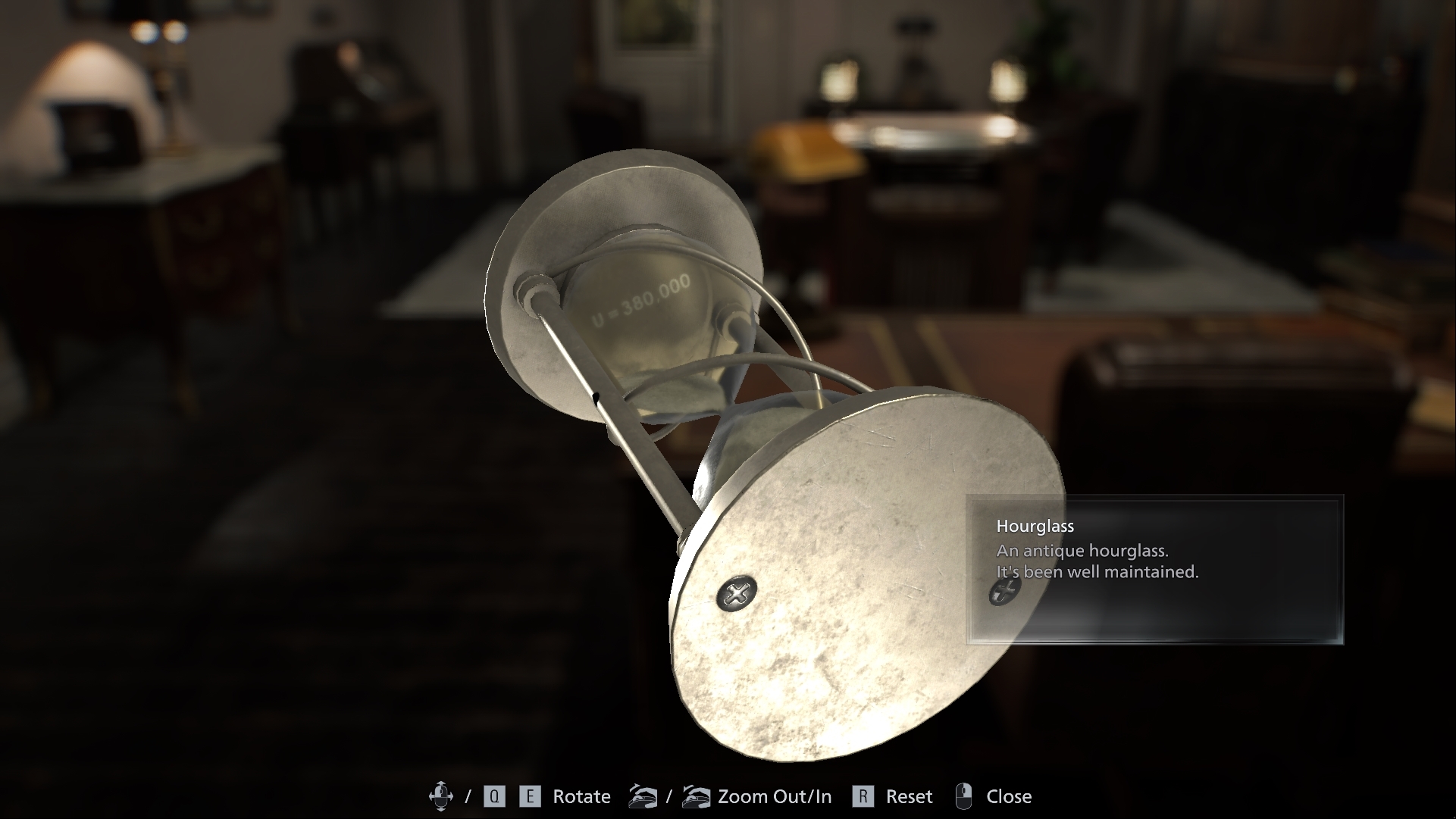
The Final Puzzle’s presence in a casual playthrough is only hinted at by a handful of items with no obvious purpose. A collectible severed hand. An ornamental hourglass. Every item in a Resident Evil game serves some purpose, but when finding that purpose might involve backtracking through dangerous halls with limited resources, it’s easy to let some sleeping dogs lie. I did, at least. But after the credits, at the bottom of the in-game achievements list—win without using healing items, destroy all the Mr. Raccoon statues, that sort of thing—is the following entry:
The Final Puzzle
Condition: Let the sweet pair hear the voice.
Players quickly returned to those loose threads and began pulling. Thumbnail images in documents from the very beginning the game hid key information, ciphers were found inscribed on examinable items, and some solutions were discovered by sheer brute force before the community could say for sure why they worked. The search is well-documented. Judging by the paper trail, you’d be forgiven for thinking the Final Puzzle breaks sharply from other puzzles in the series, maybe even reaching the heights of a Blue Prince and Animal Well. But the Final Puzzle stays in lockstep with the carnivalesque strangeness that surrounds it; it differs in scope, but not in kind.
Even the best Resident Evil puzzles aren’t, shall we say, thrilling cerebral pursuits. It doesn’t take an intellectual titan to fit a heart-shaped key into a heart-shaped door. If Resident Evil were a series of puzzle games, they’d be pretty poor ones. But Resident Evil isn’t a puzzle game, and more to the point, puzzles shouldn’t be relegated only to puzzle games. Puzzles in the series aren’t robustly designed enough to stand as a gameplay focus themselves, but they play a practical supporting role by cultivating mood.
In Film Structure and the Emotion System, Greg M. Smith theorizes how scenes that don’t immediately serve a narrative goal may still coordinate a film’s mood, or the viewer’s predisposition toward certain emotions. “Few texts can rely on narratively significant moments to provide mood-sustaining emotion,” Smith writes. “If we do not find any opportunities to experience these brief emotions, our particular mood will erode and change.” In Resident Evil, the mood of suspense primes the emotion of fear.
Resident Evil Village’s Doll Workshop is a perfect example. Its escape room-style puzzles include autopsying a mannequin, descending into an unlit well, and sorting voyeuristic footage of Ethan Winters’ own family. None of these present much intellectual challenge, but they evoke common phobias and a sense of being toyed with. That placeless unease blossoms into pure terror when an eight-foot-tall fetus monster begins chasing you through those same halls.
Common enemies like zombies and Lickers also help tee up bigger scares. But if every challenge in Resident Evil had a health bar, the franchise would be tonally closer to something like Left 4 Dead than the blend of humor, horror, and melodrama it’s known for today. The unique mood of Resident Evil is the feeling of being chased through a haunted house. Early on, this was explicit in the worldbuilding: Resident Evil’s Spencer Mansion was designed in-fiction as a deathtrap to hide the laboratory underneath, and the RPD occupies an old museum complete with secret passageways.
But even when the puzzles themselves aren’t particularly scary, they often force engagement with other dangers. One of my favorite sequences in Requiem revolves around a simple pathfinding puzzle. Two doors must be opened in the correct order to avoid stepping in an electrified pool. Easy peasy. Except, the doors use the same joint plugs as the lights, so opening either one plunges Grace into darkness, making her vulnerable to the area’s truly terrifying pursuer enemy.
Resident Evil 2’s chess puzzle, 4’s hexagon pieces, and basically the entire Chronic Care Center in Requiem revolve around finding keys scattered in the hostile world. At first, when that world is unfamiliar and resources and upgrades are low, these sections force the player into danger—but they also force curiosity. Later, when once-unfamiliar territory is well-known, they’re an opportunity to flex your mastery over the game’s perils. Solving any one puzzle pales in significance to solving the environment.
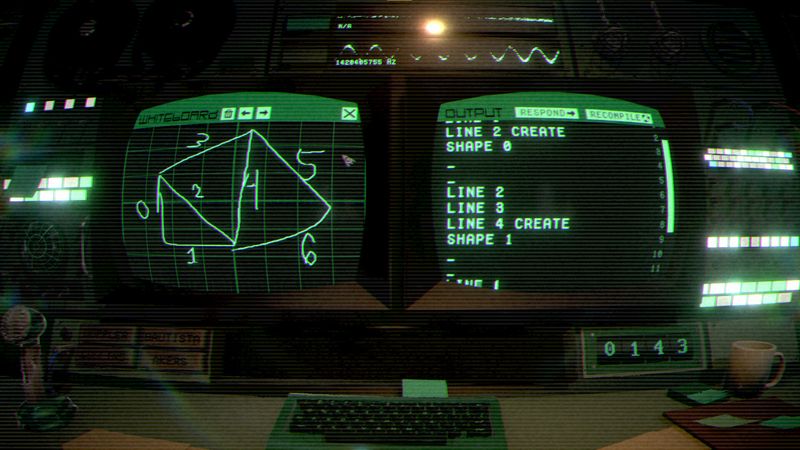
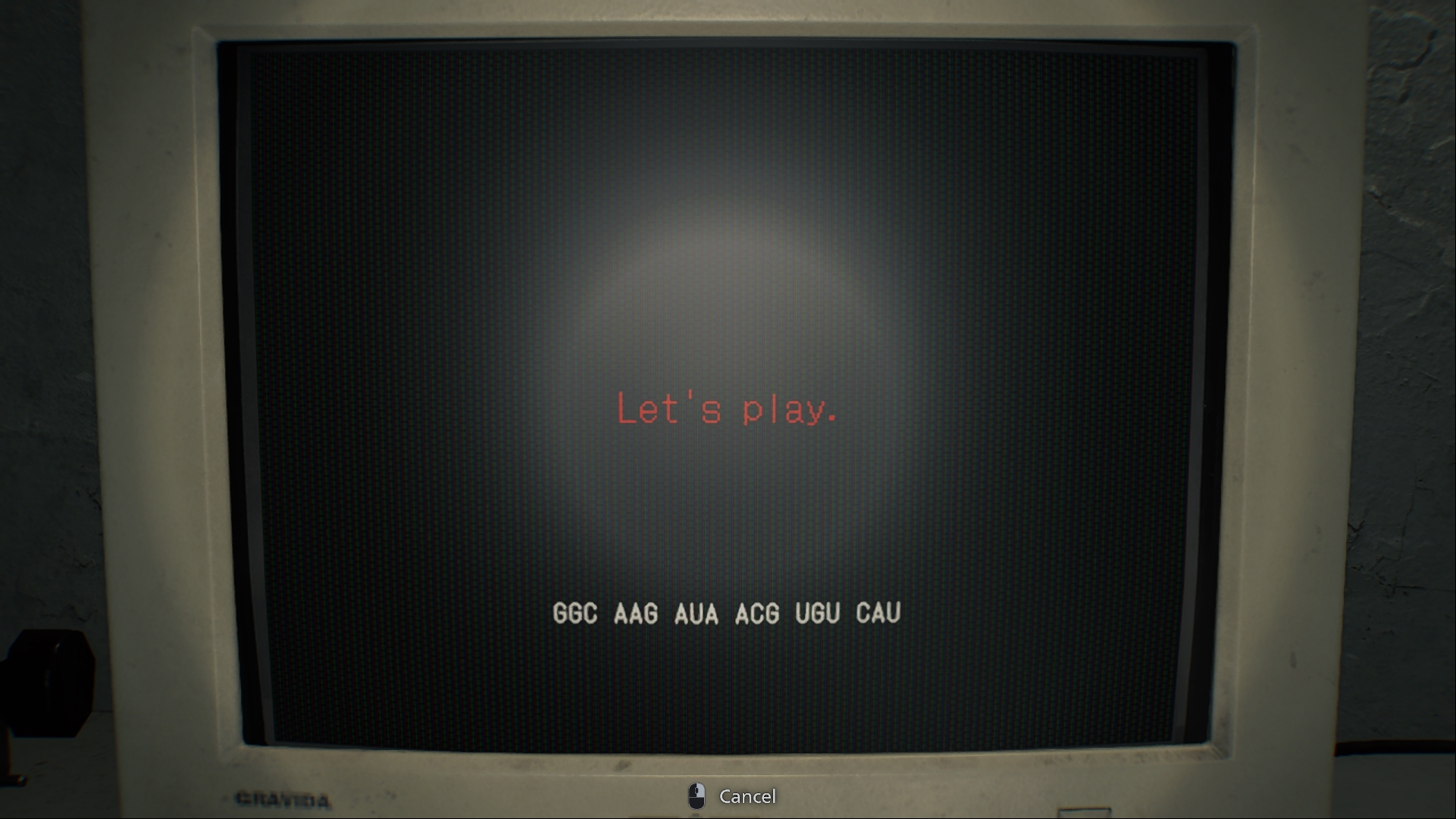
The Final Puzzle undercuts that supposed familiarity, mining new horror from it by attaching itself to puzzles Grace has already solved. The laser microscope, which by the end of my time in the care center was a landmark place of safety, is where you slot in the Severed Hand. The screen flashes, “LET’S PLAY,” followed by a cryptogram. The unknown is allowed to creep into a place that should be thoroughly mapped out. Every corner must be checked even more closely than before, not for rogue zombies, but for new mysteries.
Conversely, other sections of the Final Puzzle demand total mastery. A sequence that drops Grace into a conveyor-fed crushing mechanism is, on a first playthrough, a hectic fight for survival. The Final Puzzle turns it into a puzzle combat encounter, requiring you to maximize the number of enemies fed into the crushing wheels without killing a single one. Mirroring the typical Resident Evil arc from weakling to gun-toting super soldier, the Final Puzzle is the ultimate test of whether a player’s knowledge of Requiem is complete.
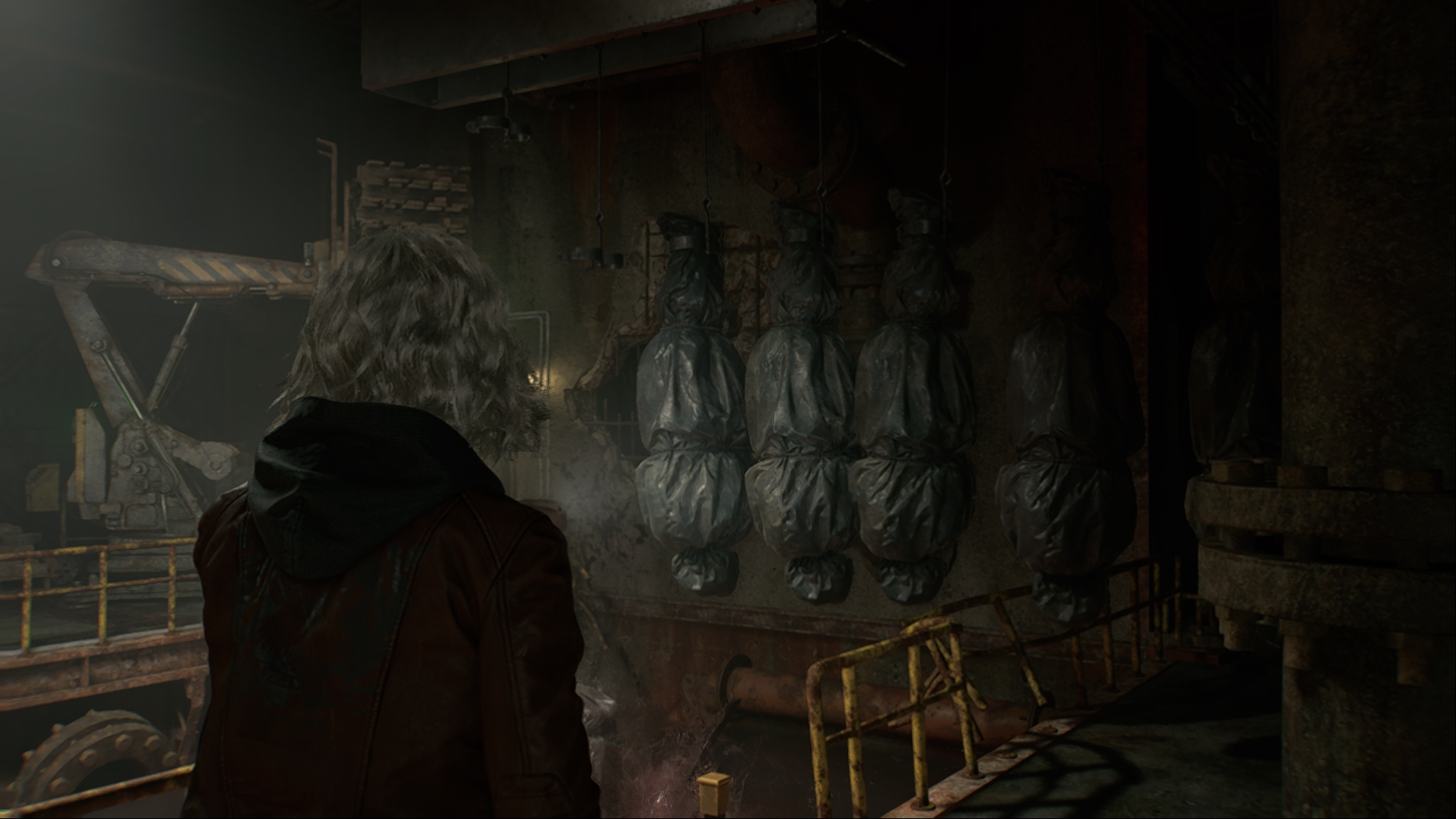
Also, like a typical Resident Evil game (or more to the point, a Resident Evil puzzle), it begins to unspool if you think too hard about why any step is the way it is. The aforementioned conveyor puzzle was discovered not by careful consideration of available clues, but by a Pokémon YouTuber who got lost for long enough to accidentally trigger the flag.
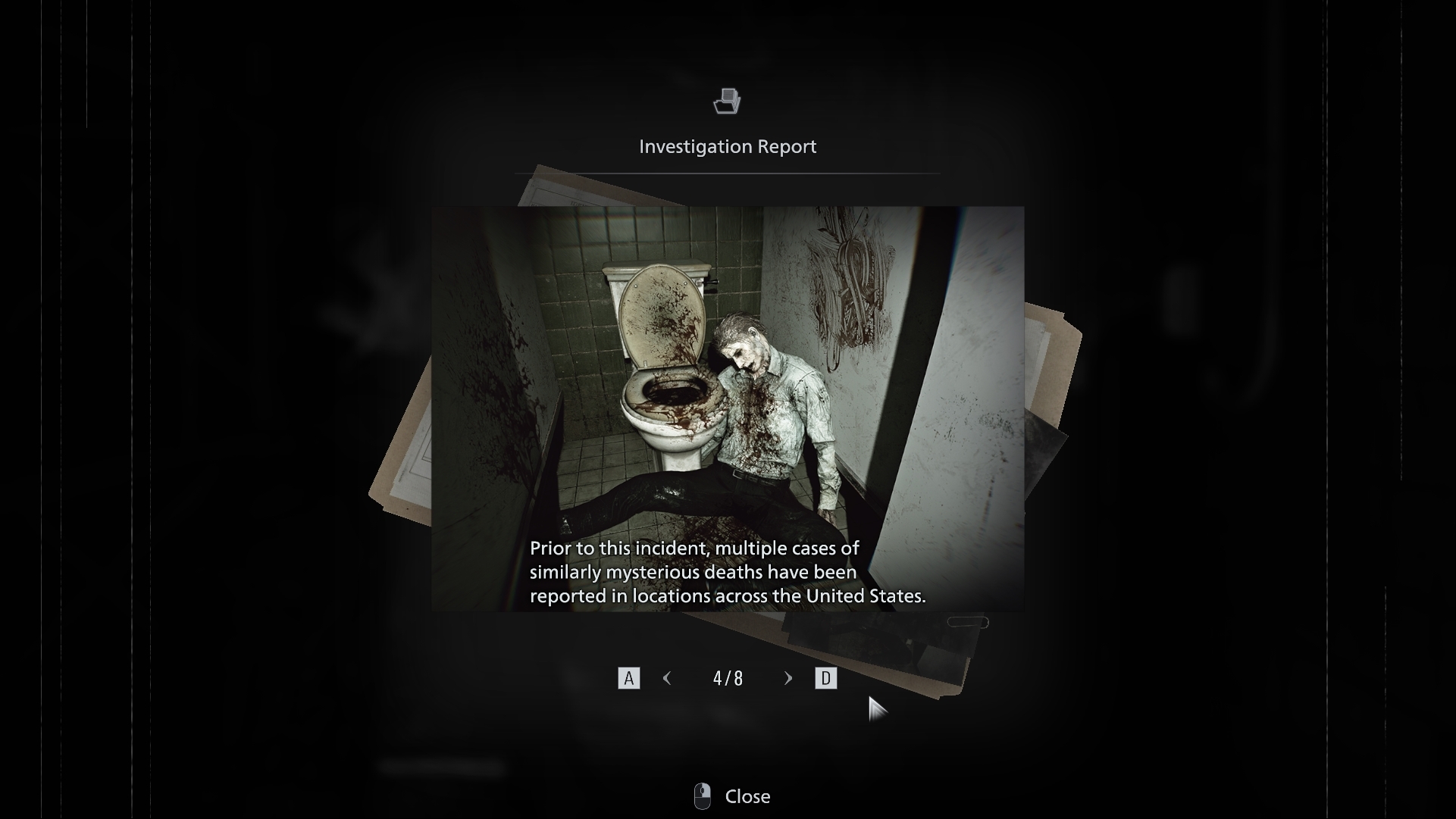
Because the Final Puzzle unfolds nonlinearly, it suffers more than others from a lack of signposting. Having to sort through Requiem’s many notes to find the one that specifies 115 zombies were processed for a particular experiment (the current theory for why you need to AFK for 15 minutes at the conveyor) is just poor puzzle design. Not to mention the requirement to flush a random toilet eight times, the connection of which to the rest of the puzzle is completely unfathomable.
And yet, I find the obtuseness of the Final Puzzle mostly forgivable. It was clearly designed as a community effort, and if we know one thing about puzzle communities, it’s that there is no upper limit to our ability to overthink environmental clues. Call it opaque, but the fact is that fans figured it out pretty quickly.
No, what gets my goat about the Final Puzzle is its payoff—or rather, its lack of one. Quick as I am to defend the functionality of Resident Evil’s puzzles, they are just that: functional. As in, they buoy the mood in order to drive the player toward something more exciting, be it a setpiece battle, a meaningful upgrade, or just a good scare. The Final Puzzle’s ultimate reward, by contrast, is 20,000 achievement points. For comparison, just completing the game on the highest difficulty is worth 40,000; the infinite RPG costs 50,000.
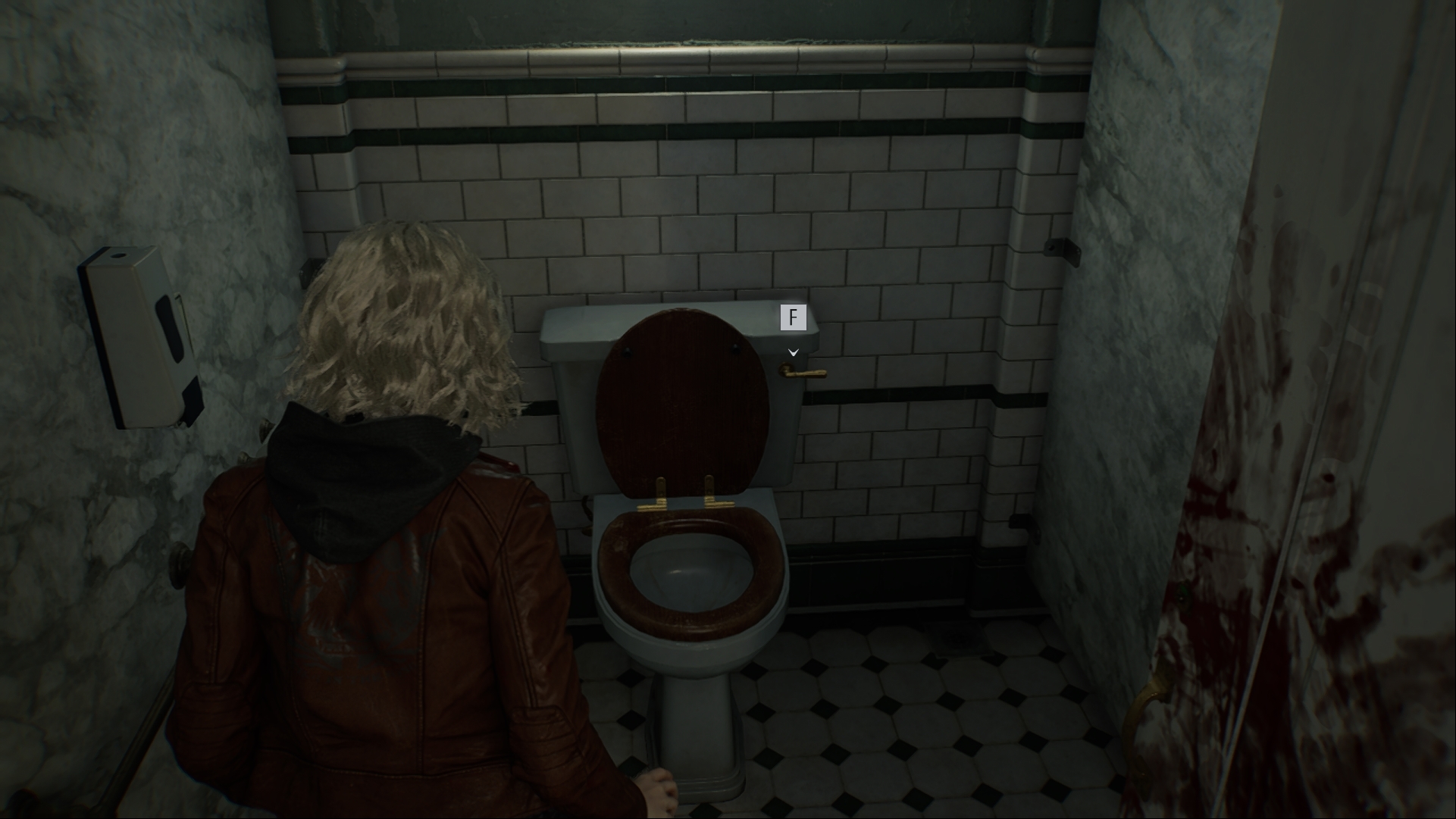
And is that why we go in on puzzles like this? Achievement points? Is that what binds a puzzle community together? I return to the Final Puzzle’s anticlimax, in which completing the final sequence triggers ghostly laughter. Unlike other puzzles in the series, which by and large stem from the Umbrella Corporation’s irrepressible flair for the dramatic, no in-game author makes us jump through the Final Puzzle’s hoops. Out-of-game, too, it lacks the authorship so strongly felt in more impactful community puzzles—those Blue Princes and Animal Wells I mentioned earlier—that sense of all of us being invited to the same party, hosted by someone who’s having as much fun creating as we are solving. The source of all this hassle is, plainly, Capcom. After watching me jump through so many hoops, points piled at my feet, I have to assume they’re the ones laughing, too.
Disclaimer: Thinky Games is a Carina Thinking Games Initiative and may have professional relationships with individuals and businesses related to the subject of this article. Please see our Editorial Policy for details.