

.png)
Spoiler warning: EMUUROM is a game best played blind. This article avoids major spoilers, but does contain minor spoilers for the first few hours, plus some vague allusions to certain late game content.
Whip every wall. Smash every pot. Rub your face against every pixel of geometry until either the game breaks, or you do. Hunting for secrets in a video game can be a toilsome task, the kind that can turn a title you love into one you resent. Worse, in a certain, trending crop of games, those which profess to be about secrets, letting go can seem impossible. How do you hang up your fedora and call it a day when those last few hidden treasures—if they even do exist—no longer feel like easter eggs, but the core experience?
EMUUROM, the first major release from solo developer borbware, is one such game. Boasting “secrets on top of secrets”, it’s a bizarre, joyous, fearless take on the metroidbrainia, one I grew to adore over the course of my 45-hour playthrough. What’s most remarkable about the game, though, isn’t its depth or its commitment to non-violence. It’s the fact that even after combing its nooks and crannies and poring over its cryptic inscriptions for so long, my affection toward the game remains untarnished. It took me a while to figure out why that was, but after some introspection, I think I’ve cracked it. It all starts with game’s primary means of interaction: the scanner.
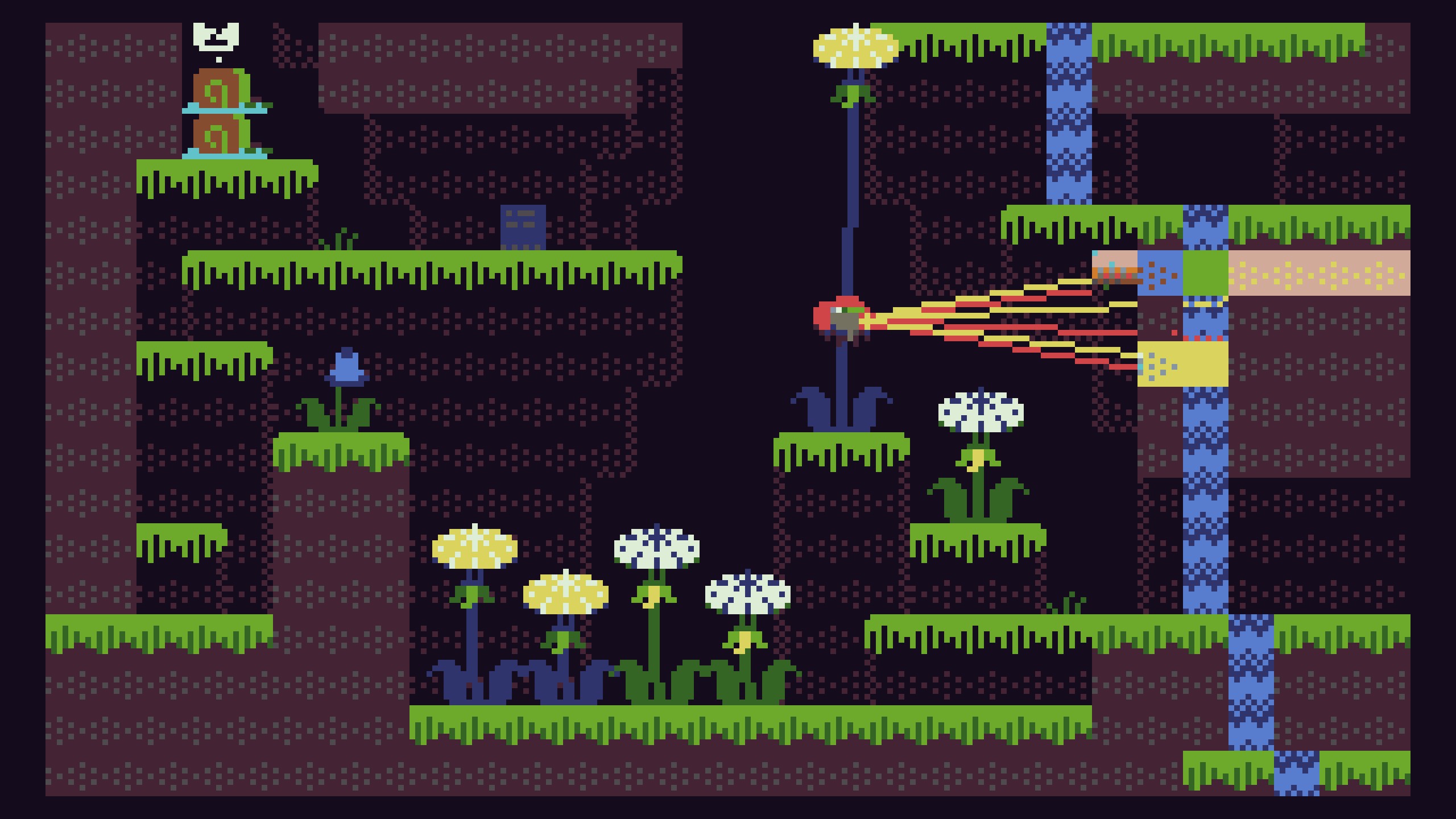
In EMUUROM, rather than attacking creatures, you hold a button to blast them with the light of scientific curiosity. Keep the cone of that light trained on a creature long enough (not always an easy task), and they’ll be added to your emuudex, along with a short blurb about their behavior. Scan others of the same species, and you’ll eventually earn a second blurb, often containing a critical hint to a puzzle. The inspiration is Metroid Prime, a fact that becomes even more obvious when you discover the scanner’s secondary use: finding secrets.
EMUUROM’s scanner can be aimed in all eight directions. What’s more, its range is infinite, only terminating when it hits a scannable object or wall. That’s pivotal because EMUUROM’s map is riddled with tiles which look impassible, but you can actually walk right through. In most metroidvanias, detecting such false geometry requires up-close physical examination, which often necessitates laborious platforming. EMUUROM’s scanner reveals those same false walls remotely, with the press of a button and tap of the d-pad. If you’re scouring the world for secret passages, this is like upgrading from a toothbrush to a power washer. It’s nothing short of transformative. Drudgery becomes delight.
Of course, EMUUROM has to reckon with this by finding another source of difficulty. It does this by centering the experience not around locating secrets, but figuring out how to reach them. In a traditional metroidvania, your means for doing this would either be damage boosting, pogoing, or, if you’re a square, coming back after you’ve upgraded your movement abilities. In other words, once you know where a secret is, you’re 90% of the way to getting it. EMUUROM is different.
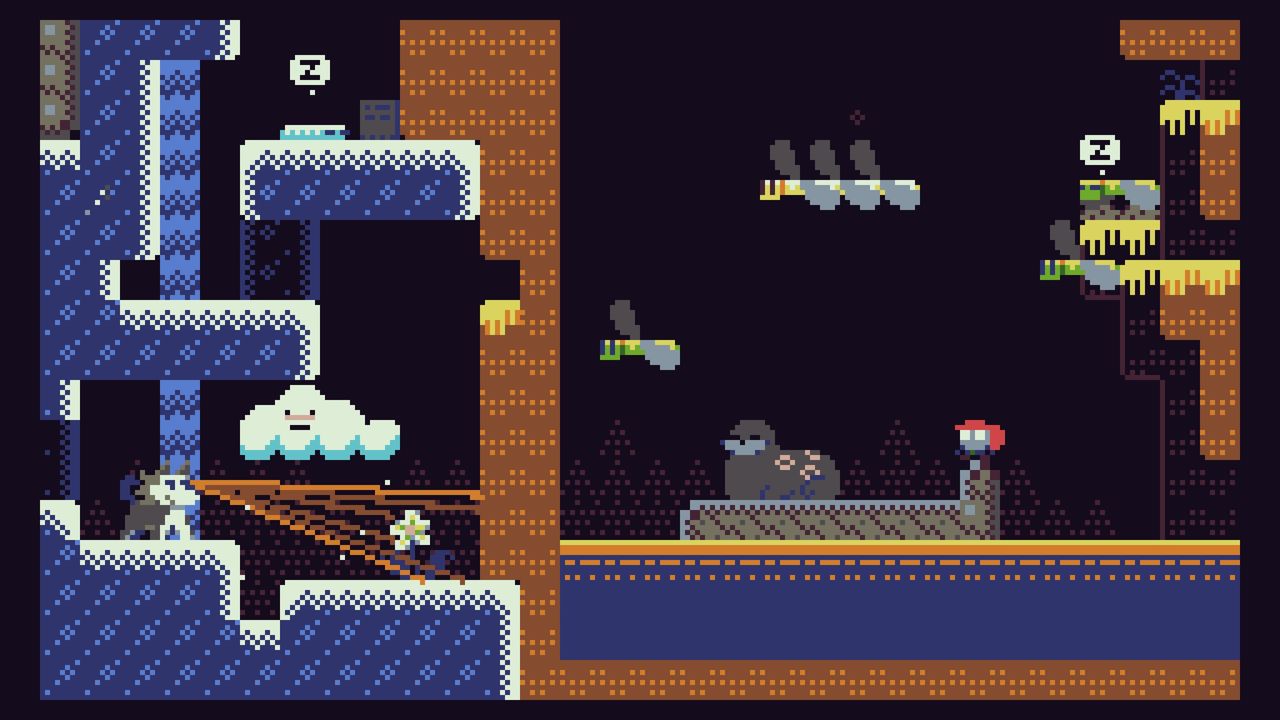
Being a “non-violent” game, it doesn’t have damage, nor attacks, nor a double jump (well, not since they patched it out!). Rather, its core traversal gameplay is weird cross between Toki Tori 2 and Leap Year. Using the ecological knowledge you acquire through observation and scanning, you might draw the attention of a roosting bird, then ride atop it back to its nest, or maneuver a worm into just the right spot so you can trampoline off of it to a distant ledge. (Protip: worms are bouncy!) Individually, these interactions are nothing special, but the way the game intermingles them and entwines them with the level design makes for all kinds of gleeful surprises. And deeper into the game, well…let’s just say things accelerate. Many of EMUUROM’s endgame “puzzles” had me whooping in victory, or simply murmuring, “Damn, that was cool.”
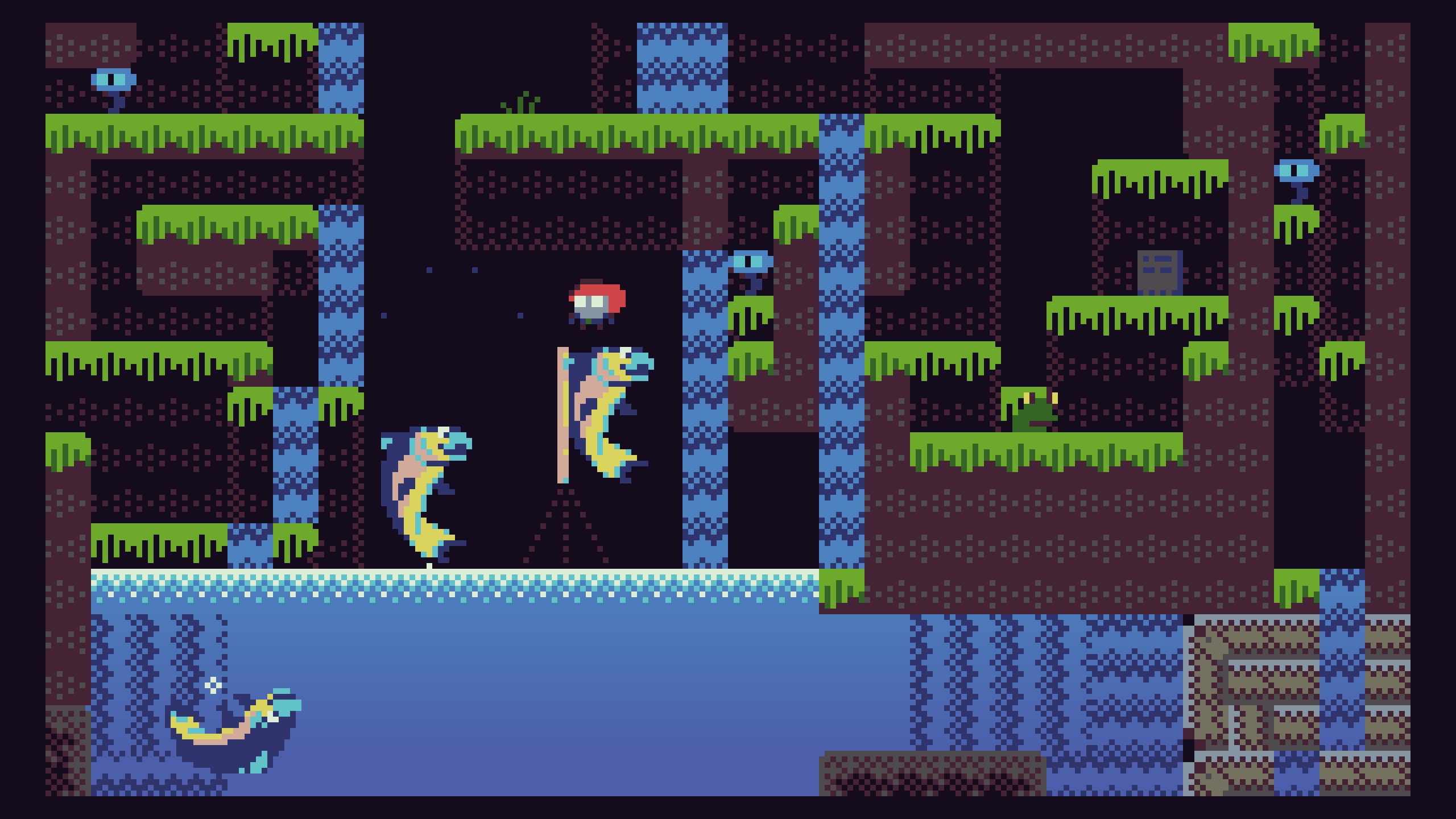
A portion of that enjoyment, and another core reason why EMUUROM never wore on me, arose from a factor I’ve yet to mention: the jank. While playing, I was constantly barking things like, “Was that supposed to happen?” and, “What the &^#$?!” Try juggling a live sorsa while platforming across a bunch of leaping salamon, and you’ll understand. This fiddliness could have easily thrown me into a rage, and for less patient players still might. What not only rescued the experience for me, but swung it back around to a positive, is twofold. First, a jank-induced pratfall rarely results in much lost progress. Second, the game extends the power and freedom of its chaos to the player as well. I can’t count how many times I circumvented an obstacle and was left wondering, Was I supposed to be able to do that? It’s as though the dev had a bunch of speedrunners playtest the game until they found all the exploits, then rebuilt it from scratch to require those exploits. This is all to say, it’s hard to be bitter toward a game that’s constantly making you choke with laughter.
Levity aside, the scanner’s illuminating beam only aids you as far as you can see it, so if you’re on the hunt for a particular secret, you’ll still need to figure out which screen to look in. Fortunately, EMUUROM mitigates this potential search space overload with some clever and benevolent design choices. A small, densely coiled map means the thing you want to investigate is never more than a few screens away, and the profluence of shortcuts (once you discover them) make getting there a relative breeze. Better yet, you won’t even need to revisit locations half the time, since every line of text displayed on screen—tablets, dialogue, reports from scanning creatures—is permanently logged and accessible from anywhere. (La-Mulana players, rejoice!) This frees up the pages of your notebook for more interesting content: theories, unsolved mysteries, funny doodles…the good stuff. On top of all this, EMUUROM’s world isn’t as haphazard as it might appear. What seems at a glance to be a crazy quilt is in fact an intricate tapestry, the grain of which can help guide you to its secrets. Learning those rules, that structural continuity, is one of the game’s greatest joys.
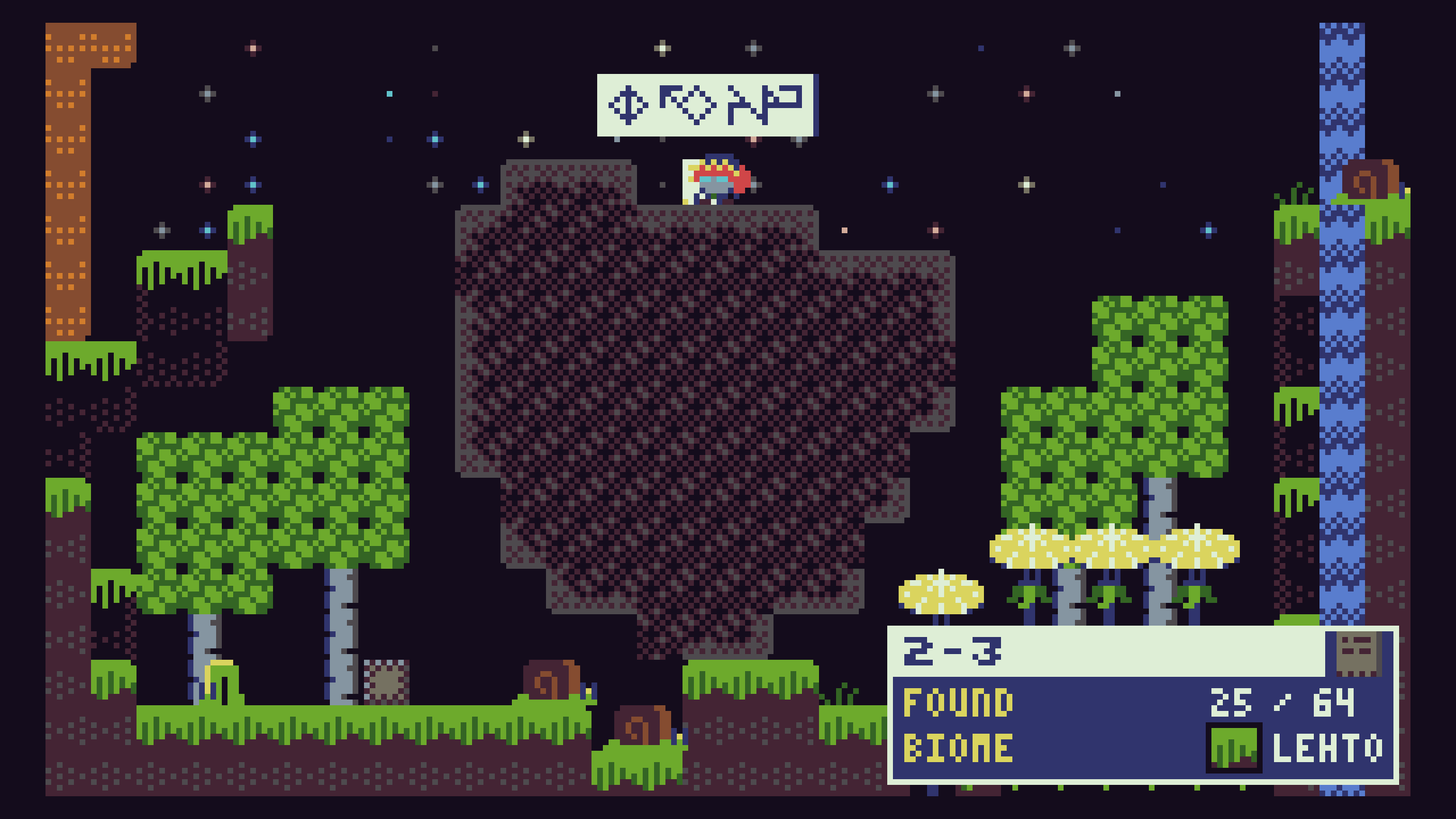
All these factors—the dopamine-dispensing satisfaction of the scanner, the tightly woven world design, the convenient quality of life features, and the comic-relief jank—combine to make EMUUROM not just a haven for quirky critters and crafty forest sprites, but a paradise for those of us obsessed with uncovering that one last hidden treasure. Just be prepared to laugh at yourself (and curse) a little along the way. And hey, if you still can’t find what you’re looking for, the option remains: break out the toothbrush and get to scrubbing.
Disclaimer: Thinky Games is a Carina Thinking Games Initiative and may have professional relationships with individuals and businesses related to the subject of this article. Please see our Editorial Policy for details.