


The first thing a game brings to mind is rarely a poem, so Cassette Boy is already in esteemed company. The poem is Robert Frost’s “For Once, Then, Something.” A narrator laments staring into a well in hopes of seeing beneath the water, “beyond the picture” of the reflection on its surface. He succeeded only once, catching a glimpse of “a something white, uncertain / Something more of the depths—and then I lost it.”
Cassette Boy brushes with philosophy in its narrative, which references a question about perception raised by Einstein: “Is the moon there when nobody looks?” The game is high-minded, but balances its metaphysical sensibility with chipper aesthetics. It’s a game I’ve had marginally more fun thinking about than actually playing, owing to its unfocused take on puzzle RPG mechanics. The handful of hours I spent with Cassette Boy frequently lost me, but its mazey world glimmered here and there with something that kept me enchanted.
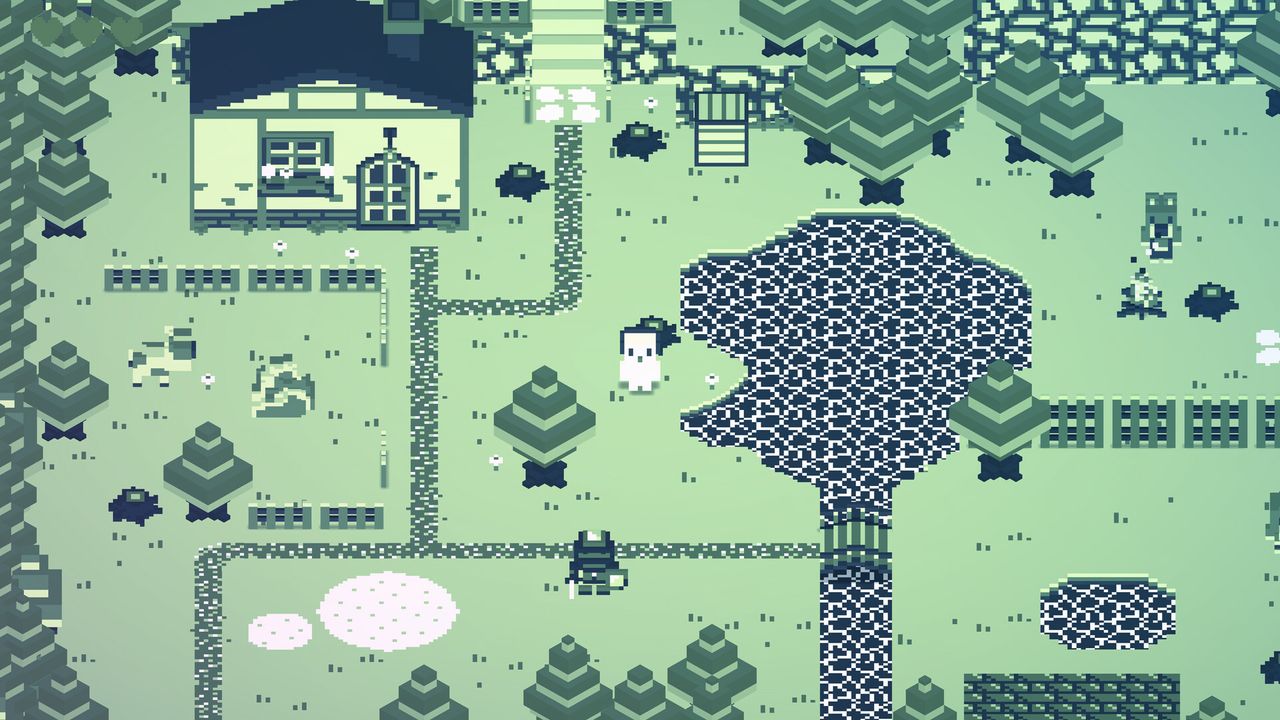
Cassette Boy’s standout mechanic is one of the best examples I’ve encountered lately of harmony between gameplay and narrative. By rotating the isometric two-dimensional world in three-dimensional space, objects in the world slip from view. When something isn’t visible, for all intents and purposes, it doesn’t exist.
Sure, this applies to the crates, rocks, and portcullises that clog Cassette Boy’s dungeons. But the trick of perspective also applies to buttons and switches, arrows in flight, and enemies. One puzzle hurled a boulder at me down a narrow corridor, and I spent minutes getting squished by it over and over again. I wished that boulder just didn’t exist. And then I realized it didn’t have to.
Challenges in Cassette Boy revolve around the question, What do you wish you could ignore? It’s a strangely indulgent fantasy for any puzzle gamer. How often is a perfect solution spoiled by one stray element? Cassette Boy’s answer is to simply avert your eyes.
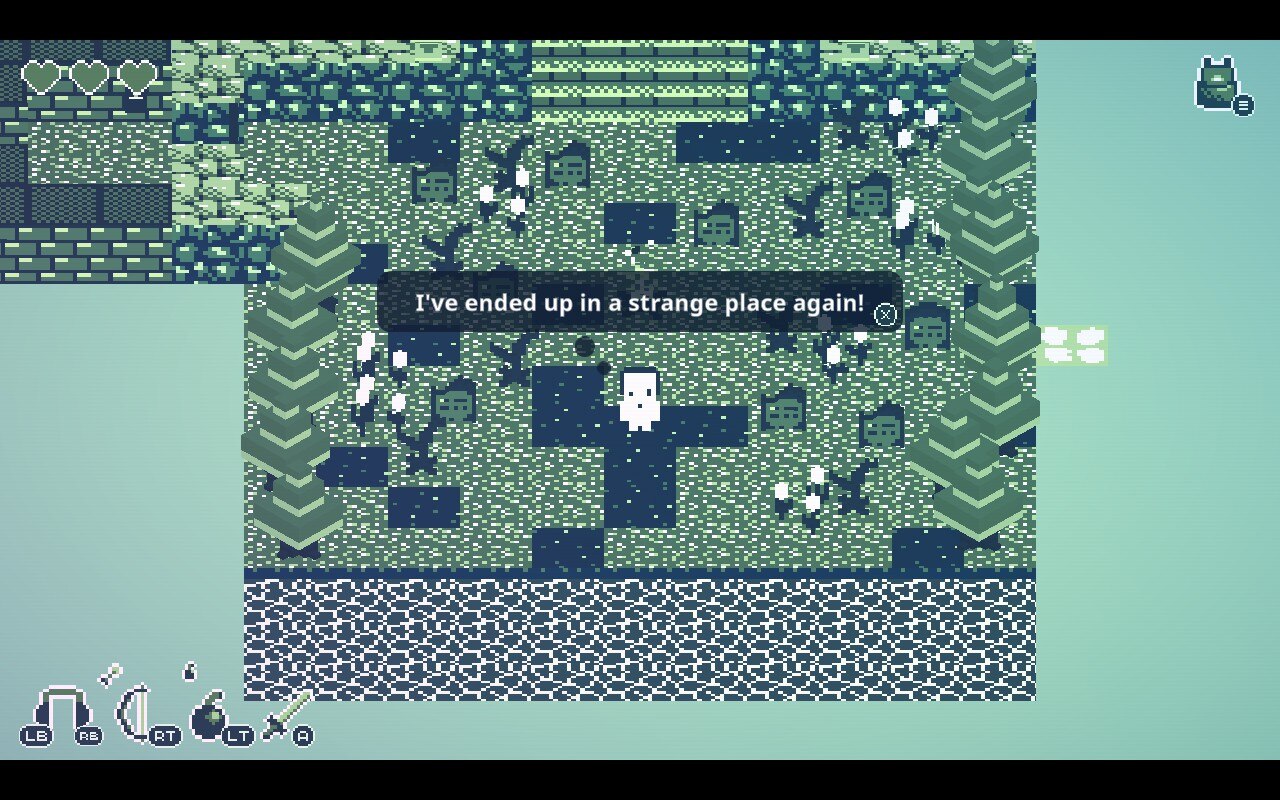
Rotating my perspective never felt obvious or natural, and while I could attribute this feeling to the originality of the mechanic (I do, kind of), I also trace it to a lack of scaffolding. Cassette Boy avoids tutorialization and repeated puzzles that might have built my confidence in the game’s mechanical foundations, relying on optional shrines a la Breath of the Wild that only sometimes have a clear connection to their surrounding puzzles. Whenever a mechanic is used one or two times, a new one is introduced—a bow and arrow, a bomb, a new kind of button. Meanwhile, I didn’t fully understand the central mechanic.
Progress comes in inches, and the best angle of approach is typically unclear. Effectively, perspective-shifting makes the world bigger, since any segment of the map may be viewed from eight angles, and those angles all play slightly differently. However, the golden path is narrow, never requiring creativity so much as logic.
Cassette Boy winds up far larger but no richer than a fixed-perspective RPG. Combined with the sore lack of a map to navigate its unsteady geography (at least in my time with the game) and a retro art style that’s charming but hard to parse, Cassette Boy often had me at a loss. Loss, emptiness, and disorientation are clearly a part of the palette Cassette Boy is painting with—buoyed by a gorgeous, dreamy soundtrack that made getting lost a delight—but not all of my getting spun around felt particularly authored.
Supporting this architecture of theme, puzzle craft, and world design are the cornerstones of a more generic RPG: stat increases, incremental damage bonuses, healing items, side quests. Rarely were these elements inspiring, but neither were they very obtrusive. I can forget I’m gaining XP until a “level up” badge flashes over my avatar. I wandered through one dungeon, lost because progress was locked behind defeating a certain enemy; I had forgotten about the enemies altogether.
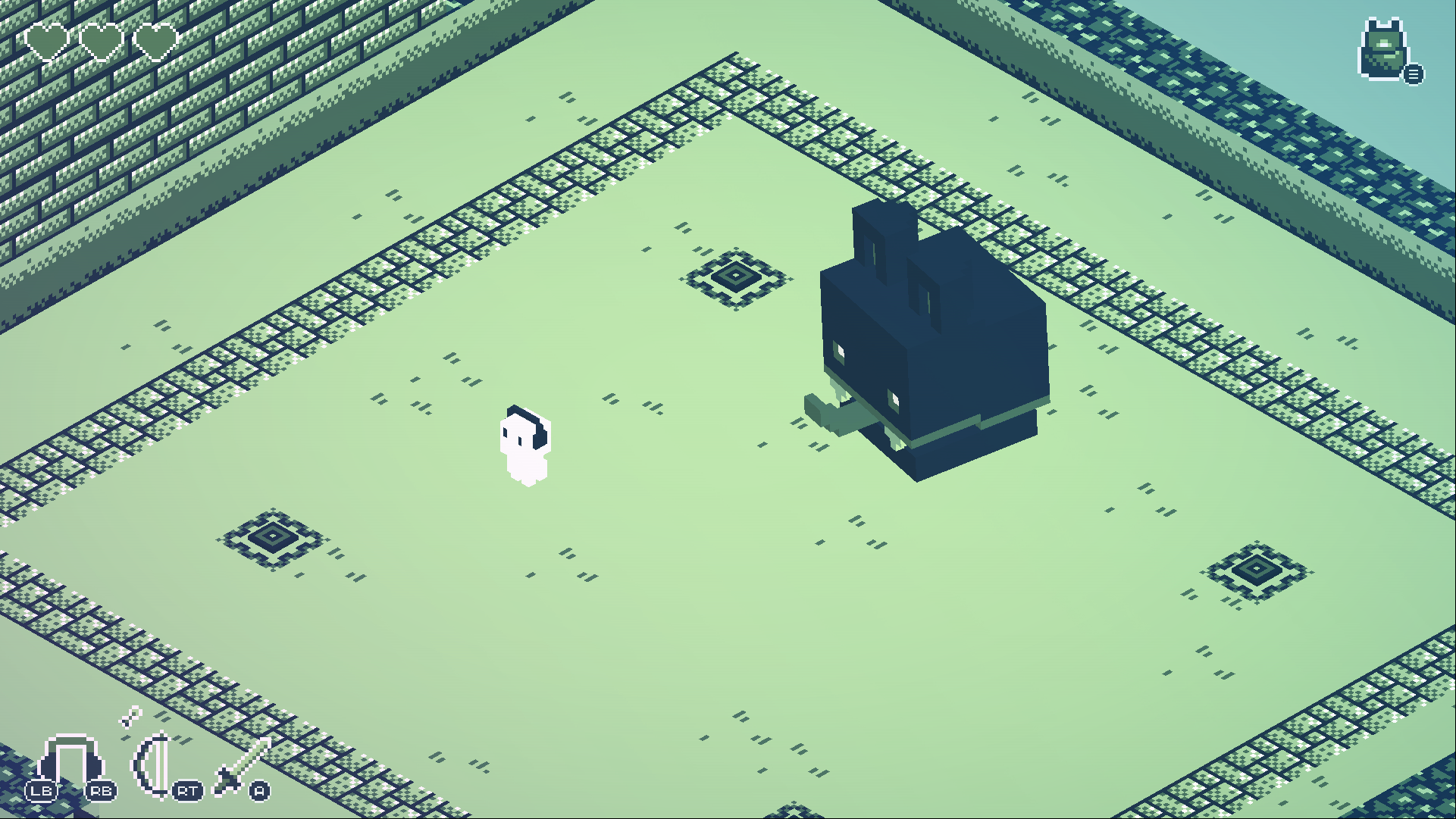
The boss fights deserve a special mention. I found two in my time with Cassette Boy, and they’re what I remember most about the experience. The first was a perfect showcase of the core mechanic as a puzzle combat engine. I’d get in a few hits, then create space by positioning the boss out-of-view, and thus out-of-existence. The fight was simple but thrilling.
My second boss fight was less stellar because it relied less on Cassette Boy’s originality. It was a standard King Dodongo type making use of my recently acquired bomb upgrade, only superficially complicated by the fact that my bombs disappeared when I couldn’t see them. In its second phase, the fight utilized perspective in inventive ways, but required tons of finagling. I haven’t found a good place to say this yet, but the controls in Cassette Boy are weird, and the unexpected precision required for certain maneuvers frequently made me wish the game was set on a grid.
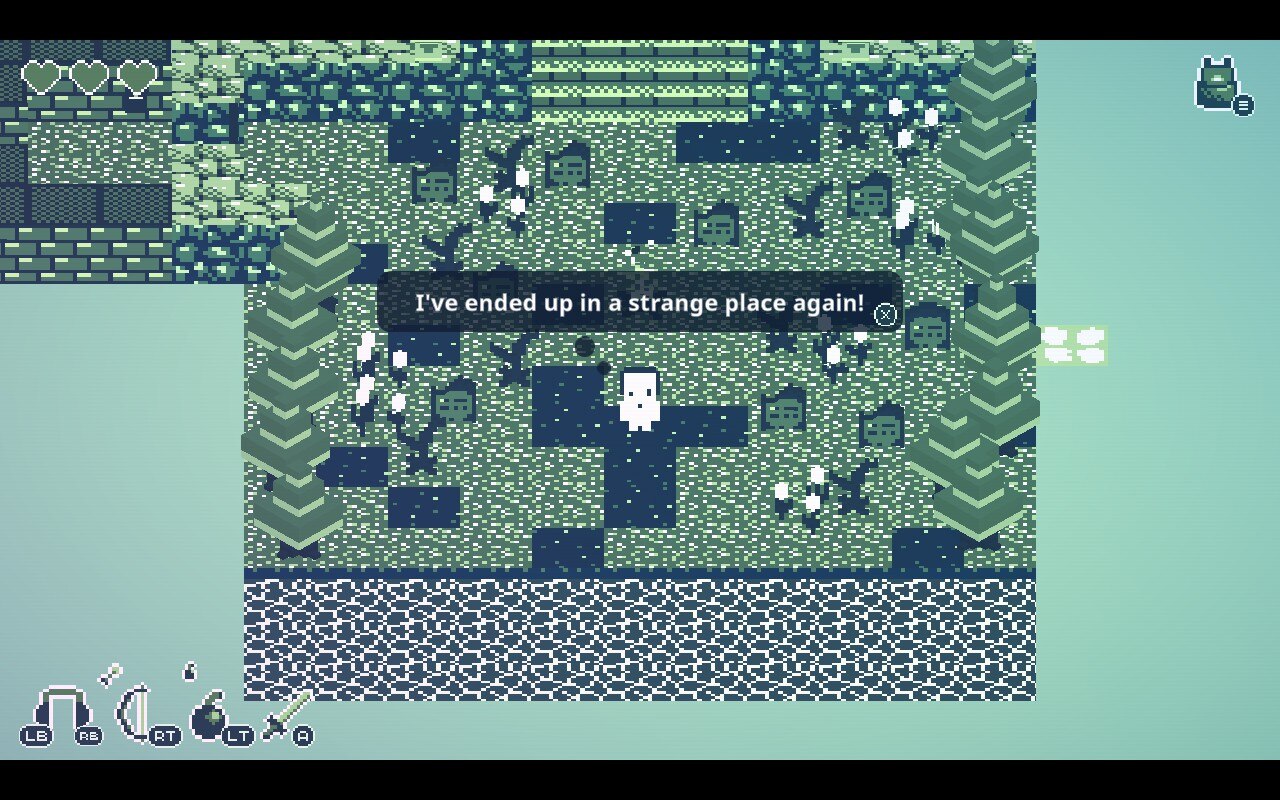
Together, the two fights capture Cassette Boy’s inconsistent greatness—and that’s where I want to leave my impression of the game. It’s slippery, brilliant, messy, fresh, and confusing. Playing it is like catching smoke, only you do actually catch the smoke sometimes, then wonder how you did it. Cassette Boy thrums with energy that I’m only occasionally able to harness. And at the end of the day, I would rather play something vexing but alive than seamless and dead.
Disclaimer: Thinky Games is a Carina Thinking Games Initiative and may have professional relationships with individuals and businesses related to the subject of this article. Please see our Editorial Policy for details.