

-1280x720.png)
.png)
The Myst series, torchbearer for the first-person point-and-click genre, centers around the fictional concept of the “Linking Book”, the idea that entire worlds can be written into existence, made real simply by scribing their intimate details—then teleported into via shimmering title page portals. Pick up a pen and create a new world. Open a book and be transported to one. With Neyyah, developer Aaron Gwynaire has written a Linking Book to an Age of adventure games I assumed long dead, a golden Age of glistering sunsets, confounding contraptions, and delightfully campy characters. But is it an Age worth revisiting? And does Neyyah truly take us there?
Like its forebears, gameplay in Neyyah involves clicking around the environment, jumping from one pre-rendered CG image to the next. Modern games have mostly scrapped this system, and for good reason: keeping one’s bearings while navigating non-orthogonal environments is near impossible, and being shackled by the developer’s sense of what does and doesn’t deserve investigation is infuriating. A computer screen that seems relevant to the current puzzle? Nope, can’t let you look at that. A random rock formation on the beach? Stare as long as you like!
On the upside, this slideshow format allows the game designer to, like a photographer, curate the composition and lighting of everything the player sees. Neyyah leverages this to impressive effect. Its scenes are sharp and evocative, sometimes breathtaking, and the artful way it pairs music and ambient sound effects with its vistas amplifies the immersion. The creaks of an old rusted railing, wooden planks groaning as the waves crash over them, the clicks and whines of insects lurking in the reeds. It’s fantastically transportative.
.png)
My one gripe here is the lack of diversity. In Neyyah’s most direct inspiration, Riven, each of the world’s islands had a distinct look and feel—a lush jungle, a volcanic crater, a craggy plateau. There was even lore to justify this variation. Neyyah’s islands, meanwhile, feel like the same tropical landscape in different lights. Not identical, perhaps, but a distinct aesthetic identity is absent. Combine this with the fact that Neyyah is a far longer game than Riven—around twenty hours compared to Riven’s twelve—and the issue intensifies.
Back to positives. Character interactions happen via green screen FMV, and the results are pitch-perfect. Maybe I’m weird, but the “secret portal” line delivery in Neyyah’s trailer sold me on the game outright. If it tickles you the same way, know that the full game delivers plenty more hammy moments. Shoutouts to the actor portraying Smollax, whose Mad-Max-villain theatrics had me giggling every time.
.png)
.png)
The computer terminal interfaces are also a joy. It’s bang-on Y2K web design, reminiscent of that vivacious, maximalist era when every front page had an embedded Flash intro animation, all vectorized and faux-futuristic. Neyyah reaps this nostalgia without sacrificing immersion. A feat worth applauding. #
If you’ve watched Neyyah’s trailers, I doubt this review so far has surprised you. That’s about to change. See, Neyyah is more than a Myst-like. It’s a research game.
From the outset, the game bombards you with text. Without access to the games’ scripts, I can’t be sure, but I estimate Neyyah’s word count to be around ten times that of Riven. Much of that is skippable lore, but just as much isn’t, and with no obvious means of differentiating, you can’t afford to not read something the game offers you. (Contrast this with the actual gameplay, where Neyyah does a great job signaling which elements of the world are interactable. I can’t recall a time when I got stuck due to failing to hunt down the right pixel. The tuning here is just that good.)
.png)
Then there’s the verbiage itself. The proper nouns in Neyyah are arduous to parse, let alone pronounce. This emphasizes the alienness of the world, which is cool, but it also makes keeping track of objects and people and locations a royal pain in the ass. The game is constantly dropping terms like “Felitsu Island Gufunkye Zone” with no explanation. Pepper this with fragments of a literal alien language—which my play partner fondly termed “Japanese Braille”—and reading becomes a puzzle in itself.
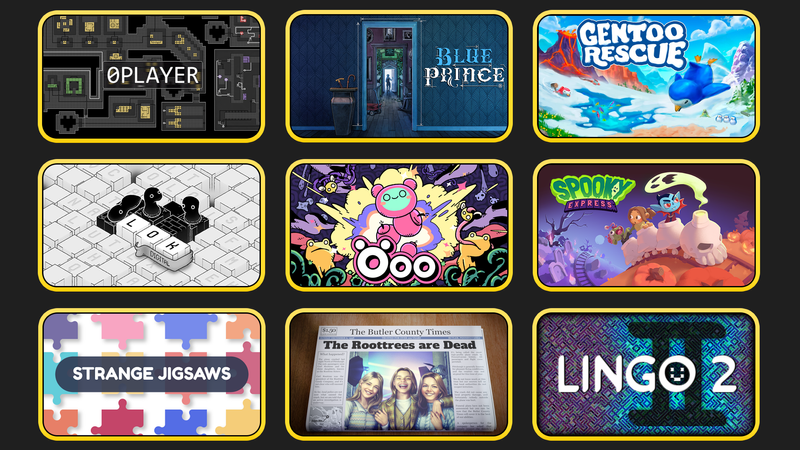
As the kind of word-brained weirdo who enjoys games like Epigraph and The Roottrees are Dead, I initially relished this aspect of Neyyah. By the end though, I began to resent it. After all, the game world is so rich and vibrant that it feels almost blasphemous to be learning about it through some engineer’s diary, rather than direct observation and experimentation.
.png)
Then again, the line-level writing in Neyyah is very strong, sometimes beautiful. The lore is deep and interesting. If you can stomach the reams of text the game throws at you, you’ll be fascinated from beginning to end. And if that just isn’t your thing, the game includes two separate in-game guidance modes—with varying levels of pop-ups, highlighting, and overt hints—to help you sort your Pelskas from your Payeetas. Just know how much content you’ll be skipping by using them.
Critics of Riven often point out that it only has three, maybe even two, puzzles, depending on your definition. What they don’t mention is that those 2-3 puzzles are each enormous, requiring the player to string together clues and cross-correlate symbols and sounds and numbers across 5+ islands. Neyyah has a lot more than 2-3 puzzles, however none of them are as vast as Riven’s, nor as elegant. Judged in isolation, they are satisfying obstacles to overcome, and that’s all. To be fair, Riven’s puzzles weren’t all that genius, but they made up for it with just how fiercely interwoven with the game’s ecology and culture they were. Neyyah gestures at this, but for my taste, the endgame puzzles don’t feel grand enough to distract from their own contrivance. A shame, when there was so much lore there to draw from, the building blocks of a truly satisfying metapuzzle ready and waiting. Take the world’s local fauna for example, which, despite hopping and slinking across your path frequently, are virtually unused as a mechanic. Riven players know.
.png)
Earlier I compared Neyyah to one of the Myst series’s Linking Books. The thing is, there are actually two types of magical tome in Myst: Linking Books and Descriptive Books. A Descriptive Book defines a reality, collapses it from the infinite quantum possibilities, makes it tangible. A Linking Book merely acts as a portal to such a world. It seeks not to create, but to connect. If Neyyah were a Descriptive book, I could overlook its flaws, but the truth is, Neyyah is a Linking Book. It offers the player a portal to an Age of puzzle games gone by.
That isn’t a criticism in itself. Nostalgia has undeniable value. But if your goal is nostalgia, Linking, then you better get the details right. Neyyah gets close—its aesthetics are near flawless, its worldbuilding deep and fascinating—but when it comes to its puzzles, and its overreliance on verbal exposition, there are chapters unwritten and pages ripped out. This is not to say that Neyyah is a bad game. It’s great, and I recommend it to any fan of the genre. Rarely did it frustrate me. Never did it bore me. It’s packed with interesting, rewarding moments. It’s a frankly mind-blowing accomplishment for a (mostly) solo indie developer. Its imperfections only become apparent when compared to the games it worships and attempts to replicate.
Despite those imperfections, Neyyah is a shining, perhaps vital addition to a genre often forgotten—proof that while the Age of Riven hasn’t returned, neither is it lost forever. We just need to remember the words to take us there.
Disclaimer: Thinky Games is part of the Carina Initiatives and may have professional relationships with individuals and businesses related to the subject of this article. Please see our Editorial Policy for details.