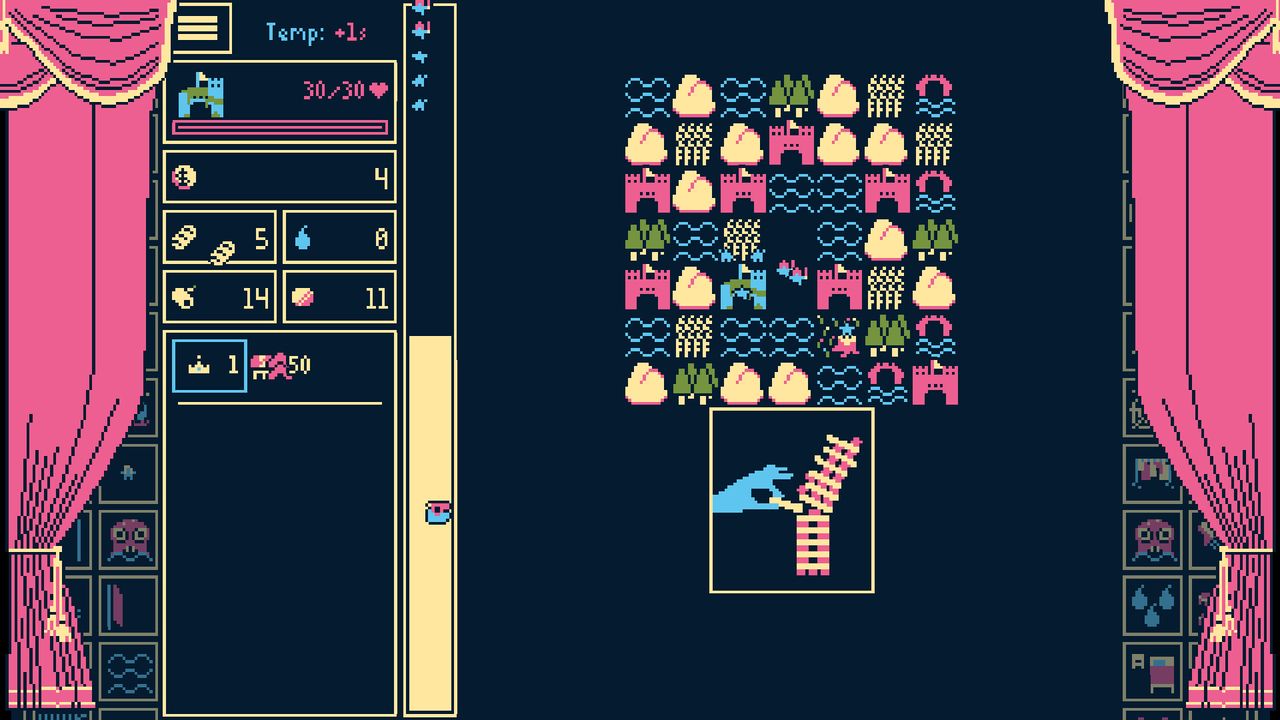
A strategical twist on match-3 set in a surreal realm of faeries and baseball references.


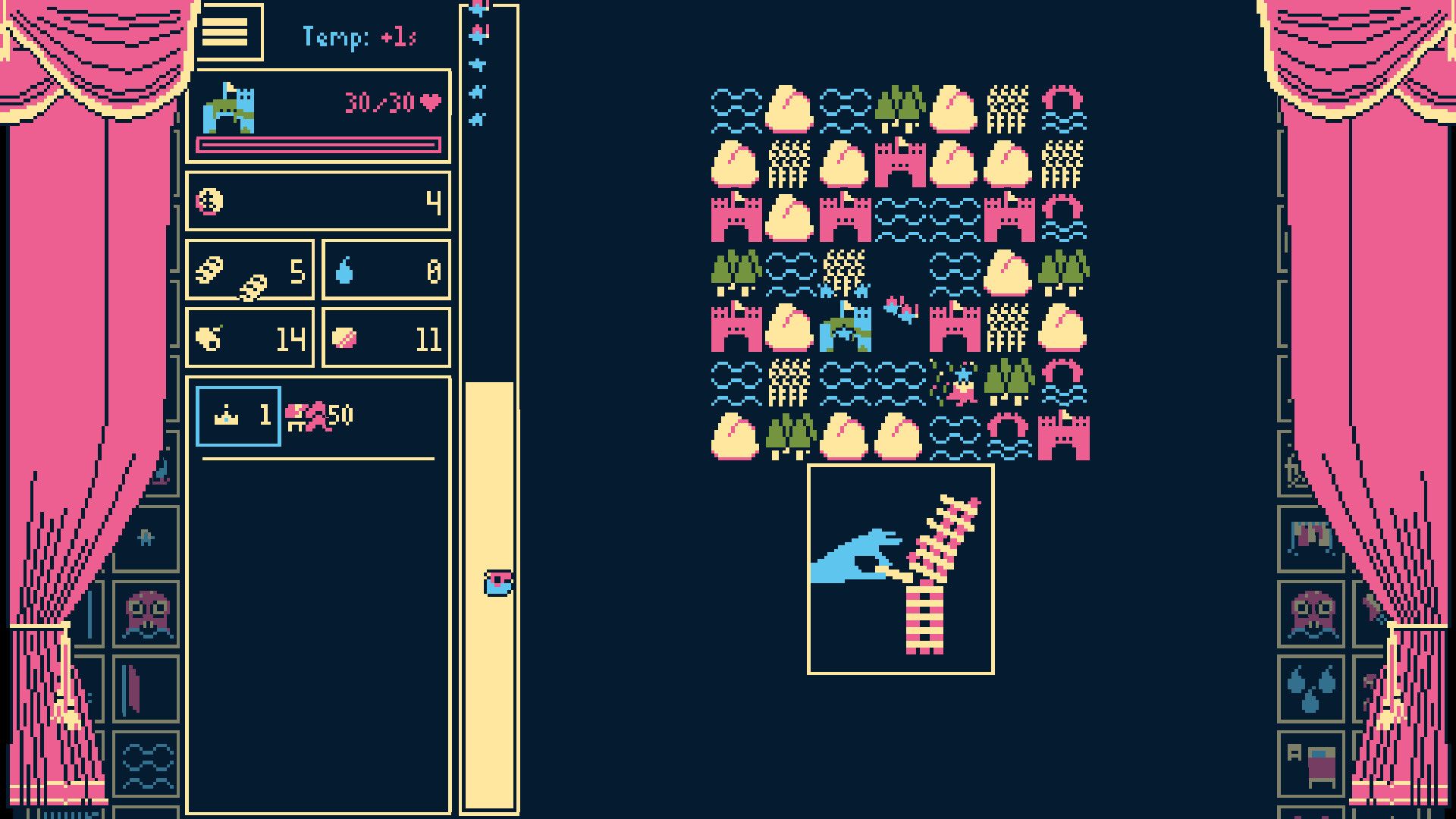
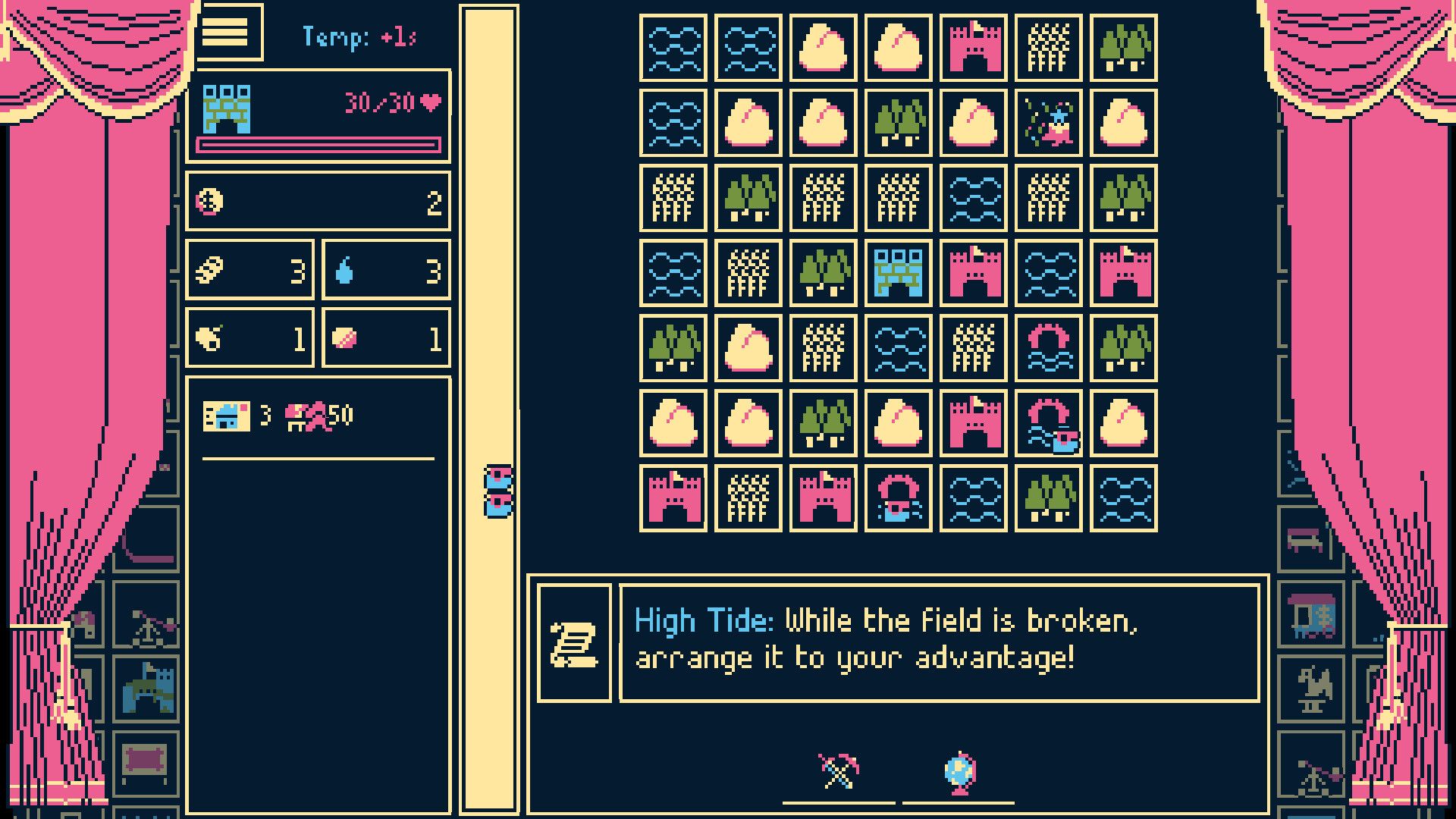
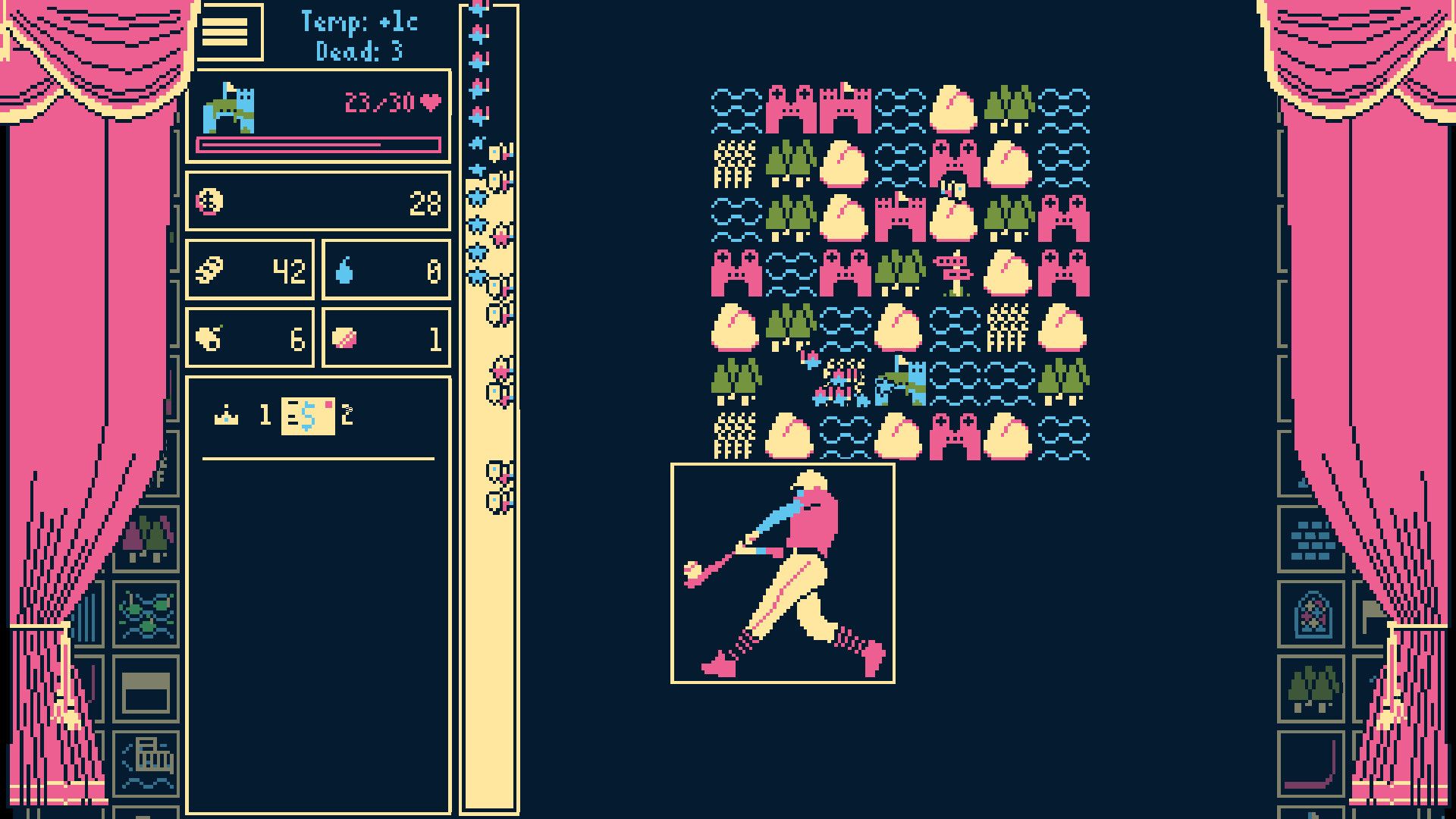
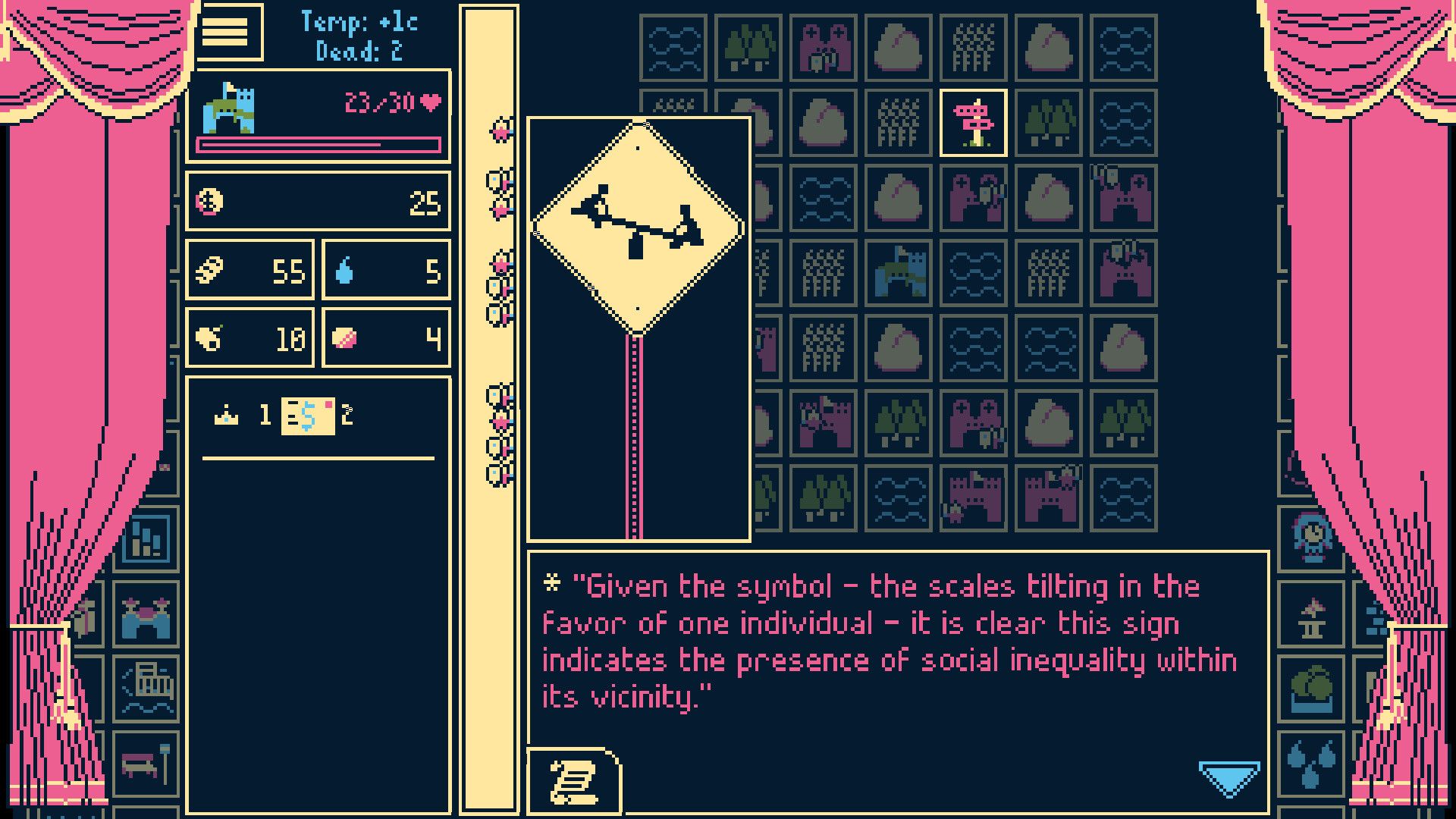
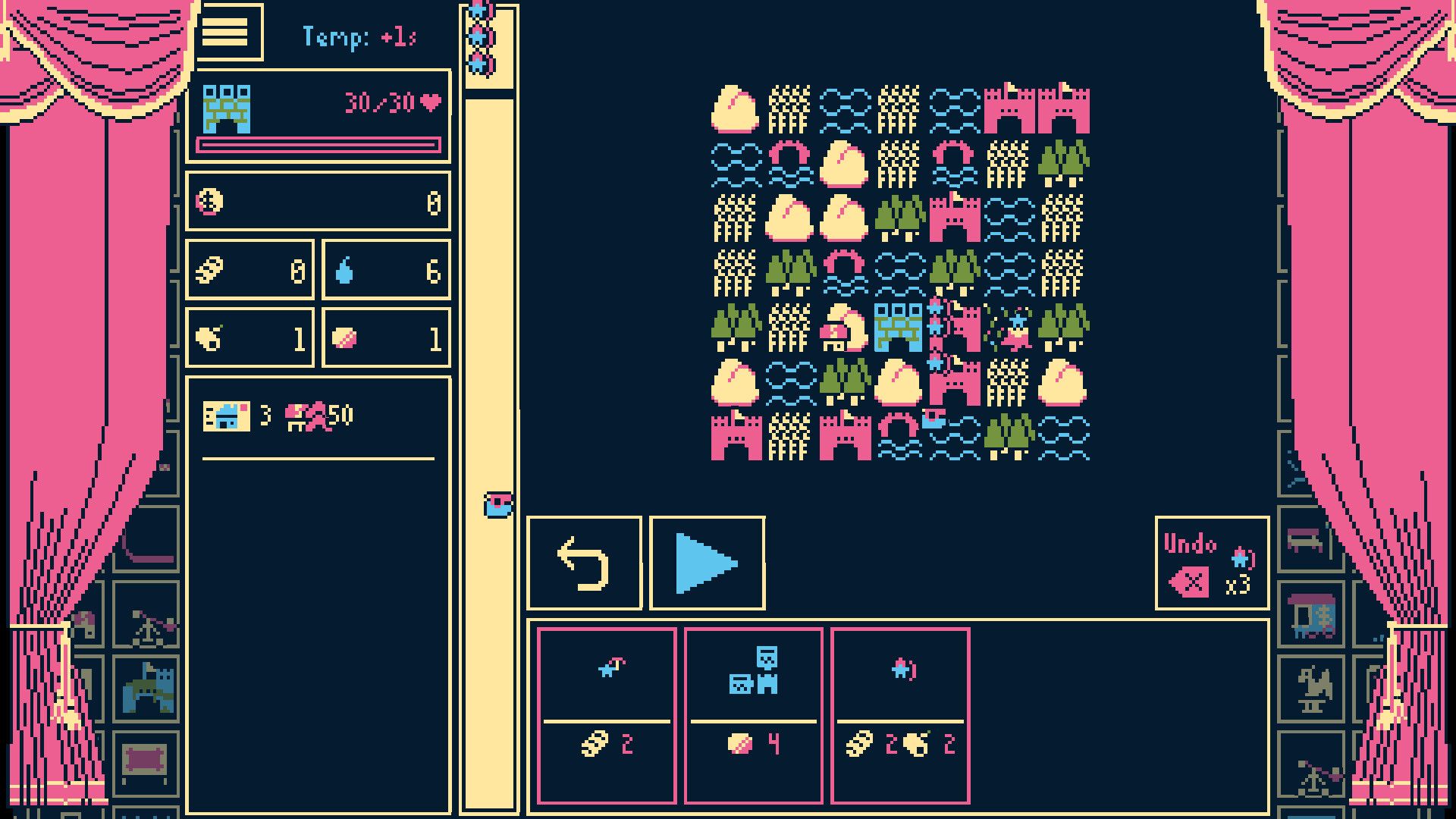
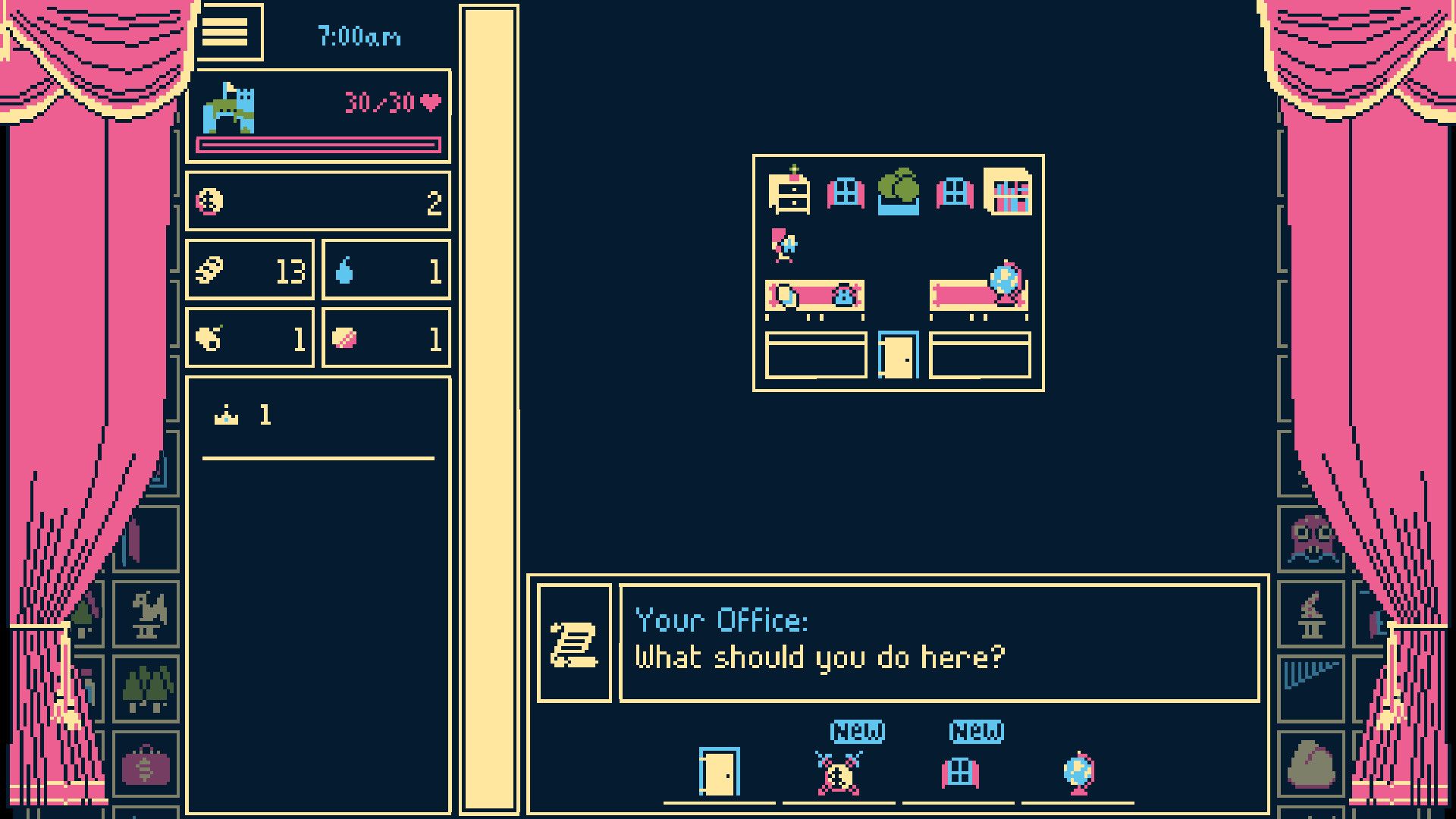

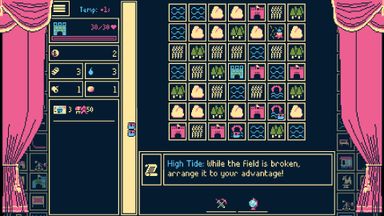
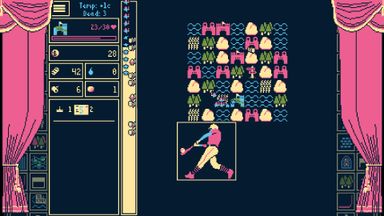
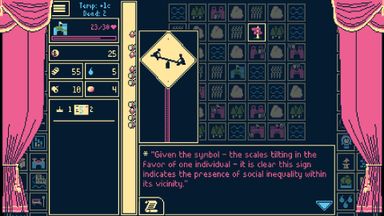
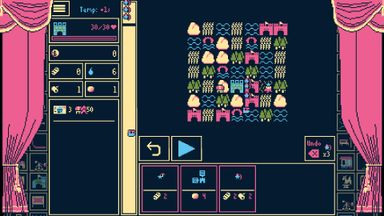
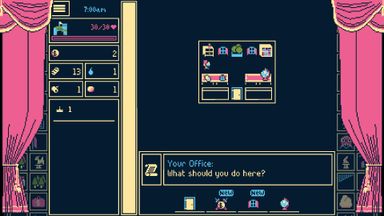
Titanium Court is a match-3 autobattler strategy game about fighting a pointless war for a bizarre faerie court. You must rearrange a tile-based battlefield and gather resources, then use the resources to deploy units to defeat the enemy. In addition to its unusual mechanics, Titanium Court stands out for its complex, offbeat plot and distinctive pink and blue pixel art aesthetic.
The game starts with you finding yourself transported to a faerie court, which immediately pronounces you queen and announces that you are now in command of the war that’s currently being waged. All the faeries are immortal and the battlefield magically resets every night, so whether you win or lose has very little consequence on the ongoing story, but you will be trapped in the court waging war until you find a way to escape.
The battlefield is a grid where one square contains your court and the other squares contain either enemy courts or terrain such as water, hills, and forests, which sometimes also have special amenities like stores or loot boxes. During the first phase of the battle, you use match-3 rules to clear terrain and rearrange the battlefield to your advantage. For instance, you might match enemy courts to get rid of them, or place water so that it cuts off enemies. When you match terrain, you gain the corresponding resource. You can also move your court, regardless of whether it creates a match. There’s no timer, but you have a limited number of moves, and then the second phase of the battle begins.
During the second phase, you spend your resources to deploy units. Units include combat units, workers who gather resources during the battle, walls and other structures, and spells that have effects ranging from converting enemy units into allies to lighting the battlefield on fire. You can access stores and other special map locations at this point. There’s no timer while deploying either and you can undo all your choices, so you can spend as long as you want deploying units to your satisfaction.
Once your units are deployed, you can run the autobattler part of the battle. At this point, units can move around the map, gather resources, and attack enemy units and structures. Effects like fire also activate. Battles are just 30 seconds long and surviving counts as a victory whether or not you destroy all the enemies, so defending yourself and positioning yourself where you can’t be attacked is a key element of the strategy.
Each run, you play as one of a variety of jobs, each of which has its own set of starting units and a unique way of making money. One role earns money when enemies destroy your structures, while another spends health to earn money and earns health back when enemies die. A run consists of six battles followed by a boss that usually runs for two or three additional battles. Each boss has three different victory conditions: offensive (killing the boss), defensive (surviving until the end), and economic (giving the boss a specific set of resources that appease it).
The difficulty of a run varies greatly depending on your choices. There is a difficulty meter that goes from Comfort (lower difficulty) to Strife (higher difficulty); raising Comfort can give you extra resources or fewer enemies, while raising Strife does the opposite. But the game also plays with the concept of difficulty by giving you “cheating” options, such as allowing you to watch a musical performance instead of playing the boss fight, or deliberately reminding you in-game that save scumming is possible. These options make the game accessible to players who are interested in the story but do not want to tackle the strategy gameplay.
Between runs, you can explore the faerie court, talk to the faeries, and try to find a way to escape. There are keys to collect, curses to lift, and lots of secrets to discover. The writing has an offbeat sense of humor often revolving around strange faerie customs, their misinterpretations of the human world, and metahumor about the game mechanics. The art continues the sense of humor by illustrating the faerie war with pictures of sports players and musicians. However, as you explore, a serious layer to the story also emerges. It’s a many-layered game with more going on than immediately meets the eye.
This description was written by Gwen C. Katz.

Discuss this game with fellow thinky fans on our Discord
Please note: This is not an official server for this game.
| Developer | AP Thompson |
|---|---|
| Publisher | Fellow Traveller |
| Release date | 23 April 2026 |
| Genres | Roguelike, Strategy |
| Vibes | Relaxing, Funny, Surreal |
Send us your feedback, suggestions, or corrections




Defend the Earth with powerful mechs in a seamless mix of roguelike deckbuilding and grid-based tactics.
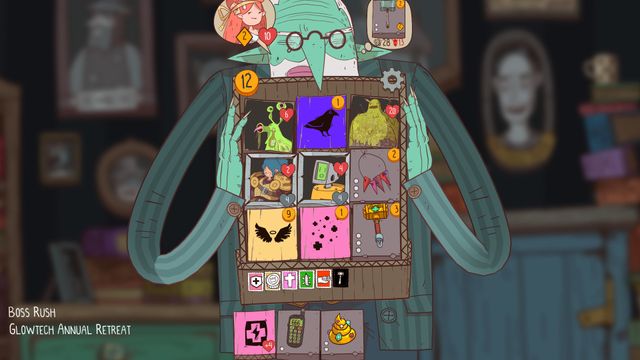







Make the best of each draw as your equipment gets mixed with off-the-wall enemies on a 3x3 grid.

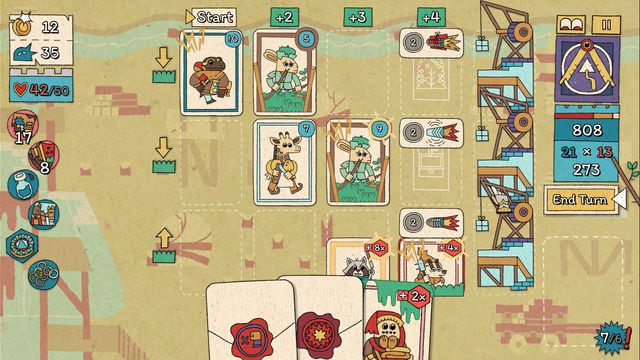
Restore your animal kingdom to glory by commanding card soldiers and creating legends.
Lead your wizarding crew through puzzly tactical challenges, rewinding at will.

Get a free thinky game to play and discuss, plus the latest thinky news and reviews, directly to your inbox every 2 weeks!