Program a transmutation engine to concoct potions and poisons.


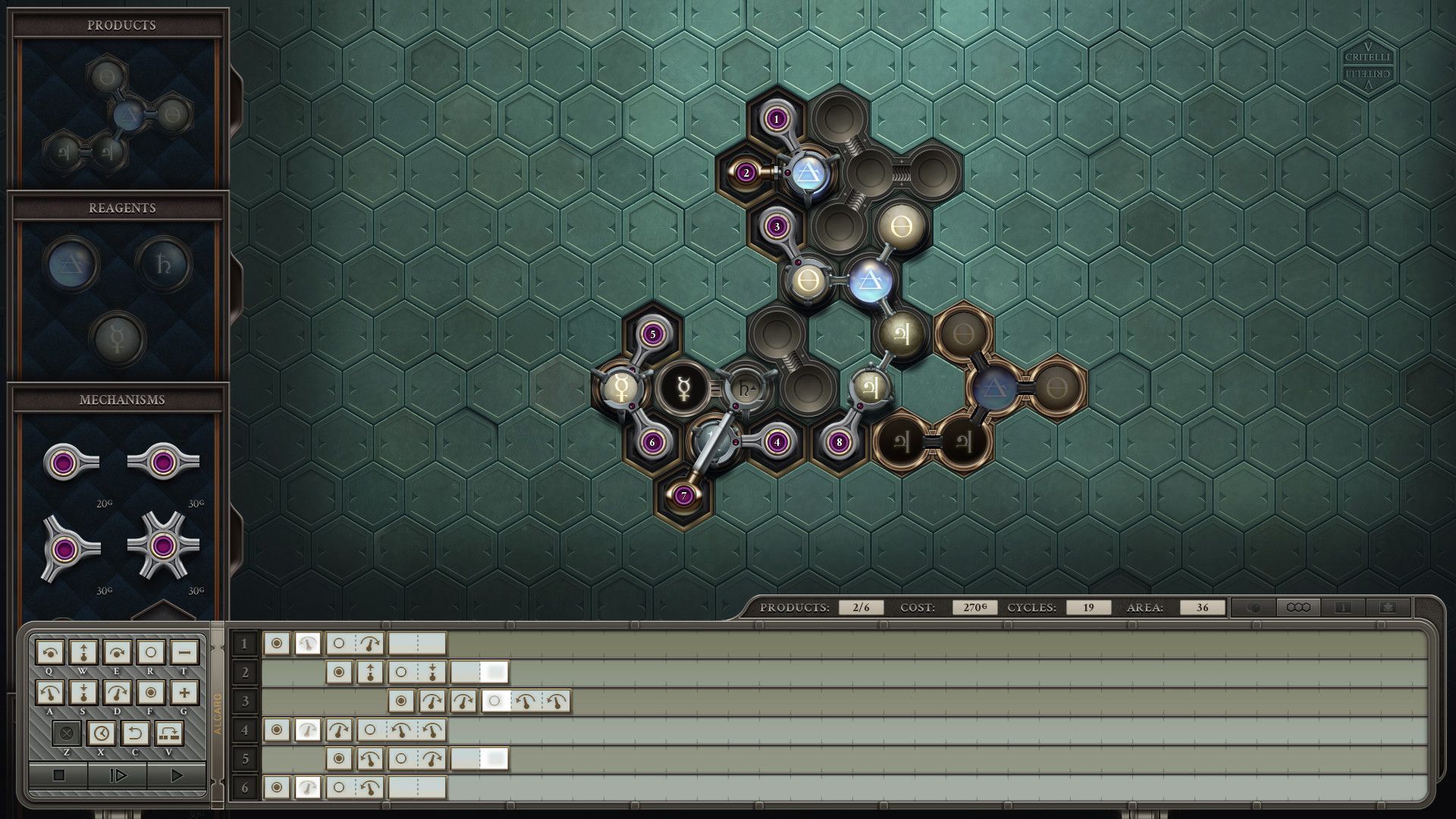
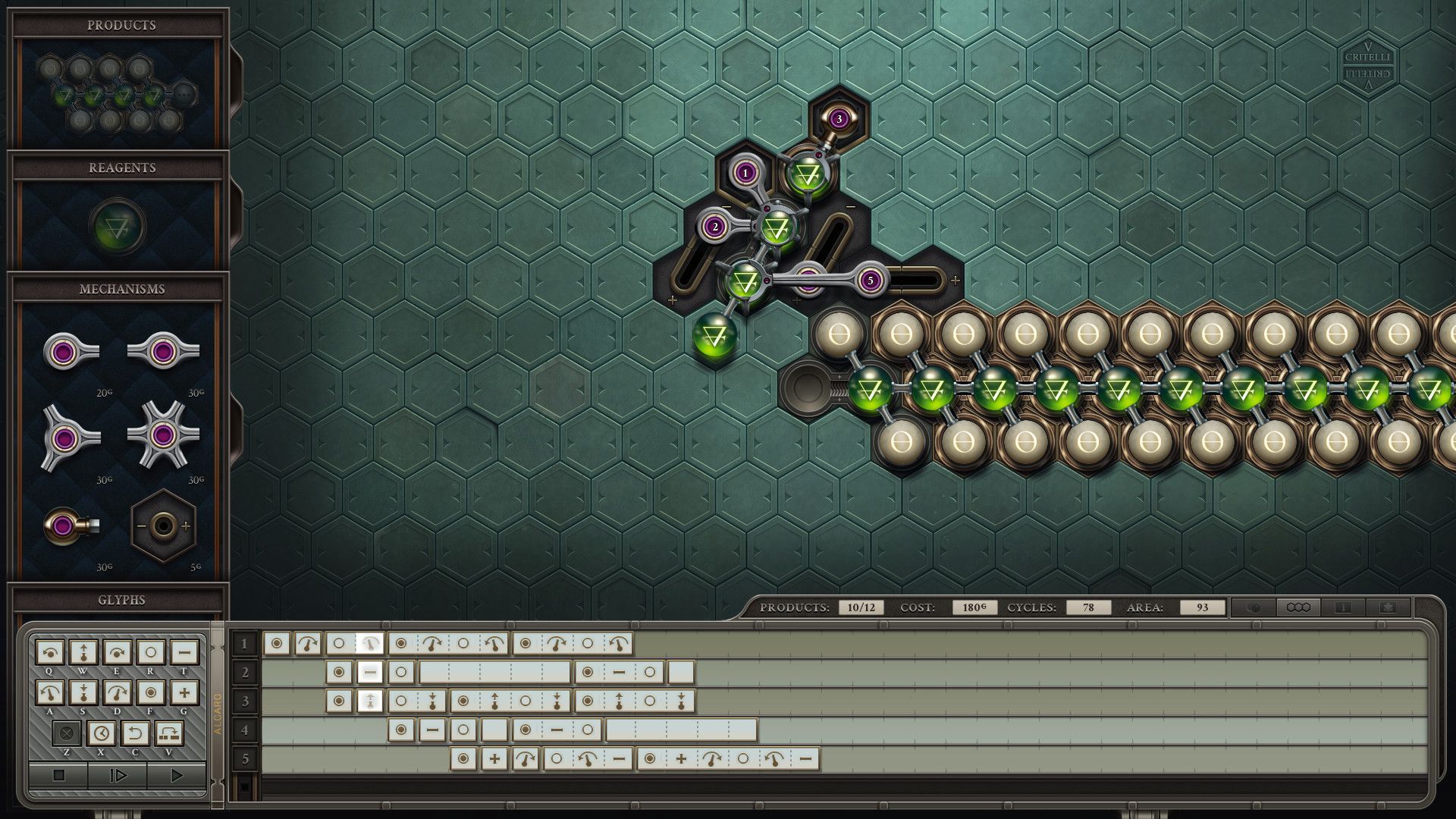
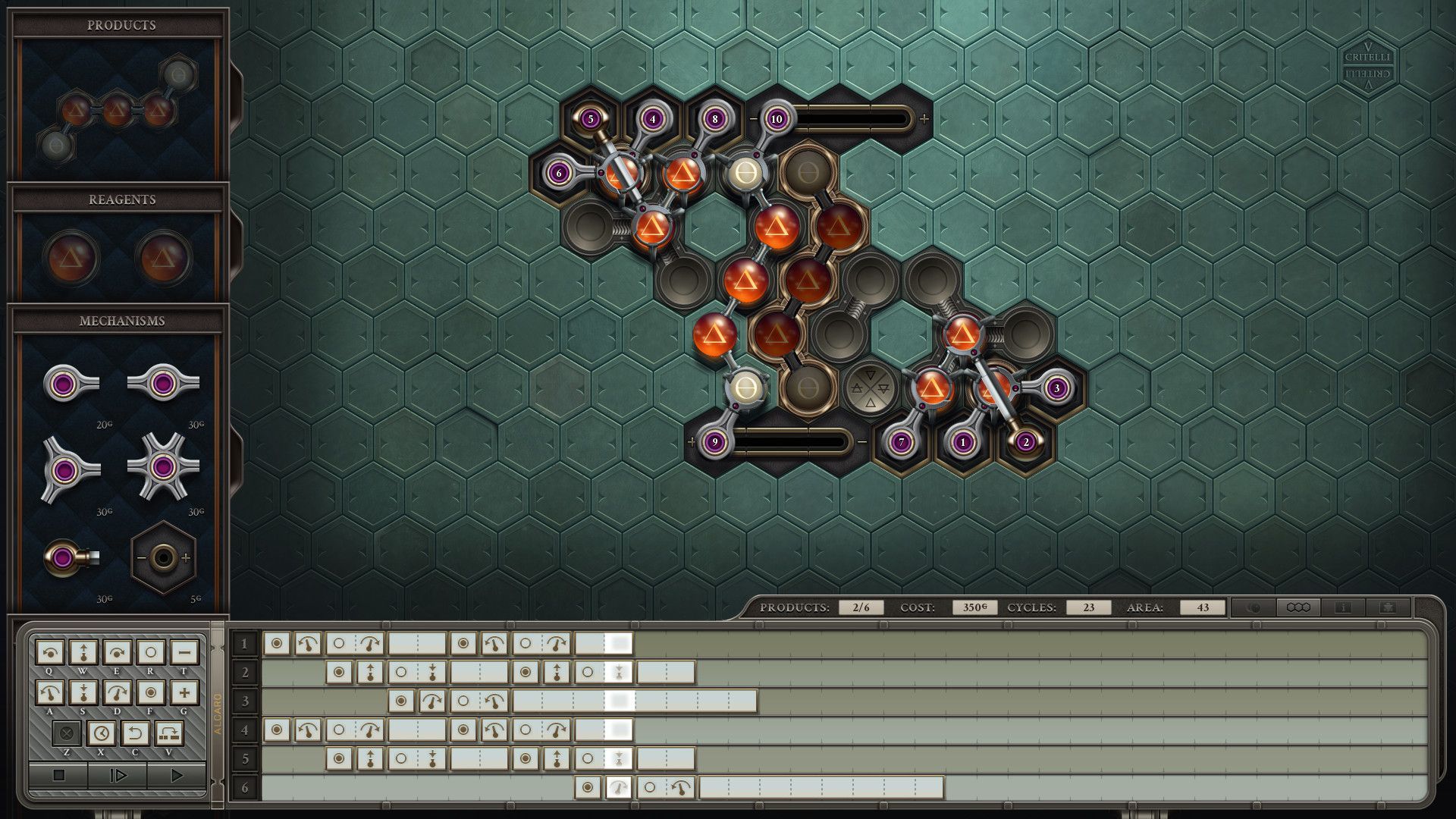


Opus Magnum is an engineering puzzle game where you play as a promising young alchemist caught within the politics and intrigue of a grand city. With just a set of simple tools, you construct intricate machines that transform and combine the basic elements of life into potions, tonics and fuels. Your contraptions can be as simple or as convoluted as you’d like as long as they get the job done, so beating the game is relatively easy — the real challenge comes from optimizing your solutions.
Each level of Opus Magnum takes place in the hexagonal grid of the transmutation engine. The engine allows you to construct and program an automated mechanism that transforms one or more reagents into a specific product. The reagents are often single elements like earth, air, fire and water, or they can be more complex structures. These elements are processed using glyphs placed in the transmutation engine; for example, the glyph of calcification will turn any basic element into neutral salt, while the glyph of bonding will glue together any elements that slot into its two open spaces.
To properly position the elements over the glyphs, you place mechanical arms that grab, swivel, and rotate them into place, manually programming the arms to perform movements using a simple visual script. However, elements can’t collide with each other, or with the bases of arms, meaning that each level tests your spatial reasoning as you try to position everything just right while avoiding collisions. Luckily, the game doesn’t expect you to create perfect machines on your first try; you can run the engine through a setup-and-play interface as many times as you want to see how your design fares, and improve it until you reach a satisfying result.
As with other “zachlike” games, the levels of Opus Magnum are totally open-ended — anything that can consistently turn the reagents into the products counts as a success. However, after beating each level, the game shows how you performed according to three metrics:
For each metric, you can see how well you did, as well as histogram leaderboards of how well all other players did. The game gives no additional incentive to optimize your machines; the only thing pushing you to seek improvements is your own desire to do so.
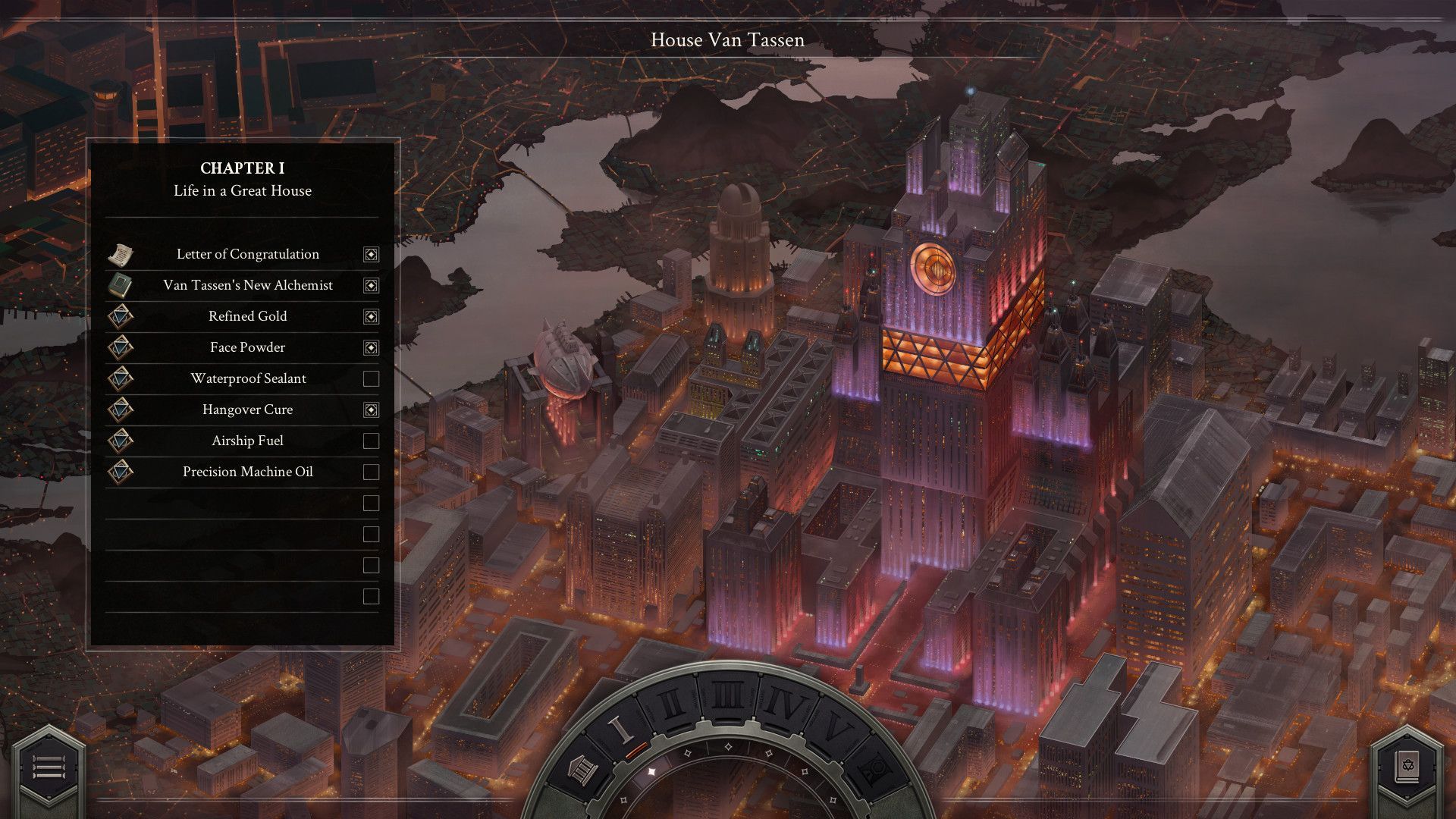
As you construct your alchemical devices, your character, Anataeus Vaya, becomes embroiled in the political tensions and conflicts between houses. His story runs through the entire game, presented as conversations between him and his peers. The narrative is well written and sometimes darkly humorous, although it’s not the focus of the game. Opus Magnum also has incredibly polished art and animations, making each completed alchemical machine a joy to behold, as polished metal arms dance and twist to cleanly slot products into their outputs. The game wisely has a feature allowing you to share animated GIFs of your creations.
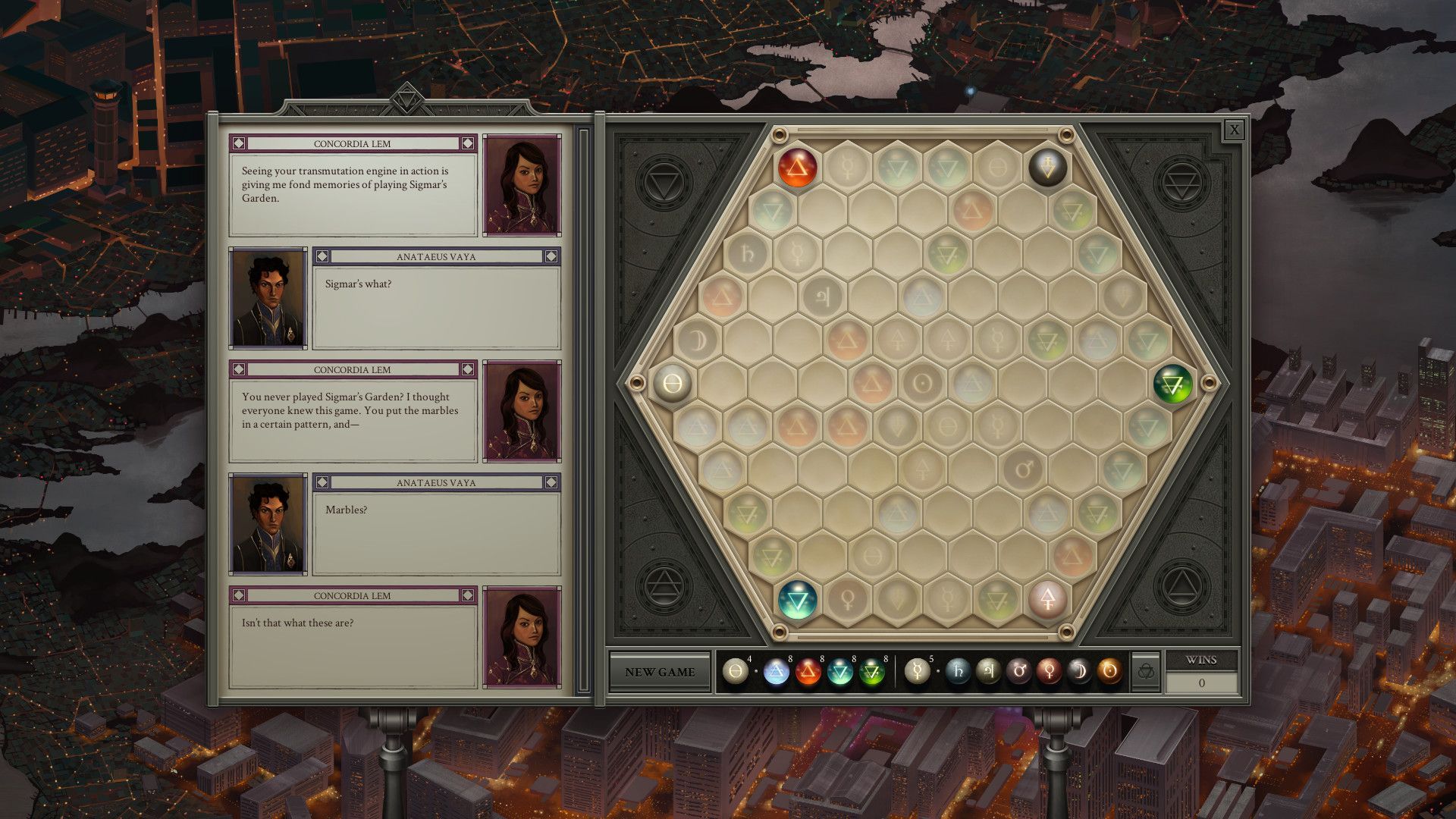
The mechanics of the game were directly inspired by The Codex of Alchemical Engineering, one of Zach Barth’s early Flash-based releases, but Magnum Opus is a much more comprehensive experience. In addition to the main campaign, there’s also plenty of extra-challenging side content, a level editor, and even a custom solitaire game.
This description was written by Asher Stone.

| Developer | Zachtronics |
|---|---|
| Publisher | Zachtronics |
| Release date | 7 December 2017 |
| Genres | Setup-and-play, Engineering, Puzzle, Automation |
| Vibes | Techy, Fantasy, Futuristic |
Send us your feedback, suggestions, or corrections





Design mechanical birds, artificial hearts and coffee machines through state diagrams.

Explore qubits, superposition, entanglement, and interference in this quantum engineering game.



Construct furniture and spaceships for your alien overlords in this 3D engineering game.


Read hacking zines and code viruses to infiltrate banks, universities, and even your own body.

Get a free thinky game to play and discuss, plus the latest thinky news and reviews, directly to your inbox every 2 weeks!