


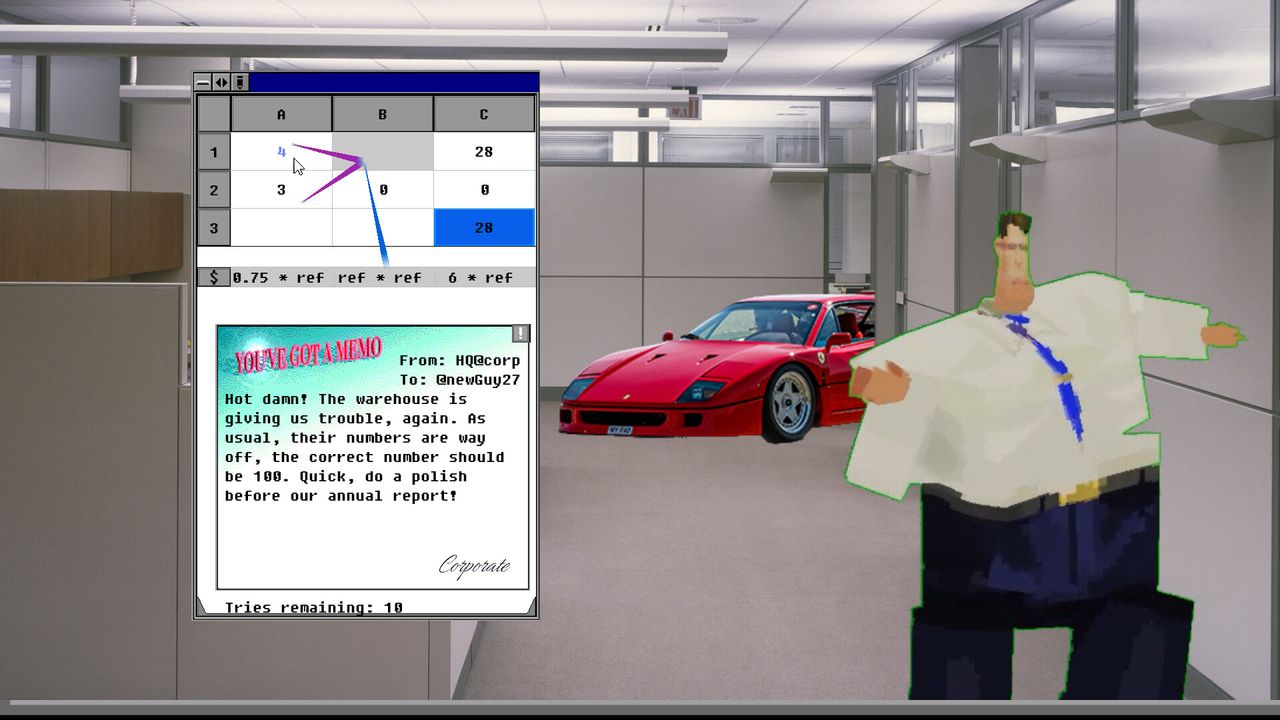

SpreadCheat is a new retrowave math game set in the testosterone-fueled world of ’90s finance. It’s tiny, only a little gamier than your standard calculator app—except that my calculator doesn’t send up a bunch of low-res jpegs of dolphins whenever I figure out an addition problem or ask me to bump lines of coke off my boss’s desk. So, there are some differences.
BroCorp is your typical ambiguous financial organization, aggressive hierarchy, incompetent bosses, shady cost-cutting strategies and all. You come in on the cost-cutting end, using your Microsoft Excel prowess to make problems disappear. “Problems” here meaning IRS audits and employees taking lunch breaks. Receive an email from corporate outlining a critical task, and complete it without asking too many questions. The American dream at work.
At least, that’s the framing—that, plus the low-poly animations, aforementioned dolphin graphics, and Clippy-like “smart” (read: possibly sentient) assistant. In practice, it’s your typical level-based puzzler with a Windows 3.11-inspired interface. Each email can be more or less ignored save for the target number it presents you with, and your goal is to reach that target by manipulating numbers and formulas in a three-by-three cell grid. Some cells are fixed, while others are filled in by your own creative accounting. Figures and formulas are handed down each level from a little number bank, so the accounting can only be so creative.
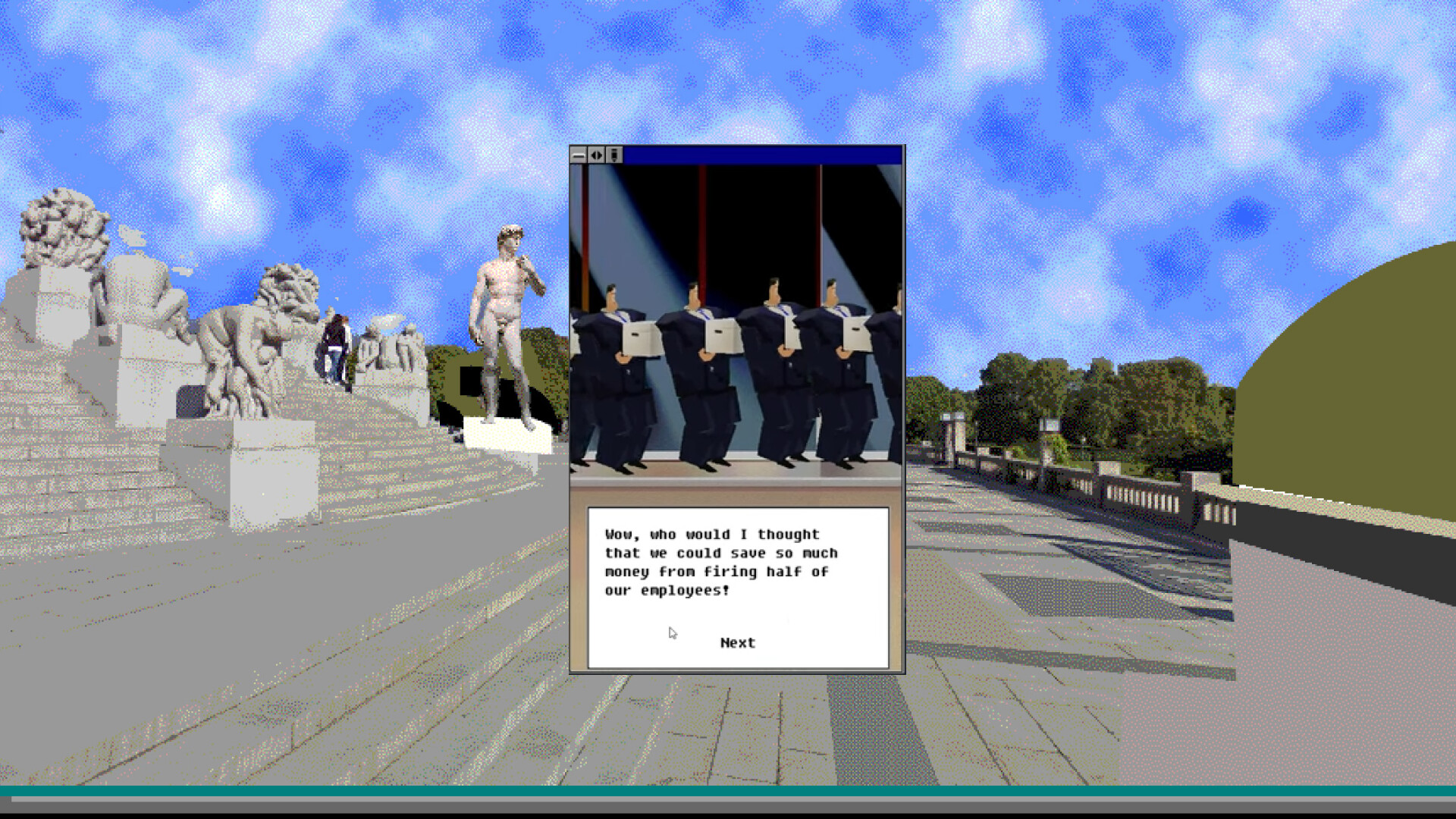
In between spreadsheets, your boss leverages your nerd talents to take care of some… let’s call them supplemental tasks, like whipping up a PowerPoint presentation or blacking out incriminating documents. These vignettes are ostensibly your reward for puzzling. None of them have possible failstates or really much wiggle room. They’re more like visual punchlines about the jock types that thrive on Wall Street. Once you hear one, it’s easy to guess the tone of the rest, but I still found enough guffaws to carry me through the main story.
SpreadCheat’s puzzles aren’t their own reward, in other words. I didn’t gain any new ways to manipulate cells as I progressed; target numbers were always given with perfect clarity; the size of the spreadsheets didn’t increase; I kept waiting for the math to recontextualize itself in some way, but it never did. I recognize the absurdity of wanting to become more powerful in a game about basic addition and subtraction, but I ended up with pretty much the same skills and understanding as I had at the start. When I restarted in hard mode, it was the squirreliness of the integers themselves that changed—working in multiples of nine and 13, for example, rather than five and 10—not the ingenuity required to apply them correctly.
Trickier sections had me untangling formulas on Post-it notes and dawdling around in the same online calculators I used back when I got my mathematics degree. The game opens into a tiny window by default (though I had to play in fullscreen to enjoy my beautiful oceanscape background), making it easy to think of SpreadCheat more as a daily Sudoku-like challenge that I keep pinned to my desktop than as a well-structured puzzle campaign. In-game achievements are focused around daily streaks, which also lends itself to that interpretation.
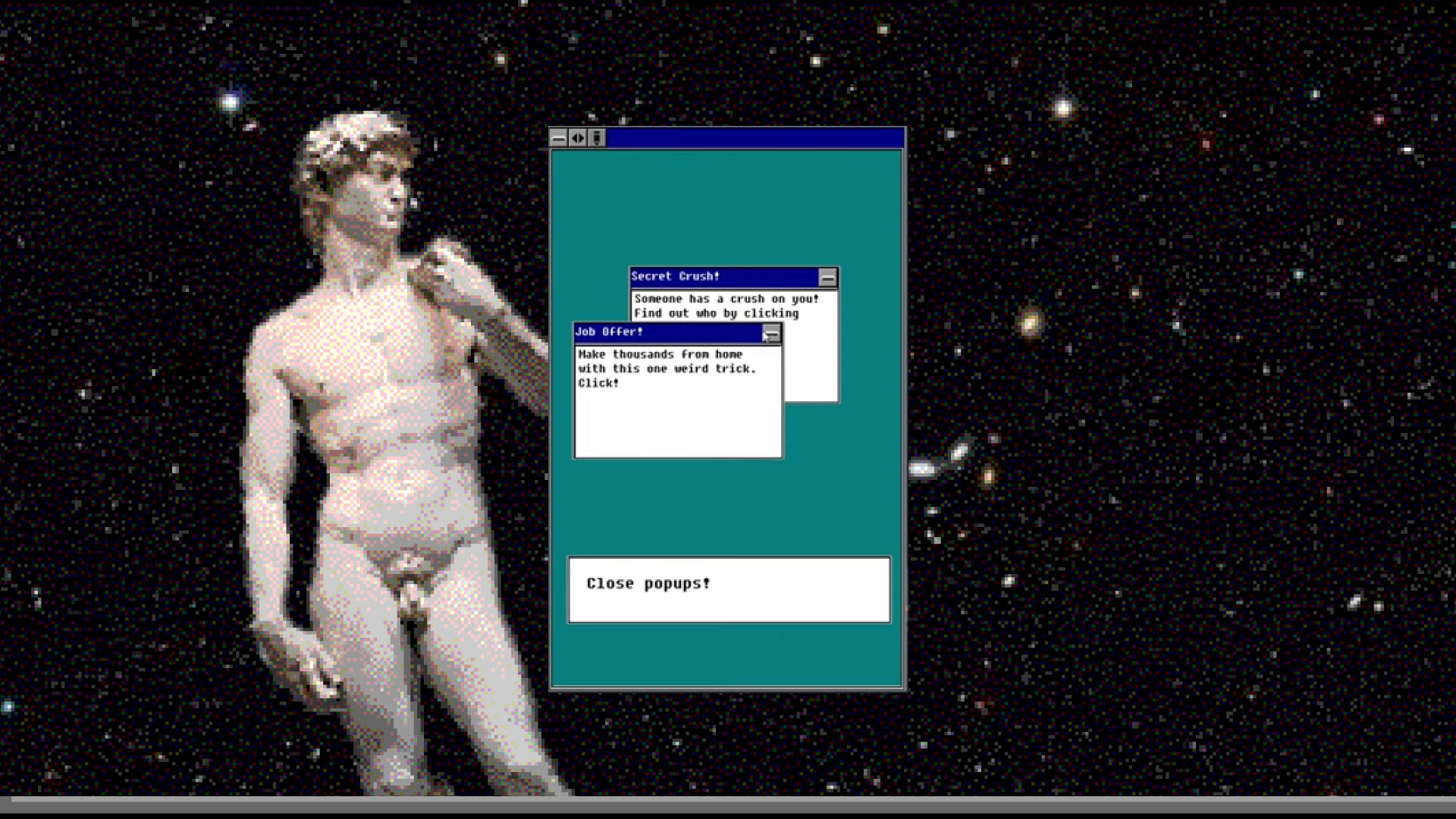
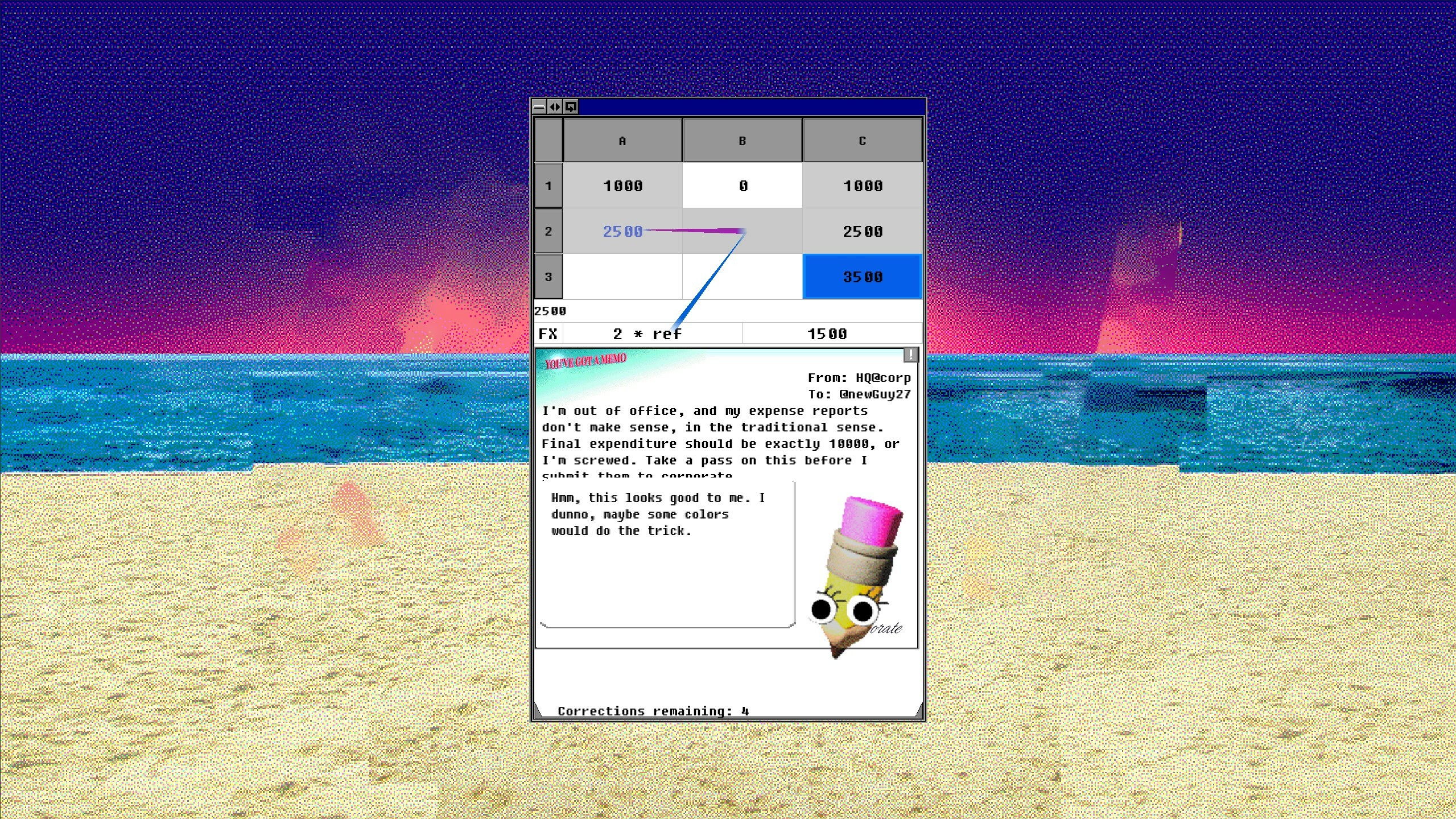
It’s just a bit hectic for a morning cup of coffee game, though. Much of the game has a charming noisiness about it—while writing this very piece with SpreadCheat open in the background, the Clippy stand-in popped up over top of my Google Doc window—but some of that noise feels less intentional. The MIDI background music track didn’t loop, meaning I only got about 30 seconds to jam before sitting in cold silence with my math problems. Accessing the setting menu requires a full reset of the game. Harder levels that would benefit from a little trial and error also limited the number of corrections I could make, so that I had to restart every time I mishandled the admittedly confusing interface.
Expectations are everything when it comes to SpreadCheat, and the minimalist, focused nature of its puzzles certainly weren’t what I expected at first. It took me about two hours to see the main campaign to its ending, which for the time I spent was a satisfying button on the corporate comedy that sells its premise. After that, I can’t readily guess what might make me return for higher difficulty levels or daily challenges. The trailer shows some promising customization options (not yet implemented at the time of this writing), which could be enough of a carrot to keep me going past its first set of levels. Nothing spruces up a grim corporate reality like some splashy graphics.
Disclaimer: Thinky Games is part of the Carina Initiatives and may have professional relationships with individuals and businesses related to the subject of this article. Please see our Editorial Policy for details.

