


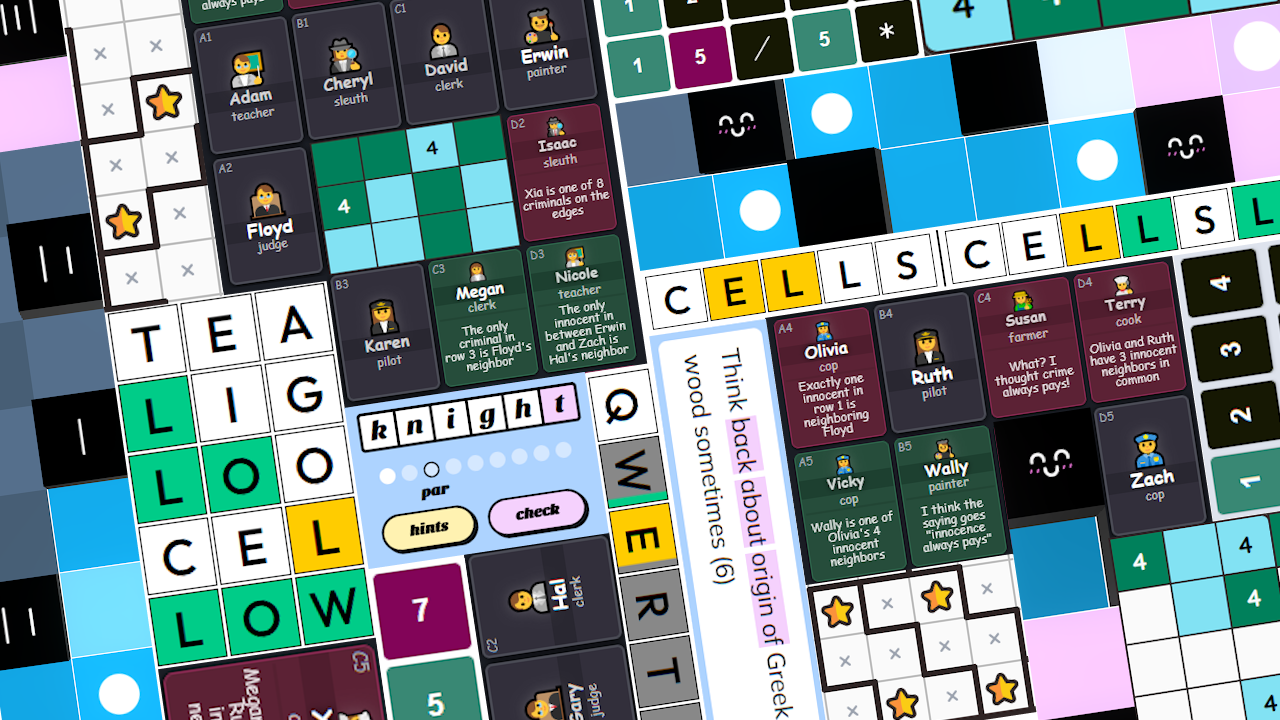

The Mastermind-deduction-word-game Wordle inspired a tidal wave of similar designs following its stripped-down, simple approach to creating a daily, sharable puzzle that you could solve in a few minutes a day while competing with friends. Which ones out there are worth trying out and have satisfying eureka moments built in?
As always when it comes to your puzzle-game dilemmas, we're here to help: here are six of our top picks for our favorite Wordle-style daily webgames.
Edit December 2025: We've made a big announcement last week and so I'm adding to the top of the list our very own daily puzzle game project. This one's full of variety and I think you'll find it's very much worth your time:
Thinky Dailies
We've entered the arena of daily puzzle games, and ours has cute illustrations, an ongoing story told through puzzles, and a massive variety in the kinds of problems you'll be presented with day to day. Rather than the same-format-every-day that Wordle and all the imitators have adopted, we set out to bring you something surprising each day you check in: the puzzles will continuously be new styles with new rules and new story elements unfolding alongside them. From playful visual riddles to linguistic brain teasers to tried and true logic grids, we've been working on it all a long time and would love for you to come join in the fun.
Clues by Sam
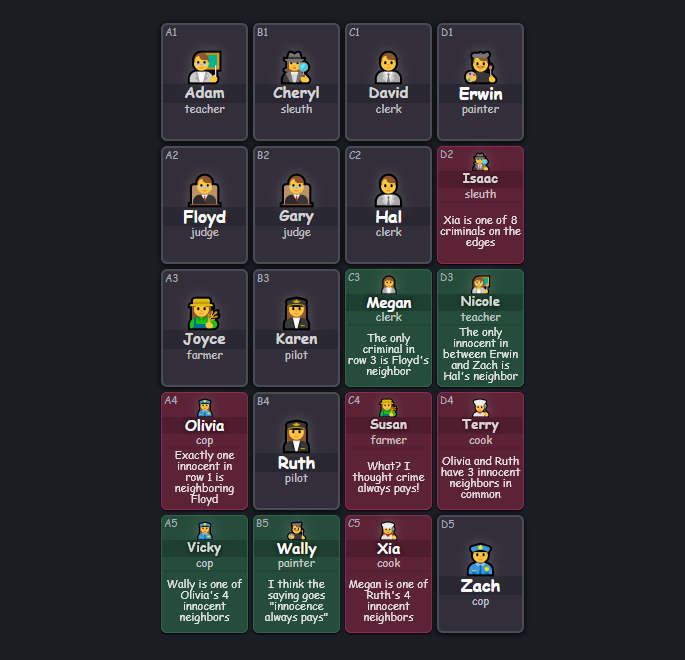
We're starting the list off with a great one: Clues by Sam gives you a daily whodunnit in the form of a grid of townspeople, some of which are dastardly criminals. This is a town full of gossips: each person has some small piece of knowledge to share about their neighbors, but they'll only tell you once you correctly identify whether they're innocent or not. Piecing together clues such as "someone next to Paul is innocent" and "the only innocents in row 3 are on the edges of the grid" you'll topple one domino at a time as the story comes together and eventually the whole thing unravels before you.
Here's a video of Joe playing some Clues by Sam on a Thinky Stream some weeks back.
Daily Akari
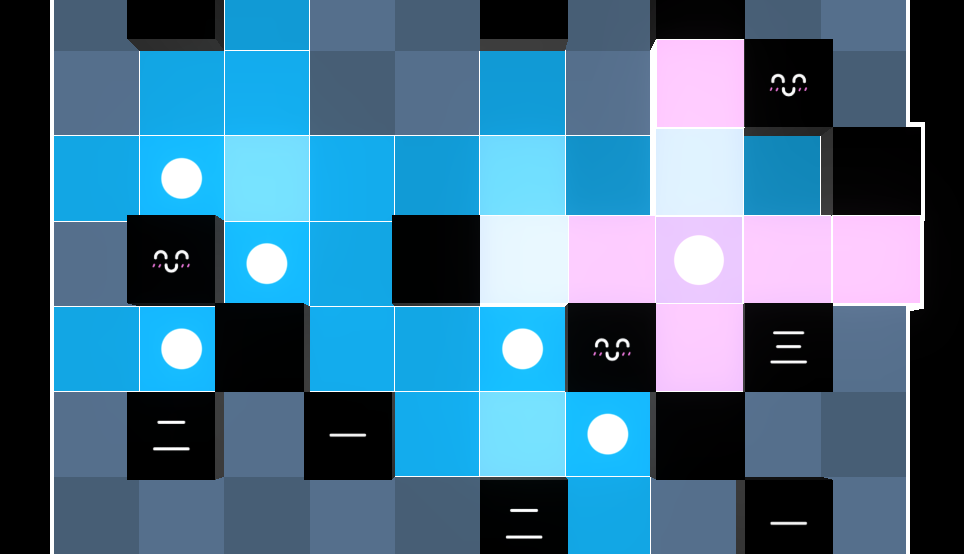
I wrote about Daily Akari recently when I did my list of good games to play on your lunch break at work. (And honestly, all of these new entries could easily qualify as additions to that list.) Akari is a type of Japanese logic puzzle where you need to place light sources to illuminate the whole field while satisfying some constraints present in the grid. Daily Akari does a great job of taking a bland black-and-white-numbers-on-paper puzzle and brightening it up with cheery animations and colors. This is a very satisfying and logical one; great for anyone who's ever been a fan of Sudoku or Picross.
You can watch Joe solve some Daily Akari from a stream back in January.
Minute Cryptic
For some, cryptic crosswords are old hat, and for others (like me a couple years ago) this is a whole strange new world of wordplay puzzles waiting to be explored. (I get a general sense that cryptics are more popular over in the UK than here in the US.) This is an alternate form of crossword puzzle: it's much less about obscure trivia knowledge and a whole lot more about clever manipulation of words and letters.
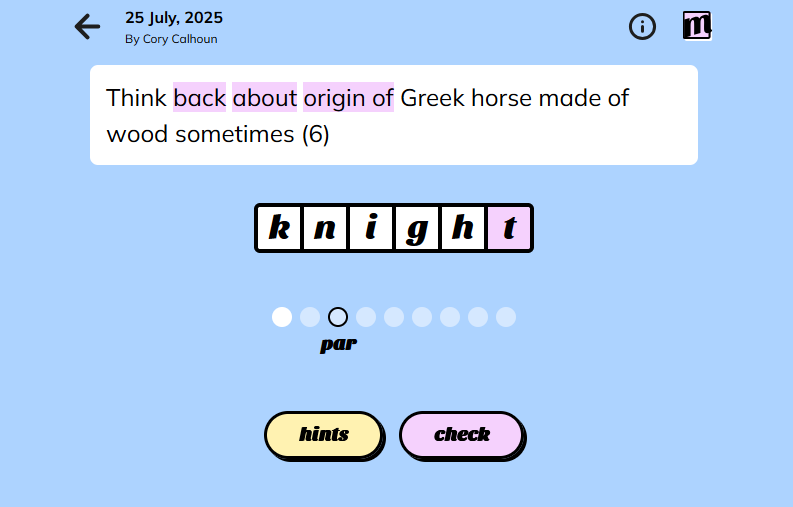
In every cryptic crossword clue, there are 2 hidden halves joined together: one is hinting at the meaning or definition of the answer, and the other half contains very literal wordplay instructions which are another way to find it. Take the example image up there: "Think back" is telling you to literally look at the word "think" backwards. Notice that you're already pretty close to spelling out the answer...
There are lots of good guides and beginner puzzles out there if you want to get into cryptics, and Minute Cryptic is a very fun way to practice in regular, quick bursts. (The hints are really useful for learning.) Who knows, maybe you'll fall in love with this wacky wordplay language like I did.
Dordle
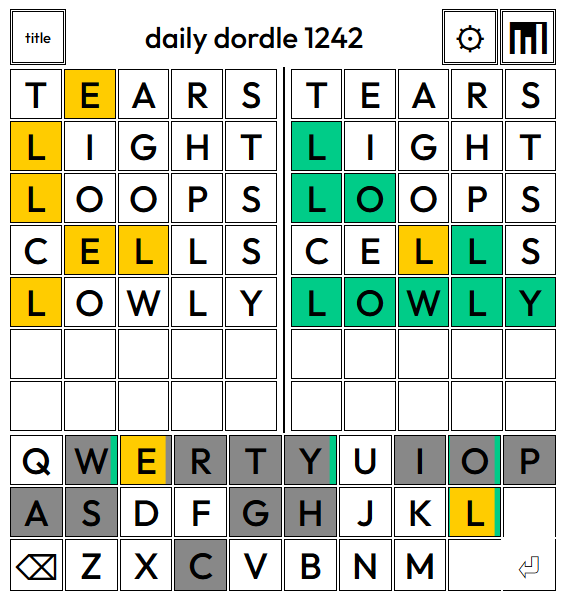
Also featured in my recent lunch-break-games list, Dordle by long-standing thinky community member zaratustra was, to my knowledge, the origin of the concept of solving multiple intertwined Wordle puzzles simultaneously. How this works in practice is that there are two secret words you're trying to guess, but each time you try a word it applies to both of these words you're making separate progress on.
So maybe the guess you have in mind will clear up some confusion about the placement of letters in your first word... but how much overlap do these letters have with what you're working on in the other one? Dordle adds a fascinating new strategic layer to the modern classic word guessing game.
Stars & Fields (Inkwell Games)
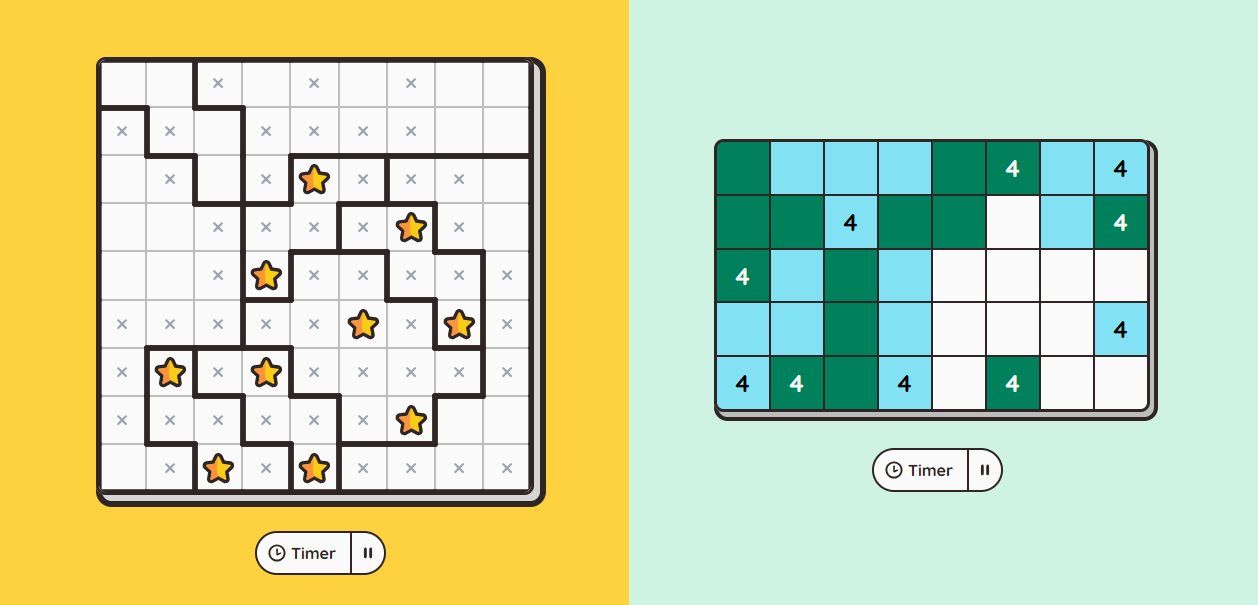
Inkwell Games is a recently-launched site that specifically aims to bring some logic-puzzle games to the daily Wordle-playing audience. Their first game Stars (known as Star Battle in the wider puzzle community) asks you to place stars so that every column, row and bordered area has exactly two. Fields came next, which also follows an established puzzle format (these ones are usually known as Light & Shadow) where you need to fill in all the spaces of a grid with two different colors, but the various areas of each color can't touch each other.
Inkwell takes old styles of paper-logic-puzzle and jazzes them up with cute, minimal, colorful presentation, simply stated rules, and a nice daily format where you compete for time and the challenge level varies over the course of the week. I think these are very pleasant ways to get an introduction to a few different kinds of puzzles.
Nerdle
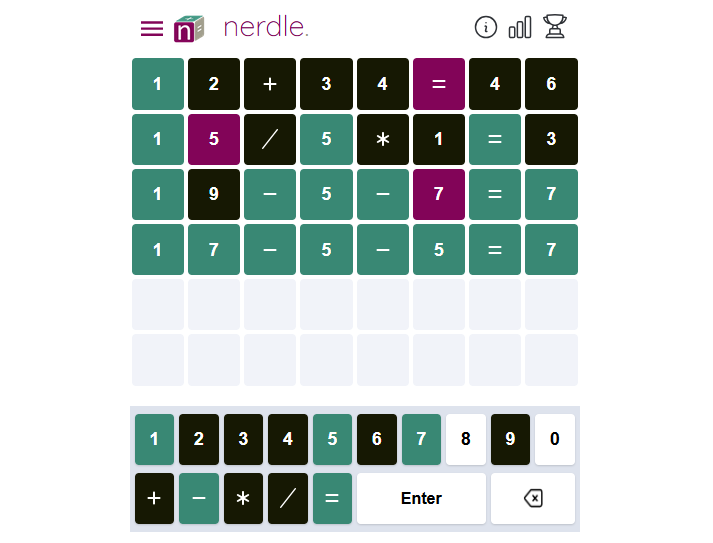
"Wordle but with numbers." It doesn't get much simpler than explaining the concept behind Nerdle. There is a hidden equation you're trying to find, and you get there by guessing your own equations (they all have to compute properly) and then learning how much yours has in common with the answer. All sorts of operations are on the table until you rule them out, and the equals sign might even be somewhere you're not expecting.
I'll admit that when a puzzle becomes literal math it's not the most immediately appealing to me personally, but I should also admit that I did have a good time figuring it out when I was working on getting that screenshot above. Math is undoubtedly the "underlying language" of logic and puzzles, and this seems like a great way to stretch your simple algebra muscles.
Additional mentions
I'm editing this section in later in order to include some bonus games: the first is one suggested to me by an active community member (thanks Sergiu!) called Raddle. It's not the easiest game to explain, but it is very fun and worthy of inclusion. You're going from one word to another, changing them through simple steps that eventually form a ladder of connections. The clues are all presented out of order, so figuring out which transformation makes sense for your current word is part of the puzzle.
Here's a second fun additional inclusion: for our recent ThinkyCon game jam, ImpliedAmpersand made the daily word game trms: you're given three clues and need to find the three synonyms for them... but neither the clues nor the answers have any vowels. The key here is that when you're left with only consonants, all three answers will be identical, and that's how you know you've found what you're looking for. The idea is simple and works surprisingly well, I've been enjoying checking in now and then for a different kind of language puzzle.
Tiled Words has a simple and accurate name: picture a little crossword grid that's been filled in and then broken apart. Your word fragments are littered all over, some turned around the wrong way. Using crossword clues you'll need to rotate and join these pieces back together, slowly fitting the linguistic jigsaw back into its intended arrangement. Another clever and simple word-game twist, and works very well on mobile too.
Disclaimer: Thinky Games is part of the Carina Initiatives and may have professional relationships with individuals and businesses related to the subject of this article. Please see our Editorial Policy for details.

