


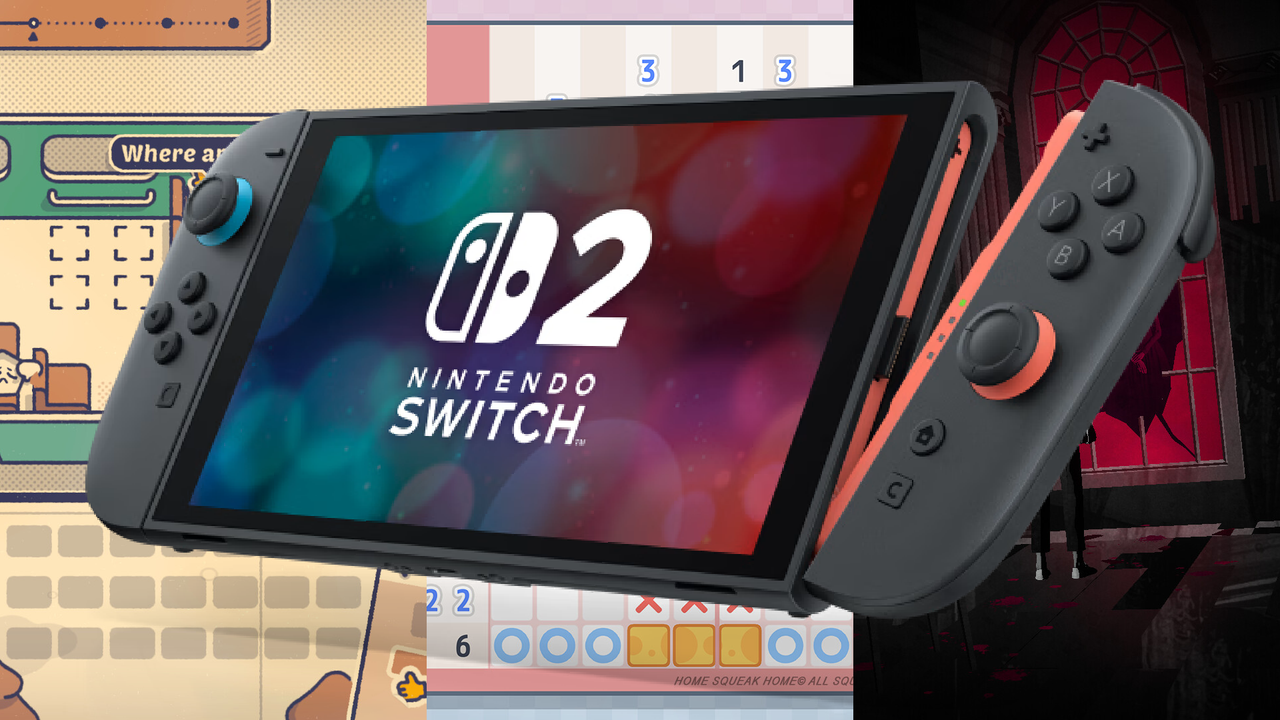

The release of Donkey Kong Bananza brings to a close the Switch 2’s inaugural summer. Cost, a limited library of bespoke titles, and only marginal improvements over the original console all loom large over the decision of whether or not to join in on the Nintendo hype train. Personally, I’ve had friends ask whether I think the Switch 2 is worth it. My generic answer has been, if you know you want one, go for it (and oh boy have people gone for it); if you’re on the fence at all, then there’s no reason not to wait.
My specific answer for puzzle gamers is a little different, since the Switch line remains the ideal puzzle game machine. You should absolutely own either a Switch 2 or an original Switch. Which you choose, however, comes down to your own tolerance for two things: FOMO and load times.
When I first got my hands on the console, like everyone else who bought in at launch, I had to dig around for something to play. And since I’m not a fan of Mario Kart, I hit the backlog. Lorelei and the Laser Eyes was my introduction to the Switch 2. First, let me just briefly explain my experience of finally playing it. Then, I’ll point out what parts of that experience were characteristic—good or bad—of the Switch 2.
Like most thinky games these days, I played Lorelei alongside my partner whenever we could find a free evening. I piloted while she kept notes, a role of vital importance for this game in particular. The game is almost entirely composed of codes scattered to the far corners of Hotel Letztes Jahr, their ciphers spread to opposite, equally far corners. And it’s all wrapped in a narrative layer of stealthily frightening ambience. Lorelei’s built-in record of clues helped a bunch, but our notes allowed us to reorient ourselves after stepping away for any length of time—typically after one of us said oh, screw this and went to grab a snack while the other took their turn under the ordnance of puzzles. Still, we sprinted to wrap up before an upcoming vacation, pretty certain that we’d be unable to pick up the thread again after a week away.

I enjoyed Lorelei, and I enjoyed it because we played it on a Switch. The main reason has nothing to do with the Switch 2 specifically, but it bears mentioning anyway. Most of the games my partner and I play together are Steam-exclusive indies. Ergo, most of the time, I’m running an HDMI across our living room to my laptop on the coffee table, which I hunch over for hours on end. The Switch spares us that kind of chiropractic disaster. Any other console would do the same, but setting aside that we don’t own the latest generation of consoles, the idea of playing Lorelei on a PlayStation 5 feels a bit like taking a Lambo to the grocery store. That’s not to say it’s a lesser game, only that these beefier consoles are optimized for extended, lean-back play sessions, while most puzzle games require bursts of focused attention.
Lorelei, with its two-button control scheme, felt right at home on the lighter-weight Nintendo system. Sleep mode let us drop what we were doing for a minute without dashing to a save point (when, for example, both of us said screw this and went to get a snack). Putting it up on the larger screen let us work together, since all puzzle games are implicitly co-op if you’ve got multiple brains working in circuit. None of these are new features of the Switch 2, but simply reinforce that the Switch is conceptually perfect for single-screen cooperative experiences.

Other styles of play benefited by the Switch’s hybrid nature also happen to line up really well with typical thinky genres, i.e. any level- or run-based game that needs to be set down every once in a while to think through. I’ve used my original Switch to play Slay the Spire, where I could go on autopilot in console mode until the moment I needed to lock in on handheld; Apollo Justice, which I played in handheld to read closely during investigations, then put up on the big screen for splashy trials; and all of the recent Pokémon games. (Pokémon Sword is actually my current Switch 2 game, and if you don’t think of the series as particularly thinky, then you should really try a Nuzlocke.)
What exactly is the Switch 2 bringing to the table? I don’t think that its overall form factor improvements can be overstated. The new click-in controllers alone evaporated any buyer’s remorse I might have had. I literally didn’t play the Switch sometimes solely because I couldn’t be bothered to slide the Joy-Cons in or out of the stock grip, as petty as that sounds. The software is faster and more responsive, the eShop doesn’t lag, the handheld screen is significantly larger and clearer, and the machine itself feels less flimsy. In terms of actual play, loading times are greatly reduced across the board, which is especially helpful for mission-based games like Fire Emblem—although, referring back to indies like Lorelei, very few will require the full graphics capabilities of the Switch 2.

Categorical upgrades like the Joy-Con mice, however, are a different story. In theory, puzzle and tactics games seem like the prime use case for this odd new feature besides FPS. In practice, they’re mostly useless. This is because the Switch 2 doesn’t “convert” existing games’ control schemes to become compatible with the mouse. Only developers with access to the latest Nintendo devkit who are inclined to rerelease a Switch 2 edition of their games can make use of it. Even in the case of Squeakross: Home Squeak Home, a Picross game released on Switch 2 simultaneously with a keyboard-and-mouse version on Steam, the Switch version is controller-only.
Nintendo’s recent embrace of indie titles includes many of the best thinky games of the last five years. But full Switch 2 hardware support will remain cordoned off to official releases, at least for the time being. For strategy and puzzle games, that includes Civilization VII, No Sleep for Kaname Date - From AI: The Somnium Files, Puyo Puyo Tetris 2S, and Nobunaga’s Ambition Awakening Complete Edition. Notably, it doesn’t include the recently released Pokémon Friends, implying that mouse support isn’t a priority for even the highest profile first-party puzzle releases.
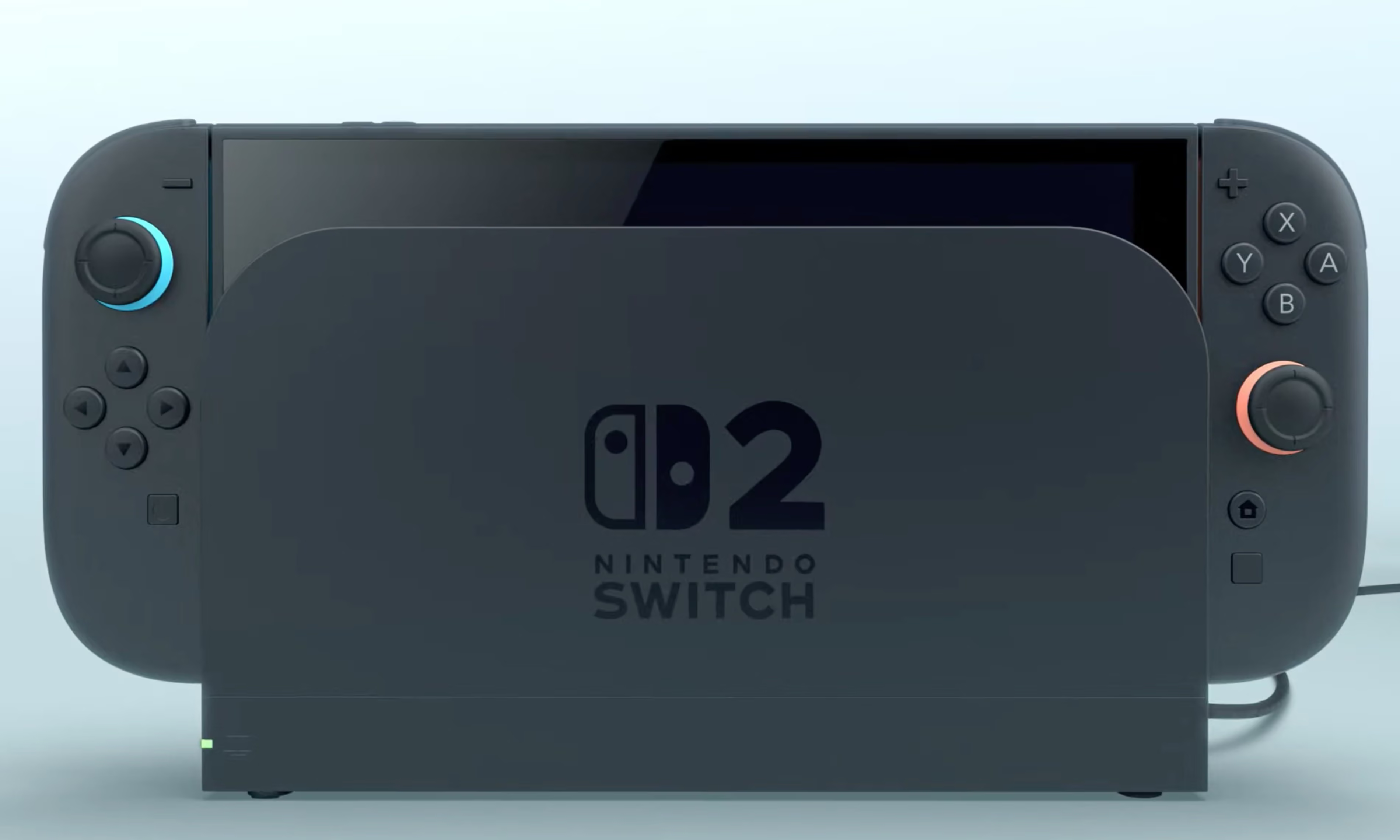
There’s one other detail from my playthrough of Lorelei and the Laser Eyes that may be a deciding factor in the decision to stick with an original Switch versus a Switch 2: its lack of mobility. We were a two-Switch household, meaning when we traveled, packing up one of our two docks was the easiest thing in the world. Now it’s a little harder. Getting a Switch 2 already felt like a splurge, so getting two of them—and thus two docks—feels like an unconscionable expense. The new and improved kickstand makes co-op technically viable in handheld mode, but still not preferable. Our Switch 2 remains confined to the living room, for now.
Ultimately, it comes down to two questions. Do you want one high-powered machine, or are you willing to sacrifice some power for the whole-home connectivity promised by the original Switch? You could get an early model and a second dock for about half the price of a Switch 2. Factoring in the price of games, you could likely find two whole Switches for the cost of a Switch 2 plus the few first party Nintendo titles currently available.
Which raises the second question: Are you fine with missing out when the next first party Nintendo thing—say, the newest Fire Emblem— is a Switch 2 exclusive? And if you are, then what are you getting out of the Switch 2 that you wouldn’t get from a Steam Deck, with its existing bench of indie puzzle games? For me, as someone who values staying on top of the industry, the Switch 2 exceeded my expectations. But that means buying in on the future of the console, since its current roster is frankly not worth the price tag.
Disclaimer: Thinky Games is part of the Carina Initiatives and may have professional relationships with individuals and businesses related to the subject of this article. Please see our Editorial Policy for details.

