



If I told you that Cipher Zero is a Picross game, I’d be doing you a disservice in two ways. First, I’d be spoiling a moment in the first three wordless, tutorial-less levels where you go, “Oh shoot, this is a Picross game!” (I’m choosing to do so here because it’s literally impossible to talk about the puzzles in this game without making that comparison. Rest assured, I plan to leave the other 300+ levels unspoiled.) Second, I’d be setting you up for failure. Although Cipher Zero uses the basic conceit of Picross as its starting point, it builds on that foundation in new and confident ways.
The opening levels in the demo start simple: one square with a tick mark next to it, then two squares with two ticks, then two squares with one tick, and so on. Actions in Cipher Zero are limited—toggle the squares on or off, check your solution, and that’s about it—so that early on, you have no choice but to input the correct answer. When it does become possible to make mistakes further in the game, feedback is swift, and experimentation is seamless.
Already, though, you might notice some of the obvious ways that this is not Picross. For one, puzzles aren’t constrained to even grids. They’re freeform, taking whatever shape is best suited to the solution. Grids also don’t reveal pictures. They aren’t random, either. It’s hard to explain, but once all the relevant mechanics have been introduced, the puzzles are about finding harmony between the ways these mechanics overlap onto a grid.
.png)
Harmony is maybe the defining theme of Cipher Zero’s design. New rules are presented through a handful of tester levels, like those at the start of the game, constraining your choices along a path that guides you into learning the rules of the game. Nothing tells me that I’m on the right track, but my inferences about the logic of each puzzle grow stronger as the levels progress. The demo really just gets the ball rolling with the basic Picross conceit and one other new mechanic. Right up to the end, I couldn’t programmatically explain the rules of each mechanic, but my intuition allowed me to succeed regardless.
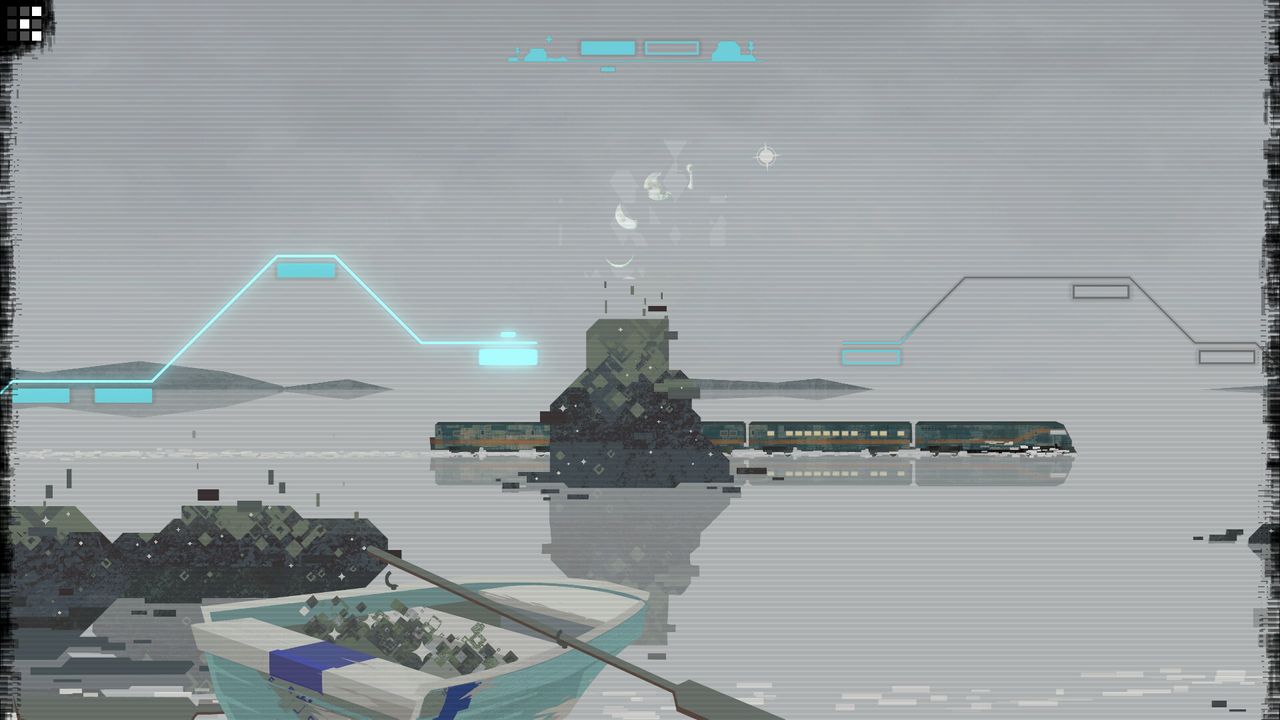
This minimalism extends to the art and sound design, too. Nothing on the screen distracts from the puzzle, though the small pops of movement and background design add a calming intentionality to what might otherwise feel like simple box-checking. Techno chimes accompany your solving (along with a sort of grating error noise when you input a wrong answer, which I could have done without), and the soundtrack responds dynamically to your progress. All of that is a long way to say, the game is gorgeous. The level select screen unfolds into a scene of nature reclaiming a desolate urban setting, which, combined with the chill aesthetic, absorbed me late into the night when I hit the “thanks for playing” screen.
.jpg)
.png)
I’ve avoided using the words “flow” and “meditative” to describe Cipher Zero, because I don’t think that paints the best picture of what the game actually feels like on the hand. Levels don’t quite breeze from one to the other. I met some serious resistance trying to untangle the various mechanics I’d just learned. There were peaks and valleys. Better than the liquid transition of one puzzle into another, the game builds and builds as though progressing towards something. The subtle frame narrative shows an industrialized landscape slowly being reclaimed as a train winds its way through, which I saw as another clue that the dev knows exactly what kind of experience they’re trying to create: a game about laying a path forward, at least in some abstract way.
While the commitment to minimal presentation is a strength of the game overall, I do find myself wishing for a little more in the way of mechanical support. The only tool for tracking squirrelier solutions is a button to flag individual squares. Arbitrarily colored pink, yellow and blue, I haven’t found a good use for the range of options provided—besides just using the pink flag as a “don’t check this box” indicator, which could more easily and more cleanly have been an “X.” I still can’t think of a use for the other colors. It’s a small gripe, but as one of the three controls afforded to the player, it stands out.
.jpg)
Grids in the demo are small enough to mostly keep track of in my head, and they aren’t governed by more than a couple of rules. But the lack of planning tools may become more pronounced depending on the direction the difficulty takes in the full game. Bigger grids and more overlapping logic rules will create a sharper difficulty curve, while continually switching out mechanics will put more weight on the player’s flexibility, not necessarily taxing the existing minimalist frame. Or there’s the secret third option, which is that difficulty progresses in such a way that new uses for the flag system become obvious.
Meanwhile, I’ll be happy to keep Cipher Zero on my Steam Deck to knock out a few levels when I have some downtime. Or enter a total trancelike state and beat the entire thing in one go when it comes out on July 22. Time will tell, but it’s a win-win as far as I’m concerned.
Disclaimer: Thinky Games is part of the Carina Initiatives and may have professional relationships with individuals and businesses related to the subject of this article. Please see our Editorial Policy for details.

