


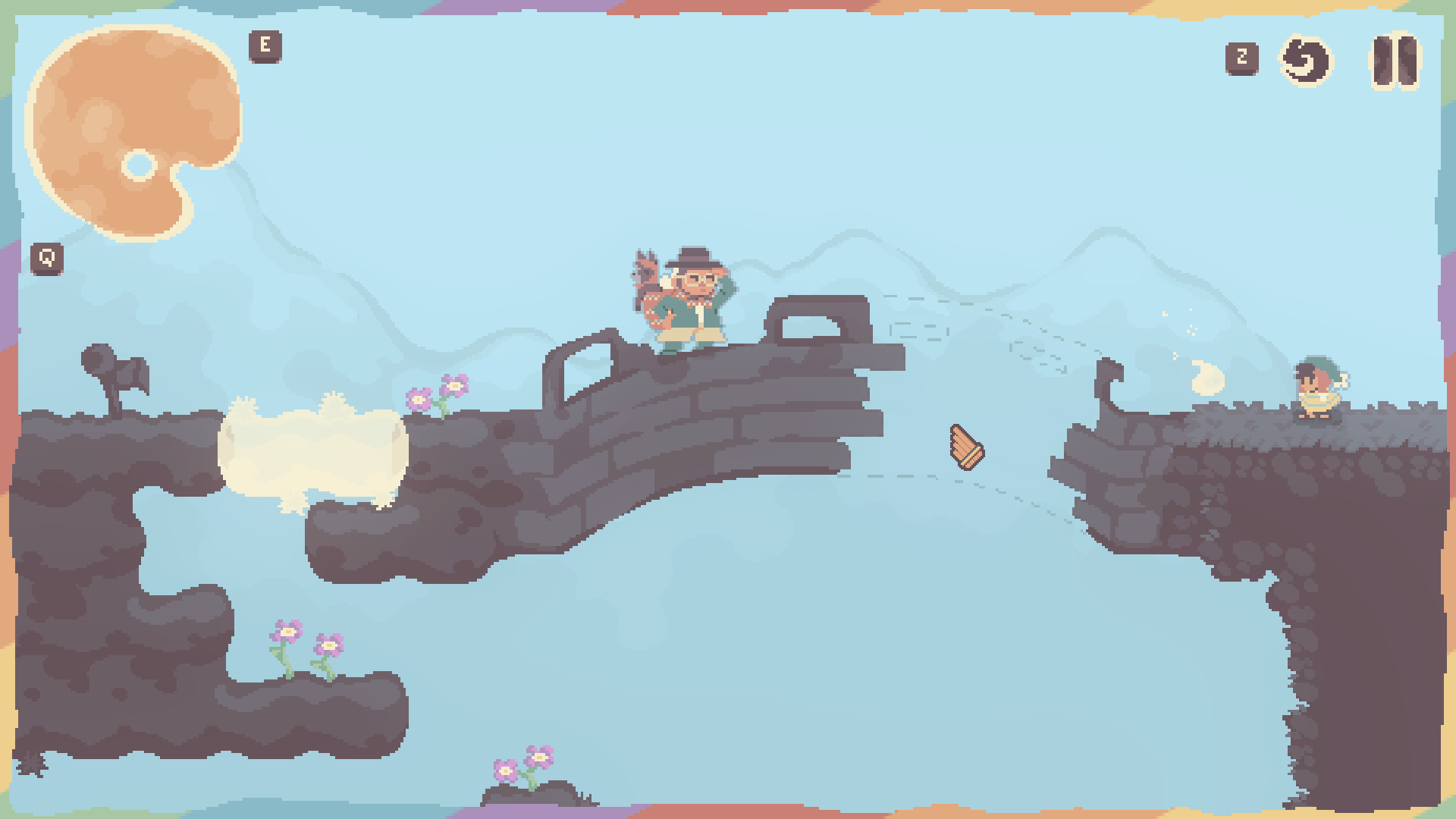
Colorbound is one of those games that you just know is going to vex you. (In the best possible way, of course.) In my experience, the cuter the graphics, the more it throws you off when the puzzles start to get really difficult. I've played a lot of 'reach the flag by crossing the chasm' puzzle games, and it's always the adorable ones that are deceptively difficult. By the looks of it, I've found another one. Colorbound has a very cute, soft pixel style with a color palette of pastel yellows and blues and muted reds; it's bright and kind of soothing, especially when you're playing it on a rainy day.
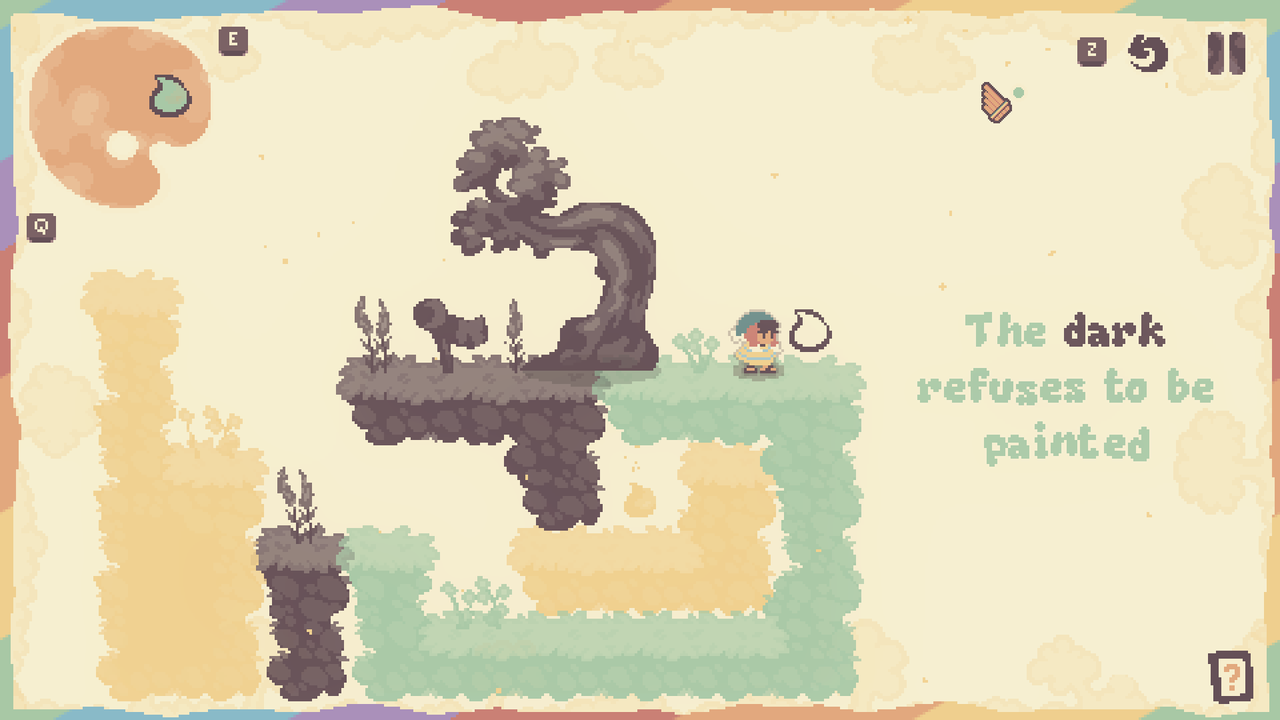
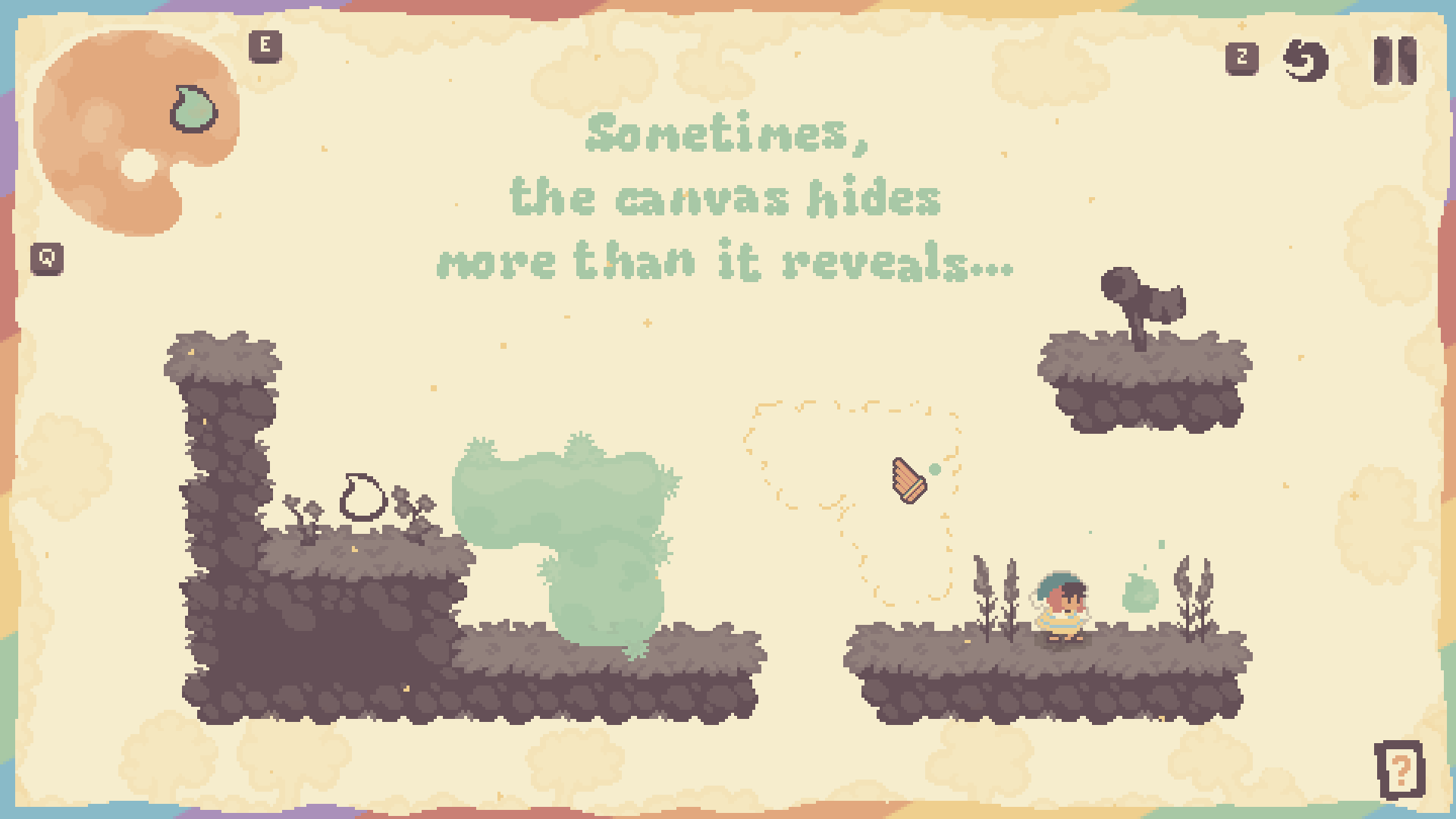
You play as Anku, an Aymara boy trying to give his musician grandfather a proper send-off after his death. Anku wants to find his grandfather's now-disillusioned band members and convince them to play one more time; to do so, he'll need to traverse a series of challenging levels, using only a paint palette and some blobs of color. At its most basic, this involves collecting a color, then painting a block yellow (for example) to plug a gap, so you can hop over and reach the finish line. Or, you can switch the background color, revealing new ledges that you can hop over. Each new mechanic is introduced using a hint, usually something like 'if you don't see it, it doesn't affect you' (i.e., you can make objects disappear by making them the same color as the background).
Of course, things get a bit more complicated as more rules are introduced. Grey areas of the level cannot be painted and will always stay the same. Flags, which mark the end of the level, must be attached to a solid block underneath, or they won't work when you touch them. Dark blue blocks are heavier, so they'll always drop to the lowest point they can reach. If you paint several blocks the same color, they'll stick together, making it easier to remove a great lump of them at once.
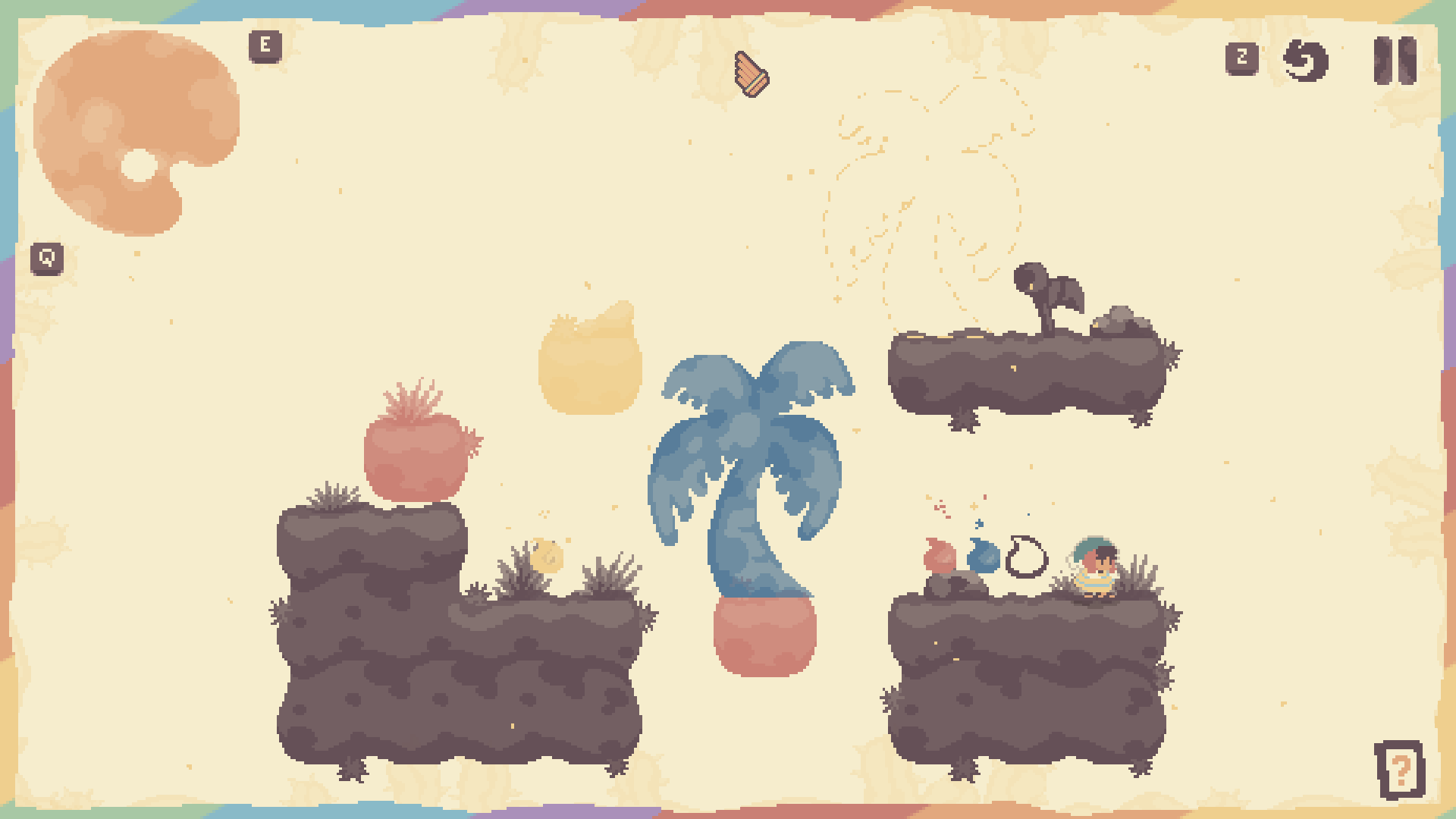
The puzzles are immensely satisfying, particularly when they have a bit more of a bite to them. Sometimes, blobs of color will be scattered across the level, so you'll have to figure out how to get over there first. Removing ledges you're standing on will (of course) make you fall down, which is sometimes useful, but not so much when you're about to land on a row of cactuses. (Or is it cacti? Either way, not the softest landing.) So you have to make sure you have positioned yourself correctly first. The platforming is simple, with a little bit of jump-and-quickly-paint going on, in which you have to be dexterous enough to switch things around in mid-air. Still, it's easy enough that even the most casual gamers should be able to manage it; my children would definitely find it approachable (in fact they'd probably work out the puzzles quicker than me, but that's because they have fresh brains that are, so far, unfried by the internet).
You can press Z to undo your last move, which allows you to play around with all the colors available to you without having to restart the level. And, if you're really stuck, you can use the hint system, which allows you to reveal which colors you need to use in their correct order. I'm intrigued to see how the mechanics develop later in the game. Having a nose around the Steam page, I can see more obstacles like movable pieces (crates you can push, for example), blocks that float away, and slowly-dissolving color blocks, which may mean that the timing of your movements may come into play a little more.
As far as accessibility is concerned, you can play in colorblind mode, with the options of deuteranopia (green), protanopia (red), and tritanopia (blue), which adjust the hue and saturation of each color. You can also switch camera shake on and off, and play around with the interface size and the cursor sensitivity.
The demo doesn't introduce you to many characters, although, importantly, you do get to pet and ride a llama, which seems to be something you can do later in the game, too. I'm looking forward to seeing more of the story develop, as you don't get a huge amount of backstory in the few levels you can play so far. The Aymara culture is interesting, and with Panpipe's Chilean heritage, it feels like a lovely celebration of a part of the world I don't know enough about. At its core, this is a great game with intuitive mechanics, balancing a good level of 'Thinkyness' alongside interesting themes and a lovely art style. One to watch for 2026, for sure.
Disclaimer: Thinky Games is a Carina Thinking Games Initiative and may have professional relationships with individuals and businesses related to the subject of this article. Please see our Editorial Policy for details.