

.png)
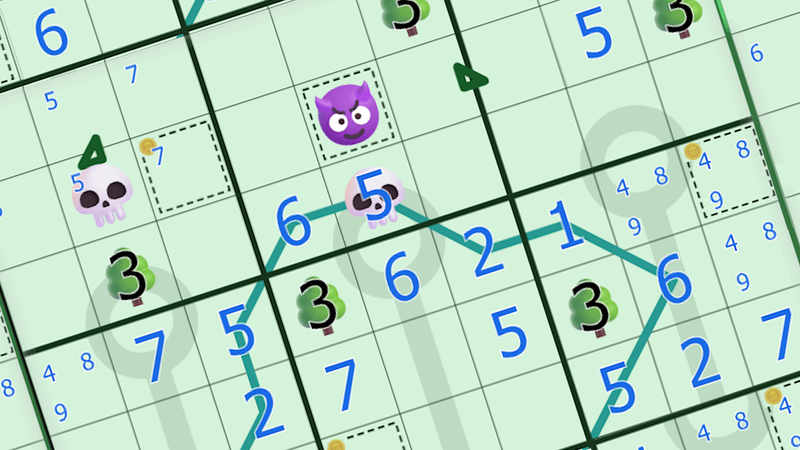
“Portal meets Stray.” That’s how developer Martin Binfield describes Schrodinger’s Cat Burgler, the first release for his fledgling studio, Abandoned Sheep. “It’s a puzzle game where you can be in two places at once. It obeys the uncertainty principle of quantum mechanics. If you’re observed in one location, you stop existing in the other, and you can use this to accomplish various puzzly, burglary things. The game is an adventure through a big facility. And you’re a cat! That’s the headline. Probably should put that first!”
It’s a compelling pitch for a game that’s inherently tough to explain. What does it mean for a puzzle game to revolve around the quantum uncertainty principle? Fortunately, I can report that, despite the mind-rending nature of its core mechanic, actually playing the game is a lot smoother of an experience than talking about it. Remarkably so. Which leads me to the central question I had going into my chat with Binfield: How do you adapt such a notoriously confounding branch of science into an experience players don’t need a PhD to enjoy?
The short answer: lots and lots of iteration.
.png)
Binfield is an industry veteran, having gotten his start as an animator at Sony’s Cambridge branch in the early 2000s, where he cut his teeth on titles such as Heavenly Sword and LittleBigPlanet PSP. Since then, he’s worked for a variety of studios, from AAA to indie. Always as an animator. (This helps explain why the cat animations in SCB are so endearing!) SCB is his first time leading a project and performing all the other duties like design and programming. And he’s been helming that ship for almost a decade. “This game is my baby. I’ve been working on it for the entire eight years.”
SCB is in no way a solo effort, though. While Binfield has always been the lead on the project, he was quick to point out its many other contributors, around fifteen in total. “At the start, I was just doing everything, and as the team has grown, I’ve gone down into the role of director, programmer, designer, animator.” (He means his role has diminished to only those positions. Hah!) In particular, he shouts out Andrew Zygmunt, “artist, level designer, puzzle designer,” who has been his partner on the project for the majority of its lifetime.
I asked Binfield if he’d always had aspirations of being a designer. Yes, he said, but more in the vicarious, “I could do that,” sense, which just about everyone in the games industry feels at some point or another. That all changed when, inspired by games like The Swapper, Unravel and Kuri Kuri Mix, he started musing about the concept of a multi-agent puzzle game where the characters were quantum-entangled. “Just the idea that whatever happens to one character affects the state of the other—I don’t think that’s unique, but I don’t think many other games do systems like that,” he said. “Thinking more about the possibilities of that…that was where I started to really get my teeth into thinking about designing a game. Before then, it was just a ‘wouldn’t it be nice.’”
.png)
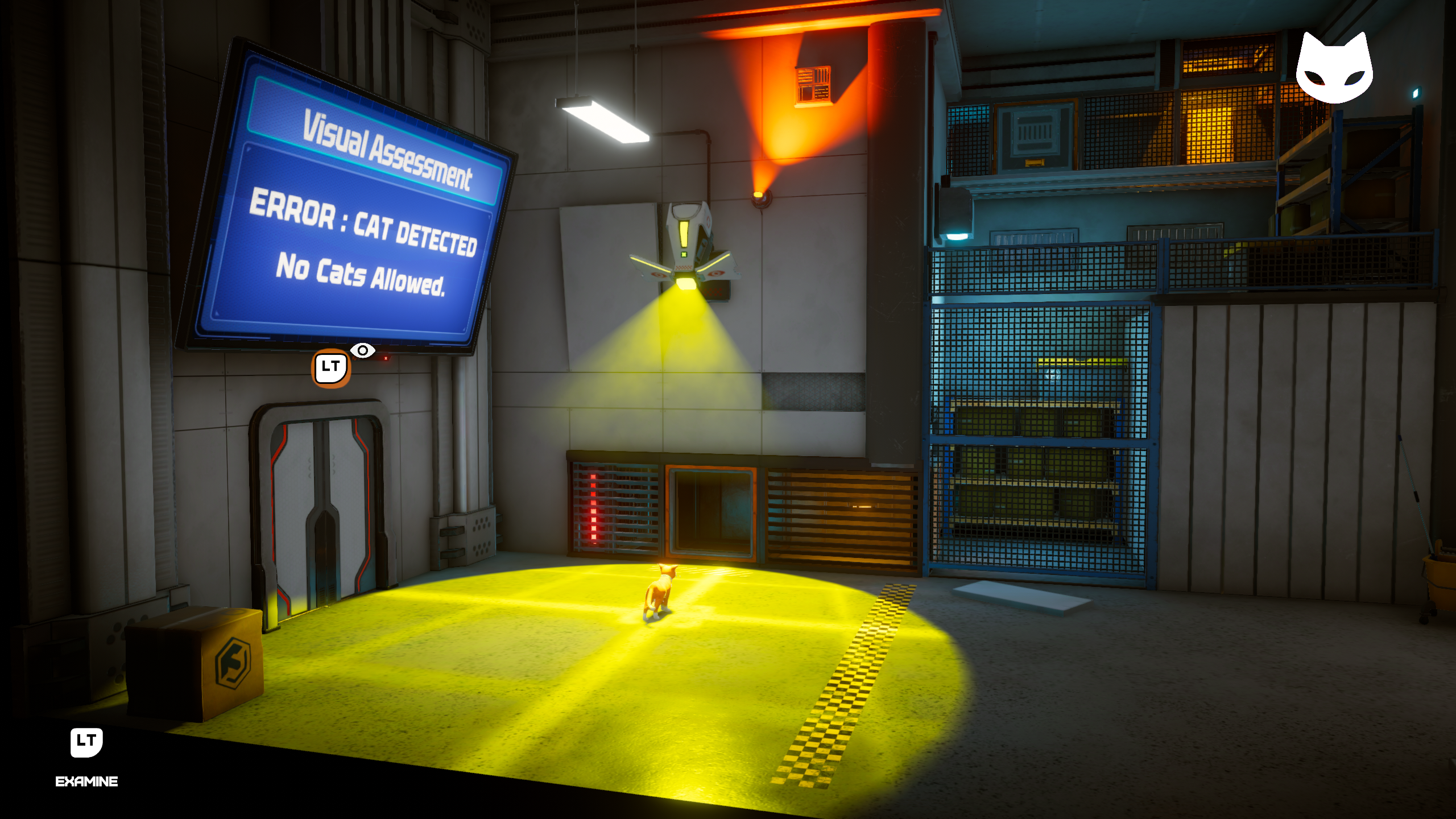
That doesn’t mean Binfield was confident with the concept immediately. Early on, he worried it was “just a really annoying, frustrating thing to get your head around.” The struggle to find a camera system that could make puzzles readable without sacrificing the game feel of the platforming sections, for example, nearly killed the project.
It didn’t help that, from the beginning, Binfield wanted SCB to be a game where everyone could see credits. A “roller coaster of concepts,” he described it as, referencing the Portal series as the structural blueprint. That meant keeping players strapped in and on track—no easy task for a game whose core mechanic is constantly pulling players’ brains in multiple directions.
To craft the necessary guard rails and seatbelts, Binfield sought guidance in Valve’s own developer commentary. Still, just as much came down to pure innovation. “The jumping system is quite avant-garde,” Binfield laughed. (In SCB, a jump can either be performed by walking directly into the structure you want to scale, or, when more precision is required, by holding down a button to “prepare” a jump, which opens up the ability to cycle between targets.) “There’s loads of calculating and deciding going on behind the scenes to try and make that as forgettable as possible.”
.png)
Help from the local game dev community was also key during this process. The fix for those camera troubles, a “spline” camera system, ultimately came from talks with a colleague outside the studio. From then on, Binfield really started to believe in the game.
Is the Australian game dev scene very close-knit? I asked. Yes and no, Binfield reported. The country’s breakout titles—Hollow Knight, Cult of the Lamb, Unpacking, to name a few—have come from all over, and those studios don’t necessarily communicate. (Australia is big!) Most inter-studio interactions happen at the city level. “Brisbane in particular I’ve found really friendly for game development,” Binfield said. “There are a lot of meetups that happen, and everyone is always friendly. And there have been a good few success stories, like with Webbed, Isopod, and Catto’s Post Office. Momento released recently, too. There are a whole bunch of games bubbling up.” He also mentioned the local branch of international studio Gameloft (developers of the upcoming Bluey’s Happy Snaps), whom he said maintain a close relationship with the city’s smaller studios.
I suggested that government funding might be part of why Australia has been such an indie hotbed of late, and Binfield agreed. He plugged both Screen Queensland and Screen Australia, praising not only their widespread support, but their track record for picking games with commercial appeal, the successes of which help justify more and more funding for future games.
.png)
With its elaborate production values and adorable protagonist, SCB fits nicely into that legacy. Not that Abandoned Sheep planned it that way: Binfield credited Zygmunt for the game’s good looks, but denied presentation was ever a mandate. Rather, I got the sense that polish arose because of two factors: first, the aesthetic eye of Binfield and Zygmunt (who, recall, are both artists), and second, because there were so many playability issues to overcome. Solutions for such issues often come from improving presentation, and even when they don’t, the prolonged development leaves a lot of time for refinement.
When asked whether there was a particular feature that was the hardest to implement, Binfield mentioned a “leashing” mechanic that didn’t make it into the game but which the team hopes to resurrect with DLC. (From his descriptions, I pictured something like Filament, but with two characters instead of one.) He also talked about another experimental mechanic which I won’t spoil. Suffice it to say that it sounded like something for us real puzzle sickos.
Whether either of those mechanics ever surface remains to be seen. After eight years, Abandoned Sheep have surely earned a break. Still, based on the persistence it took to get here, I’m guessing neither these quantum felines, nor Binfield, are quite done yet.
Disclaimer: Thinky Games is a Carina Thinking Games Initiative and may have professional relationships with individuals and businesses related to the subject of this article. Please see our Editorial Policy for details.